Africa
#EUEmergencyTrustFundForAfrica - New assistance package to support vulnerable groups and address COVID-19 in North Africa


The European Commission has adopted, through the EU Emergency Trust Fund for Africa (EUTF), a new assistance package for North Africa to protect migrants, stabilise local communities and respond to COVID-19. This package includes €80 million in new funds in support to Libya and Tunisia, as well as €30m reallocated from non-contracted actions under the North of Africa window of the EUTF. In line with the Joint Communication on the global EU response to COVID-19, this new funding will strengthen the immediate response capacity and reinforce the health systems and services in the North African partner countries.
It will also mitigate the socio-economic impact of the crisis, as well as allow for the continuation of actions to protect refugees and migrants. Commissioner for Neighbourhood and Enlargement, Olivér Várhelyi, said: “With today's substantial and targeted assistance package we are responding to the urgent needs to fight the COVID-19 crisis and address the needs of some of the most vulnerable groups in North Africa, in particular refugees, migrants and displaced persons. In Libya, while the armed conflict continues, the EU Emergency Trust Fund for Africa has already supported over 200,000 beneficiaries with hygiene kits and medical assistance and over 1.7 million people now have better access to basic services in local communities, thanks to the renovation of health centres.”
With this adoption, the EUTF now funds 39 programmes in North Africa amounting to €888m. More information can be found in the press release and in the EU Emergency Trust Fund for Africa website.
Share this article:
EU Reporter publishes articles from a variety of outside sources which express a wide range of viewpoints. The positions taken in these articles are not necessarily those of EU Reporter. Please see EU Reporter’s full Terms and Conditions of publication for more information EU Reporter embraces artificial intelligence as a tool to enhance journalistic quality, efficiency, and accessibility, while maintaining strict human editorial oversight, ethical standards, and transparency in all AI-assisted content. Please see EU Reporter’s full A.I. Policy for more information.



Counterfeit cigarettes drive illicit tobacco trade to highest level in a decade, new study claims

Libya’s fuel crisis offers lessons for energy security on both sides of the Mediterranean

EU Cybersecurity Act could expose member states to costly investment treaty claims, legal opinion warns

Spring semester package: Steering EU economies to increased competitiveness

In space, we can’t defend what we can’t see

Kazakhstan seeks deeper EU partnership in science, education and innovation

OceanEye: Placing the EU at the forefront of ocean observation

Outrage of Iranian exiles and opposition of MEPs to inviting Reza Pahlavi to the European Parliament

EDF’s first-ever FSTP sub-call attracts strong interest from newcomers to EU defence funding

EU implements Palestine facility with $395 million for local banks and €2.1 million in technical assistance

EU exports of shark fins dropped in 2025

Commission approves €23 billion Italian state aid scheme to support renewable electricity production

Justice and Home Affairs Council

Give your career a real take off

Serbia’s business environment is driving its integration into the EU

The Hidden Cost of Aid Cuts.

Kazakhstan reforms under scrutiny at Brussels Press Club round table

Japan should face up to history and contribute more to regional peace

Ambassador calls for 'speeding up' of co-operation between EU and Kazakhstan

Timur Turlov at Smart Moves Summit 2025: How chess can transform global education

Shevtsova’s case: Out-of-court sanctions dismantling trust in Ukrainian cause

The future of European transport

Trump Vs Trueman

US 'no longer' an 'unconditional ally' for Europe - MEP
-
 Health4 days ago
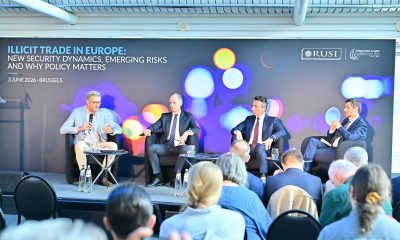
Counterfeit cigarettes drive illicit tobacco trade to highest level in a decade, new study claims
-
 Libya4 days ago
Libya’s fuel crisis offers lessons for energy security on both sides of the Mediterranean
-
 Law4 days ago
EU Cybersecurity Act could expose member states to costly investment treaty claims, legal opinion warns
-
 European Commission4 days ago
Spring semester package: Steering EU economies to increased competitiveness