EU
International role of the euro: The euro in the world


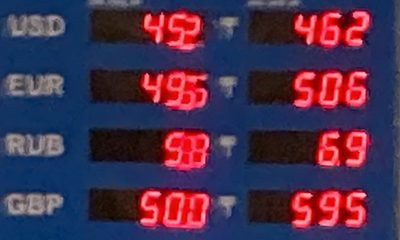
The euro is the official currency for 19 of the 27 EU member states, however its influence reaches far beyond the EUʼs borders. Sixty countries and territories outside the EU use the euro as their currency or have pegged their currency to it. This stabilises the exchange rates between countries, providing long-term predictability for businesses. The euro is the second most important currency at international level in terms of global payments. Its role as a reserve and investment currency could however still be strengthened.

European Council President Charles Michel (pictured) said: "A stronger international euro would certainly give us more latitude in our geopolitical decision-making. An attractive currency also offers a broader access to international financial markets. And this facilitates the funding of the massive investments needed for our digital and ecological transitions. These investments are the key to unlocking the full potential of the two transitions: sustainable development, quality jobs and innovation."
In November 2020, the share of the euro in global payments stood at 38%, on a par with the dollar. The share of the euro in foreign exchange reserves holdings amounted to around 20% in June 2020, while the US dollar stood at around 60%.
Increasing the euro's weight as an international reference currency could benefit both EU businesses and citizens and help increase the EUʼs strategic autonomy and influence in the world.
A globally preeminent euro would:
- increase the resilience of the international monetary system
- reduce dependence on other currencies, especially the US dollar
- open up more choices for market operators across the globe
As a result, the world trade system would become less vulnerable to asymmetric shocks. A stronger international role for the euro would ensure lower transaction, financing and risk management costs.
Strengthening the international role of the euro
On 19 January 2021, the European Commission presented a strategy to prepare the EU's economic and financial system better for the future. With its communication ʻThe European economic and financial systems: fostering openness, strength and resilienceʼ, the Commission built upon its communication of 2018, which focused on the deepening of the Economic and Monetary Union.
- The European economic and financial systems: fostering openness, strength and resilience (European Commission)
- Towards a stronger international role of the euro (European Commission)
- The Economic and Monetary Union (background information)
Did you know that the euro is the champion of green loans?
The new strategy identifies the strengthening of the international role of the euro as one of its three main pillars, in addition to the development of more resilient financial market infrastructures and an improved implementation of EU sanctions' regimes.
The Commission lists a set of measures to promote the use of the euro in the world:
- Fostering euro-denominated commodity derivatives for energy and raw materials;
- facilitating the development of euro-denominated benchmark indices and trading venues in important markets, such as emergent energy carriers like hydrogen;
- reaching out to investors and issuers in third countries to promote the use of the euro and make it more attractive for investments;
- promoting green bonds as instruments for financing sustainable investments for achieving the goals of the European Green Deal;
- upgrading the EU Emissions Trading System (ETS), and;
- looking into the possibility of introducing a digital euro.
Furthermore, the volume of EU bonds issued in the framework of the ʻNext Generation EUʼ recovery plan, a third of which will take the form of green bonds, is set to add depth and liquidity to the European capital markets and make them more attractive for investors.
- A recovery plan for Europe (background information)
- European Green Deal (background information)
- Financing the climate transition (background information)
Share this article:
EU Reporter publishes articles from a variety of outside sources which express a wide range of viewpoints. The positions taken in these articles are not necessarily those of EU Reporter. Please see EU Reporter’s full Terms and Conditions of publication for more information EU Reporter embraces artificial intelligence as a tool to enhance journalistic quality, efficiency, and accessibility, while maintaining strict human editorial oversight, ethical standards, and transparency in all AI-assisted content. Please see EU Reporter’s full A.I. Policy for more information.





Counterfeit cigarettes drive illicit tobacco trade to highest level in a decade, new study claims

Libya’s fuel crisis offers lessons for energy security on both sides of the Mediterranean

EU Cybersecurity Act could expose member states to costly investment treaty claims, legal opinion warns

Spring semester package: Steering EU economies to increased competitiveness

In space, we can’t defend what we can’t see

Kazakhstan seeks deeper EU partnership in science, education and innovation

Outrage of Iranian exiles and opposition of MEPs to inviting Reza Pahlavi to the European Parliament

OceanEye: Placing the EU at the forefront of ocean observation

Commission imposes interim measures on Meta to preserve free access to WhatsApp for rival AI assistants

Debt, AI and Algorithms: How the bond market is being reshaped

EDF’s first-ever FSTP sub-call attracts strong interest from newcomers to EU defence funding

EU implements Palestine facility with $395 million for local banks and €2.1 million in technical assistance

EU exports of shark fins dropped in 2025

Commission approves €23 billion Italian state aid scheme to support renewable electricity production

Justice and Home Affairs Council

Give your career a real take off

Kazakhstan reforms under scrutiny at Brussels Press Club round table

Japan should face up to history and contribute more to regional peace

Ambassador calls for 'speeding up' of co-operation between EU and Kazakhstan

Timur Turlov at Smart Moves Summit 2025: How chess can transform global education

Shevtsova’s case: Out-of-court sanctions dismantling trust in Ukrainian cause

The future of European transport

Trump Vs Trueman

US 'no longer' an 'unconditional ally' for Europe - MEP
-
 Health4 days ago
Counterfeit cigarettes drive illicit tobacco trade to highest level in a decade, new study claims
-
 Libya4 days ago
Libya’s fuel crisis offers lessons for energy security on both sides of the Mediterranean
-
 Law4 days ago
EU Cybersecurity Act could expose member states to costly investment treaty claims, legal opinion warns
-
 European Commission4 days ago
Spring semester package: Steering EU economies to increased competitiveness