Russia
Russia responsible for Litvinenko killing, European rights court rules


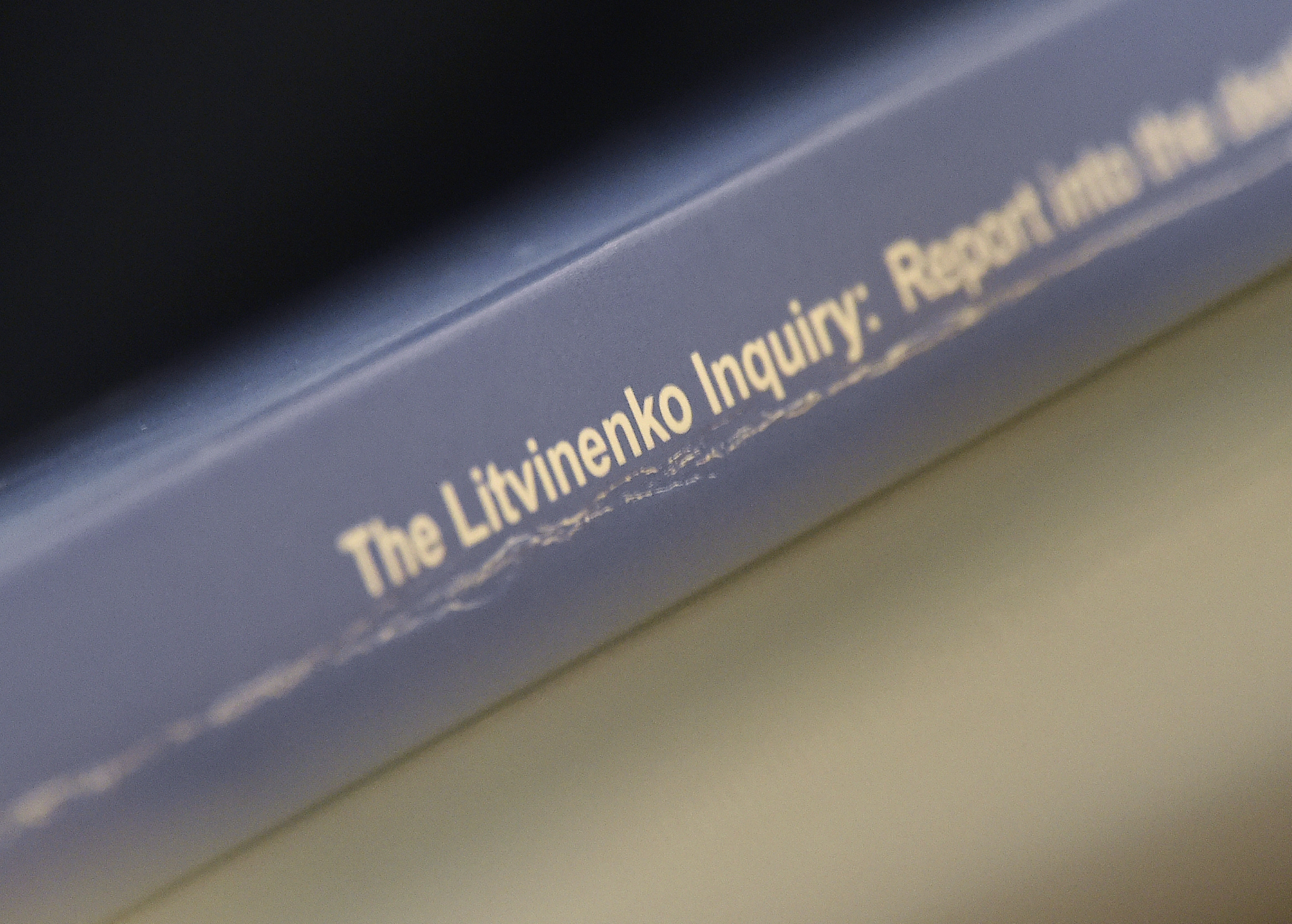
The European Court of Human Rights ruled on Tuesday (21 September) that Russia was responsible for the 2006 killing of ex-KGB officer Alexander Litvinenko who died an agonizing death after he was poisoned in London with Polonium 210, a rare radioactive isotope, write Guy Faulconbridge and Michael Holden.
Kremlin critic Litvinenko, 43, died weeks after drinking green tea laced with polonium-210 at London’s plush Millennium hotel in an attack Britain has long blamed on Moscow.
In its ruling, the European Court of Human Rights (ECHR) concluded Russia was responsible for the killing.
"It found that Mr Litvinenko’s assassination was imputable to Russia," its statement said.
Russia has always denied any involvement in Litvinenko's death which plunged Anglo-Russian relations to a post-Cold War low.
A lengthy British inquiry concluded in 2016 that Russian President Vladimir Putin probably approved a Russian intelligence operation to murder Litvinenko.
It also found that former KGB bodyguard Andrei Lugovoy and another Russian, Dmitry Kovtun, carried out the killing as part of an operation probably directed by Russia’s Federal Security Service (FSB), the main successor to the Soviet-era KGB.
The ECHR agreed. Both men have always denied involvement.
"The court found it established, beyond reasonable doubt, that the assassination had been carried out by Mr Lugovoy and Mr Kovtun," the ruling said.
"The planned and complex operation involving the procurement of a rare deadly poison, the travel arrangements for the pair, and repeated and sustained attempts to administer the poison indicated that Mr Litvinenko had been the target of the operation."
It too concluded that the Russian state was to blame and that had the men been carrying out a "rogue operation", Moscow would have the information to prove that theory.
"However, the government had made no serious attempt to provide such information or to counter the findings of the UK authorities," the ruling said.
Share this article:
EU Reporter publishes articles from a variety of outside sources which express a wide range of viewpoints. The positions taken in these articles are not necessarily those of EU Reporter. Please see EU Reporter’s full Terms and Conditions of publication for more information EU Reporter embraces artificial intelligence as a tool to enhance journalistic quality, efficiency, and accessibility, while maintaining strict human editorial oversight, ethical standards, and transparency in all AI-assisted content. Please see EU Reporter’s full A.I. Policy for more information.







Counterfeit cigarettes drive illicit tobacco trade to highest level in a decade, new study claims

Libya’s fuel crisis offers lessons for energy security on both sides of the Mediterranean

Spring semester package: Steering EU economies to increased competitiveness

In space, we can’t defend what we can’t see

EU Cybersecurity Act could expose member states to costly investment treaty claims, legal opinion warns

Kazakhstan seeks deeper EU partnership in science, education and innovation

OceanEye: Placing the EU at the forefront of ocean observation

Outrage of Iranian exiles and opposition of MEPs to inviting Reza Pahlavi to the European Parliament

EDF’s first-ever FSTP sub-call attracts strong interest from newcomers to EU defence funding

EU implements Palestine facility with $395 million for local banks and €2.1 million in technical assistance

EU exports of shark fins dropped in 2025

Commission approves €23 billion Italian state aid scheme to support renewable electricity production

Justice and Home Affairs Council

Give your career a real take off

Serbia’s business environment is driving its integration into the EU

The Hidden Cost of Aid Cuts.

Kazakhstan reforms under scrutiny at Brussels Press Club round table

Japan should face up to history and contribute more to regional peace

Ambassador calls for 'speeding up' of co-operation between EU and Kazakhstan

Timur Turlov at Smart Moves Summit 2025: How chess can transform global education

Shevtsova’s case: Out-of-court sanctions dismantling trust in Ukrainian cause

The future of European transport

Trump Vs Trueman

US 'no longer' an 'unconditional ally' for Europe - MEP
-
 Health4 days ago
Counterfeit cigarettes drive illicit tobacco trade to highest level in a decade, new study claims
-
 Libya4 days ago
Libya’s fuel crisis offers lessons for energy security on both sides of the Mediterranean
-
 European Commission4 days ago
Spring semester package: Steering EU economies to increased competitiveness
-
 Space4 days ago
In space, we can’t defend what we can’t see