Russia
EU seeks to release Ukrainian grain stuck due to Russia's sea blockade

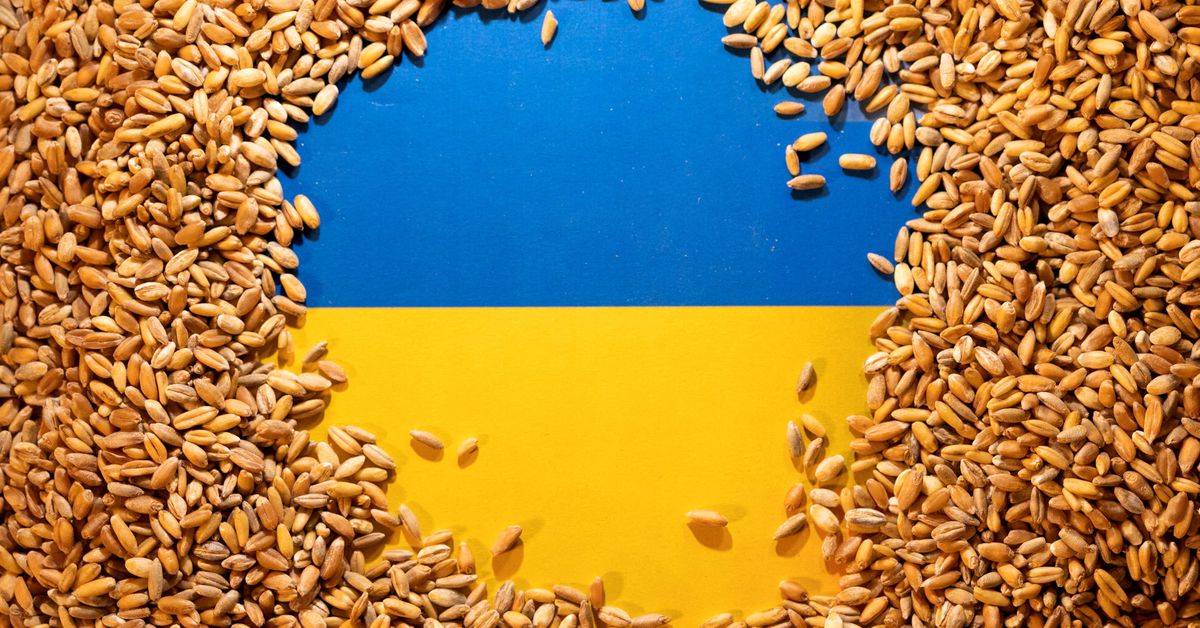
European Union foreign minsters discussed how to release millions of tonnes of grain trapped in Ukraine because of Russia's Black Sea port blocking at a meeting in Luxembourg on Monday (20 June).
Ukraine is a major supplier of wheat worldwide, but its grain shipments are stuck and more than 20,000,000 tonnes have been frozen in silos since Russia invaded and blocked its ports.
Moscow denies any responsibility for the current food crisis, and instead blames Western sanctions. This has caused a rise in global food prices as well as warnings from the United Nations about hunger in countries that heavily rely on imported grain.
The EU supports the United Nations' efforts to broker a deal for Ukraine to resume its sea exports in exchange for Russian food and fertilizer exports. However, Moscow would have to approve this.
Turkey is in good relations with Moscow and Kyiv, and it has indicated that it is open to taking up a position within an "observation mechanism" located in Istanbul if there's a deal.
It is not clear if the EU would be involved in securing such an agreement militarily.
An EU official stated that "Whether there will need to escort these commercial vessels in the future, that's a questionmark and I don't believe we are there yet."
According to an EU official, talks are ongoing between EU member states about a new set of sanctions against Russia. However, he said that no fresh measures are imminent.
According to an official, Russia's gas exports are already subject to extensive sanctions. There is no way to agree to impose new sanctions on Russia.
Share this article:
EU Reporter publishes articles from a variety of outside sources which express a wide range of viewpoints. The positions taken in these articles are not necessarily those of EU Reporter. Please see EU Reporter’s full Terms and Conditions of publication for more information EU Reporter embraces artificial intelligence as a tool to enhance journalistic quality, efficiency, and accessibility, while maintaining strict human editorial oversight, ethical standards, and transparency in all AI-assisted content. Please see EU Reporter’s full A.I. Policy for more information.







Counterfeit cigarettes drive illicit tobacco trade to highest level in a decade, new study claims

Libya’s fuel crisis offers lessons for energy security on both sides of the Mediterranean

EU Cybersecurity Act could expose member states to costly investment treaty claims, legal opinion warns

Spring semester package: Steering EU economies to increased competitiveness

In space, we can’t defend what we can’t see

Kazakhstan seeks deeper EU partnership in science, education and innovation

OceanEye: Placing the EU at the forefront of ocean observation

Outrage of Iranian exiles and opposition of MEPs to inviting Reza Pahlavi to the European Parliament

Commission imposes interim measures on Meta to preserve free access to WhatsApp for rival AI assistants

Debt, AI and Algorithms: How the bond market is being reshaped

EDF’s first-ever FSTP sub-call attracts strong interest from newcomers to EU defence funding

EU implements Palestine facility with $395 million for local banks and €2.1 million in technical assistance

EU exports of shark fins dropped in 2025

Commission approves €23 billion Italian state aid scheme to support renewable electricity production

Justice and Home Affairs Council

Give your career a real take off

Kazakhstan reforms under scrutiny at Brussels Press Club round table

Japan should face up to history and contribute more to regional peace

Ambassador calls for 'speeding up' of co-operation between EU and Kazakhstan

Timur Turlov at Smart Moves Summit 2025: How chess can transform global education

Shevtsova’s case: Out-of-court sanctions dismantling trust in Ukrainian cause

The future of European transport

Trump Vs Trueman

US 'no longer' an 'unconditional ally' for Europe - MEP
-
 Health5 days ago
Counterfeit cigarettes drive illicit tobacco trade to highest level in a decade, new study claims
-
 Libya4 days ago
Libya’s fuel crisis offers lessons for energy security on both sides of the Mediterranean
-
 Law4 days ago
EU Cybersecurity Act could expose member states to costly investment treaty claims, legal opinion warns
-
 European Commission5 days ago
Spring semester package: Steering EU economies to increased competitiveness