Azerbaijan
In winning Nagorno-Karabakh conflict, Azerbaijan loses pretext for ignoring corruption


Several months into the Russian-brokered ceasefire that has halted fighting between Azerbaijani and ethnic Armenian forces in Nagorno-Karabakh, the battle to define the narrative of the conflict has moved from the battlefields of the disputed territory to the European Court of Human Rights (ECHR). This month, Baku and Yerevan have filed duelling suits at the ECHR, accusing each other of human rights violations during their three-decade conflict, and especially during last year’s 44-day war.
The ECHR lawsuits are just the latest chapter of a continually evolving post-conflict relationship between the two countries, in which Azerbaijani president Ilham Aliyev has emerged triumphant and Armenian prime minister Nikol Pashinyan has been left fighting for his political life. The scene in Moscow on January 11th, when Russian president Vladimir Putin welcomed Aliyev and Pashinyan for their first face-to-face meeting since last year’s hostilities, underscored the diverging fortunes of the two men.
Aliyev, riding the political high of his country’s greatest military triumph since its independence from the former Soviet Union, spoke of a bright future amidst talk of a transportation deal connecting mainland Azerbaijan with the enclave of Nakhchivan. Pashinyan, under political assault domestically since the defeat in Nagorno-Karabakh, struck a very different tone, stressing issues surrounding prisoners of war that remain to be resolved.
Whereas Pashinyan has clung on to his premiership mostly thanks to the weakness of his opponents, Aliyev’s military success has cemented his control over a country he has led since 2003. As Azerbaijani social media has trumpeted over the past two months, Baku now controls essentially the whole of Azerbaijan for the first time. The question now facing the government is how, or even if, the sudden end of Armenian occupation will change the country’s opaque and authoritarian internal politics.
Does Baku have alternatives to autocracy?
For decades, the spectre of renewed conflict over Nagorno-Karabakh (known to its ethnically Armenian population as Artsakh) has served as an effective cudgel for the Aliyev regime to silence domestic dissident, even as oil and gas wealth flowed into the pockets of well-connected elites who in turn featured in international corruption scandals like Azerbaijani Laundromat.
Now, Aliyev’s government faces serious challenges in “winning the peace” after a war even its most ardent critics supported. Those critics, including investigative journalist Khadija Ismayilova and human rights lawyer Rasul Jafarov, joined the overwhelming groundswell of public support for the military campaign, recognizing the occupation of Azerbaijani territory surrounding Nagorno-Karabakh as a precondition to any real reform in Baku.
With those territories having been re-taken, successfully re-integration will mean reversing three decades of virulently nationalist official rhetoric demonizing Armenians. Convincing tens of thousands of ethnic Armenians to accept Azerbaijani rule will also require a level of respect for basic freedoms and rights that has not been seen in Azerbaijan since Soviet rule began a century earlier.
Sadly, if Aliyev’s willingness to tackle Azerbaijan’s corruption issues offers any indication of his openness to change, meaningful reform is likely a long way away. According to Transparency International’s annual Corruption Perceptions Index, Azerbaijan ranks 126th out of 180 countries. At the same time, Azerbaijan is one of the world’s worst performers in terms of press freedom, ranking 168th in Reporters Without Borders’ World Press Freedom Index. The vicious cycle of graft and repression in Azerbaijan means journalists and civil society actors militating for transparency are met with the full punitive force of the state.
Track record on corruption offers little hope
Even that, however, has not stopped journalists like Khadija Ismayilova, whose international profile has made her a bête noire for Aliyev. Early last year, the same ECHR in which Azerbaijan is now suing Armenia delivered an embarrassing judgement against Baku, when it ruled Azerbaijan had violated the journalist’s rights in order to “silence and punish Ismayilova for her journalistic activities.” All while facing prison sentences and criminal proceedings, Ismayilova and other journalists have exposed systematic corruption at the highest levels of Azerbaijan’s ruling elite, including among the Aliyev family but also the country’s top officials.
In 2017, for example, Ismayilova and the Organized Crime and Corruption Reporting Project (OCCRP) uncovered more than a million dollars in payments linked one of Azerbaijan’s highest-ranking law enforcement officials, then-deputy chief of the Anti-Corruption General Directorate Ali Nagiyev. The OCCRP’s reporting found Ali Nagiyev’s sons, Ilgar and Ilham, involved in major real estate transactions in the Czech Republic, most notably a $1.25 million transfer from a company known to be part of the Azerbaijani Laundromat network.
Per the OCCRP, Ali, Ilgar, and Ilham Nagiyev, as well as Ali Nagiyev’s brother Vali, also received hundreds of thousands of dollars in payments made to bank accounts in the Czech Republic, ostensibly for “computers.” The investigation found the family’s companies, including AME Holding, invested millions of dollars in Czech resorts and real estate projects during Azerbaijan’s oil boom in the early 2010s, buying an entire city block in the historic spa town of Marianske Lazne. Work on those projects was reportedly suspended following the 2014 oil crash.
Far from facing scrutiny for his alleged role in a corruption scheme, Nagiyev has instead been promoted, becoming head of Azerbaijan’s State Security Service in June 2019. The position makes now Colonel-General Aliyev a key figure in the tense negotiations with Armenia over the status of the countries’ border and the implementation of the November peace agreement. For her efforts, Ismayilova’s freedom from prison remains conditional, and she continues to face a travel ban.
The OCCRP uncovered a plethora of examples showing how €2.5 billion were funnelled abroad with the help of European banks. In the years since, Aliyev’s government has continued to spend lavishly on mega-projects, even as basic public services failed to meet the country’s health and educational needs. Military victory in Nagorno-Karabakh means Aliyev and his top officials might be able to ignore questions over corruption and public spending over the weeks and months to come, but as nationalist fervour gradually wears off, Azerbaijan’s rulers will need to contend with the fact they no longer have a useful Armenian threat to distract attention from their own actions.
Share this article:
EU Reporter publishes articles from a variety of outside sources which express a wide range of viewpoints. The positions taken in these articles are not necessarily those of EU Reporter. Please see EU Reporter’s full Terms and Conditions of publication for more information EU Reporter embraces artificial intelligence as a tool to enhance journalistic quality, efficiency, and accessibility, while maintaining strict human editorial oversight, ethical standards, and transparency in all AI-assisted content. Please see EU Reporter’s full A.I. Policy for more information.



EU and South Africa kick off intergovernmental dialogue on Clean Trade and Investment Partnership

Seveso - 50 years on: EU strengthens its commitment to industrial safety in a changing landscape of risk

Why young jobseekers struggle to find roles abroad that fit their expertise

Commission opens formal investigation into possible gun jumping in XXXLutz's acquisition of Porta

Shared commitment to advance EOSC through new EOSC Nodes and EOSC projects

Falling in love with the Maldives

ECR MEPs question the European Commission on cardiovascular health and diet promoting the Mediterranean diet as an alternative to ultra-processed foods as key to tackling obesity

Farmers, fair markets and consumers: new report highlights the role of EU competition rules in agriculture

STATEMENT by the Ministry of Foreign Affairs of the Republic of Kazakhstan

Kazakhstan seeks regional AI leadership as economic partnership with China enters new phase

Starmer’s problem? 'He is not a politician'

Why a Brussels–Nicosia–Eastern Mediterranean strategic affairs platform would benefit the European Union

Albania's Vlora airport standoff tests investor confidence as EU accession clock ticks
ECR MEPs question the European Commission on cardiovascular health and diet promoting the Mediterranean diet as an alternative to ultra-processed foods as key to tackling obesity

Kazakhstan's fixed capital investment tops 9.5 trillion tenge in H1 2026

Commission adopts simpler rules for EU agri-food promotion policy

Kazakhstan reforms under scrutiny at Brussels Press Club round table

Japan should face up to history and contribute more to regional peace

Ambassador calls for 'speeding up' of co-operation between EU and Kazakhstan

Timur Turlov at Smart Moves Summit 2025: How chess can transform global education

Shevtsova’s case: Out-of-court sanctions dismantling trust in Ukrainian cause

The future of European transport

Trump Vs Trueman

US 'no longer' an 'unconditional ally' for Europe - MEP
-
 South Africa5 days ago
EU and South Africa kick off intergovernmental dialogue on Clean Trade and Investment Partnership
-
 Disasters5 days ago
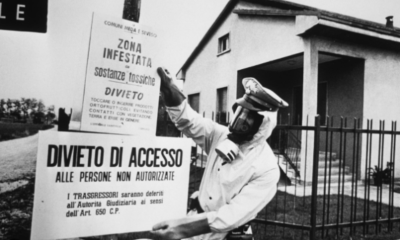
Seveso - 50 years on: EU strengthens its commitment to industrial safety in a changing landscape of risk
-
 Employment5 days ago
Why young jobseekers struggle to find roles abroad that fit their expertise
-
 European Commission5 days ago
Commission opens formal investigation into possible gun jumping in XXXLutz's acquisition of Porta