Climate change
Britain outlines plans for 2025 #coal-power phase out


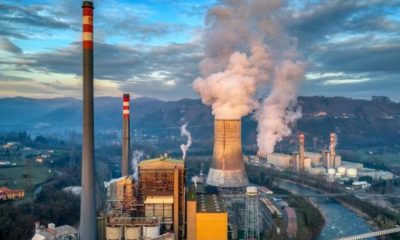
Britain will set an emission limit on coal-fired power generators from 1 October, 2025, forcing them to close unless they are fitted with carbon capture technology, the government said on Friday (5 January).
As part of its efforts to meet the country’s climate targets, Britain in 2015 announced it would end “unabated” coal-fired power generation - plants without technology to capture and store carbon emissions - by 2025.
The Department for Business, Energy and Industrial Strategy (BEIS) fleshed out the plan on Friday, saying it would set an emission limit of up to 450 grammes of CO2 for each kilowatt hour of electricity produced to make sure polluting plants close.
Since Britain introduced a tax on CO2 emissions from power plants in 2013, coal power generation has plummeted, with the country last year seeing its first day of coal-free power generation since the industrial revolution in the 19th century.
Around 6 gigawatts (GW) of coal-fired power capacity is currently in use, capable of powering around 6 million homes, but BEIS said that by the 2025 date it expects this to fall to just 1.5 GW and that other forms of generation will make up the shortfall.
With many of the country’s nuclear power plants also set for closure in the late 2020s, and few new plants being built, the government in 2017 first started payments under a capacity market, which pays plants to make available back-up electricity at short notice.
“Our assessment is that the Capacity Market will ensure that there is sufficient capacity in place to replace unabated coal units when they close,” BEIS said.
Britain has a legally binding target to cut carbon dioxide emissions by 2050 to 80% below 1990 levels as part of a drive to counter global warming.
Share this article:
EU Reporter publishes articles from a variety of outside sources which express a wide range of viewpoints. The positions taken in these articles are not necessarily those of EU Reporter. Please see EU Reporter’s full Terms and Conditions of publication for more information EU Reporter embraces artificial intelligence as a tool to enhance journalistic quality, efficiency, and accessibility, while maintaining strict human editorial oversight, ethical standards, and transparency in all AI-assisted content. Please see EU Reporter’s full A.I. Policy for more information.






Kazakhstan seeks regional AI leadership as economic partnership with China enters new phase

Setting a new benchmark in premium travel

Survey on an EU Blueprint for intellectual property licensing and spinoff creation

Burnham as PM? 'Wait and see'

Statement by the Ministry of Foreign Affairs of the Republic of Kazakhstan

Rule of law report strengthens EU democracy and fundamental rights

Kazakhstan and Belgium: Building a Partnership for the Future

Kazakhstan: Central Election Committee reviews the results of the nomination of candidates for the deputies of Kurultai

The EU’s Forced-Labour Regulation Faces a Credibility Test

European Statistical Monitor: July edition

Commission publishes state aid guidance on carbon contracts for difference

Commission greenlights Estonia's fourth payment request for €135.5 million under NextGenerationEU

Drones, dominance, and the Iranian impasse: The West's strategic blind spot

Kazakhstan's fixed capital investment tops 9.5 trillion tenge in H1 2026

Commission registers two European Citizens' Initiatives on education and housing
Kazakhstan and Belgium: Building a Partnership for the Future

Kazakhstan reforms under scrutiny at Brussels Press Club round table

Japan should face up to history and contribute more to regional peace

Ambassador calls for 'speeding up' of co-operation between EU and Kazakhstan

Timur Turlov at Smart Moves Summit 2025: How chess can transform global education

Shevtsova’s case: Out-of-court sanctions dismantling trust in Ukrainian cause

The future of European transport

Trump Vs Trueman

US 'no longer' an 'unconditional ally' for Europe - MEP
-
 China4 days ago
Kazakhstan seeks regional AI leadership as economic partnership with China enters new phase
-
 Aviation/airlines2 days ago
Setting a new benchmark in premium travel
-
 Intellectual Property Rights2 days ago
Survey on an EU Blueprint for intellectual property licensing and spinoff creation
-
 Labour2 days ago
Burnham as PM? 'Wait and see'