Brexit
Brexit: What’s the deal?


Nobody wants the UK to leave the EU, not even most people in the UK and the current UK government. So can a deal be done? When EU Reporter spoke with senior EU diplomatic sources about today's (17 December) Brexit discussions, we were told that a lot of progress had been made on the technical side. The European Commission now has a dedicated team led by one of the EU’s most senior and distinguished officials, Jonathan Faull. The main stumbling block will be the issue of migration within the EU.
The other issues all appear solvable.
The UK wants to increase European competitiveness and ability to create growth and jobs – this isn’t an objective any EU leader is going to argue about, as the EU has already proposed a text on better law making. Yesterday (16 December), the Commission put forward a text for an inter-institutional agreement on better regulation. This is about designing EU policies and laws so that they achieve their objectives at minimum cost. It aims to ensure that policy is prepared, implemented and reviewed in an open, transparent manner, informed by the best available evidence and backed up by involving stakeholders. The EU says that it wants to reduce the flow of new regulations and set a target for reducing the burden of existing regulations. This could go far in addressing the UK’s concerns and could be presented – at least by David Cameron – as a UK victory.
On sovereignty the UK wants a formal, legally binding agreement to make sure that the treaty reference to ‘ever closer union’ no longer applies to the United Kingdom. Everyone has made clear that treaty change, which is recognized by all as long overdue, is needed, however there will be no treaty negotiations until French and German elections have taken place.
The UK also wants to protect the rights of non-eurozone members, ensuring that they do not face discrimination, that their taxpayers are not financially liable for the eurozone and that any participation in banking union is voluntary. This is an area where the UK could garner wider support from other non-eurozone countries. The new Polish government is at the very least reticent on joining the euro and other non-eurozone countries like Sweden and Denmark are also likely to be supportive.
The most contentious issue remains migration within the EU. The UK is likely to special plead that because the UK’s welfare system has developed in a very different way from the rest of the EU, it requires a special dispensation for EU citizens coming to Britain. The UK has called for residents to contribute for four years before they qualify for in-work benefits and for an end to the practice of sending child benefit overseas. The second requirement is less contentious, but the first is still proving difficult to win over allies. Is compromise possible? Yes, the special pleading may be – a little like the British rebate – an awkward and rather messy compromise, but it may open the way to a deal. Given that recent polling suggests a 'Yes' vote in the referendum may be won by a narrow majority, others may fear that a UK exit might have a domino effect.
So what will we learn today? Very little – David Cameron is not going to say we’re nearly there, he will say that it is going to be a very tough battle because he is demanding so much and that compromise is a long way off. He will welcome the EU’s recognition for the need for better (namely less) regulation and say that he has allies on defending the rights of those outside the eurozone. Other than that, we will be told that he has a tremendous battle on his hands and a fight to the finish. He may well do!
Share this article:
EU Reporter publishes articles from a variety of outside sources which express a wide range of viewpoints. The positions taken in these articles are not necessarily those of EU Reporter. Please see EU Reporter’s full Terms and Conditions of publication for more information EU Reporter embraces artificial intelligence as a tool to enhance journalistic quality, efficiency, and accessibility, while maintaining strict human editorial oversight, ethical standards, and transparency in all AI-assisted content. Please see EU Reporter’s full A.I. Policy for more information.



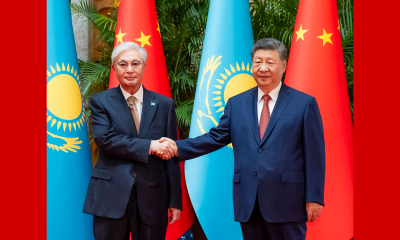
Kazakhstan seeks regional AI leadership as economic partnership with China enters new phase

Setting a new benchmark in premium travel

Survey on an EU Blueprint for intellectual property licensing and spinoff creation

Statement by the Ministry of Foreign Affairs of the Republic of Kazakhstan

Rule of law report strengthens EU democracy and fundamental rights

Burnham as PM? 'Wait and see'

Kazakhstan and Belgium: Building a Partnership for the Future

Kazakhstan: Central Election Committee reviews the results of the nomination of candidates for the deputies of Kurultai

Commission fines AliExpress €550 million for breaching the Digital Services Act

Astana Hub unveils infrastructure to support AI innovation in health care

The security environment of the South Caucasus amid changing geopolitical realities

Why the US is losing its legitimacy as a global superpower and the trust of the comity of nations

Commission launches EU-Ukraine Drone Alliance to boost drone and counter-drone technology

EU and Portugal team up to keep brightest tech talents at home

2026 Rule of Law Report strengthens Europe's prosperity, security and democratic resilience

Commission outlines measures to strengthen Europe's banking sector and support growth

Kazakhstan reforms under scrutiny at Brussels Press Club round table

Japan should face up to history and contribute more to regional peace

Ambassador calls for 'speeding up' of co-operation between EU and Kazakhstan

Timur Turlov at Smart Moves Summit 2025: How chess can transform global education

Shevtsova’s case: Out-of-court sanctions dismantling trust in Ukrainian cause

The future of European transport

Trump Vs Trueman

US 'no longer' an 'unconditional ally' for Europe - MEP
-
 China5 days ago
Kazakhstan seeks regional AI leadership as economic partnership with China enters new phase
-
 Aviation/airlines3 days ago
Setting a new benchmark in premium travel
-
 Intellectual Property Rights3 days ago
Survey on an EU Blueprint for intellectual property licensing and spinoff creation
-
 Kazakhstan4 days ago
Statement by the Ministry of Foreign Affairs of the Republic of Kazakhstan