Uzbekistan
Uzbek model of poverty reduction

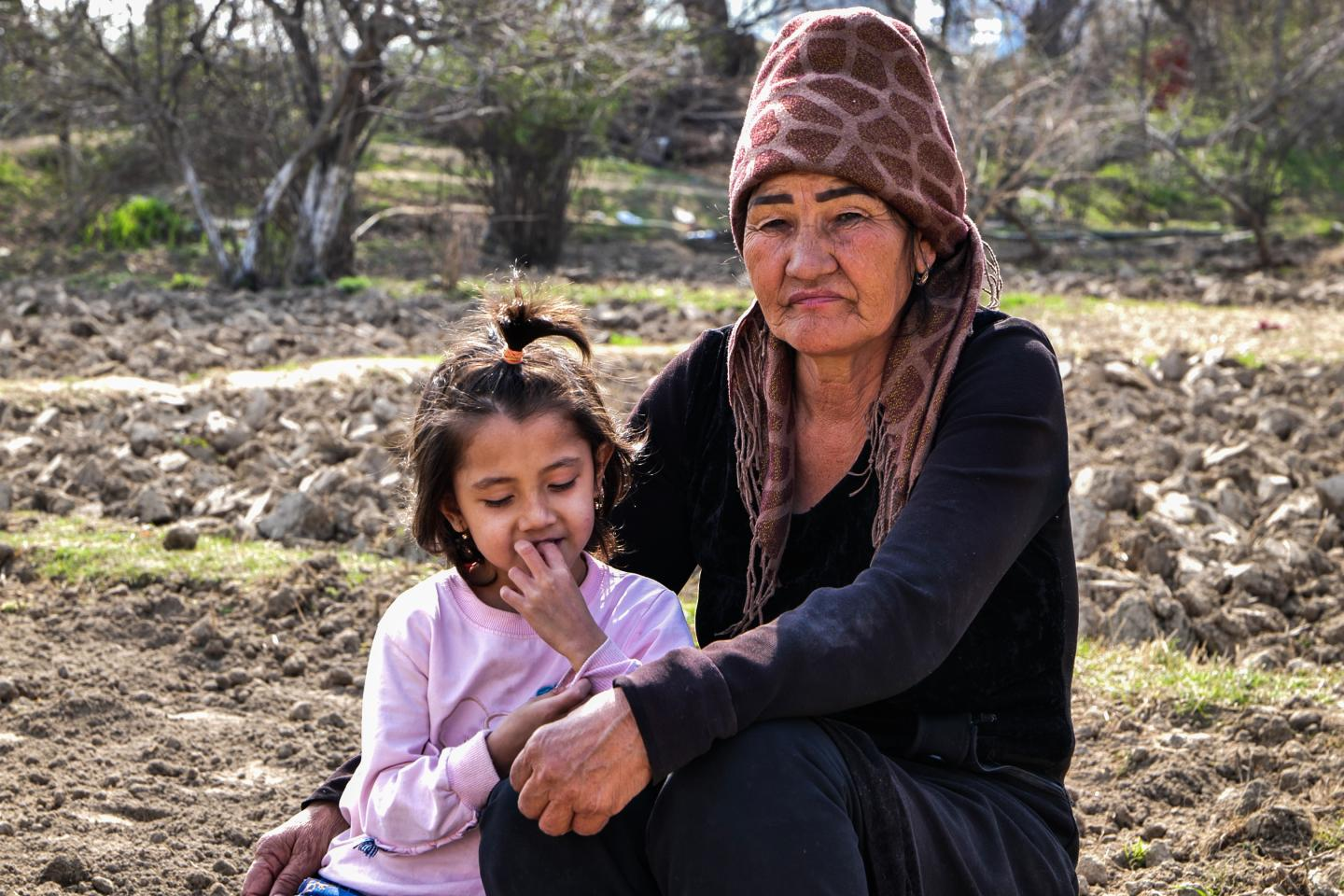
How Uzbekistan uses the accumulated experience in poverty reduction and social protection.
According to the latest World Bank report “Poverty and Shared Prosperity 2020” – about 3.3 billion people in the world still live on $5.5 a day, and about 1.8 billion people – for $3.2 per day (in monetary terms at purchasing power parity). The coronavirus pandemic has further affected the already slow pace of reducing the global poverty level, which has risen to the 2017 figure of 9.2% (against the forecast for 2021 of 7.9%). - writes Edvard Romanov, CERR
At the same time, Uzbekistan has done a lot of work in recent years to reduce poverty and strengthen social protection of vulnerable segments of the population, and the “Development Strategy of the New Uzbekistan for 2022-2026” sets a goal to halve the poverty level. To achieve this and other goals of the Strategy, the country is undergoing deep structural reforms to strengthen and further liberalize the economy.

Poverty in the spectrum of definitions
Poverty, in a broad sense, is the economic situation of people in which they cannot satisfy a certain range of their minimum needs necessary for life, preservation of working capacity and procreation. As a rule, poverty restricts access of a significant part of the country's population to high-paying jobs, quality education and health services, opportunities for successful socialization of children and youth, etc. Due to the fact that this phenomenon depends on the general standard of living in a particular society, it is considered that it belongs to relative concepts. Nevertheless, poverty remains the main global problem and affects most countries of the world.
Among specialists, different groups and definitions of poverty are distinguished. Some experts divide poverty into three categories: 1) poverty (when people do not have the means to a physiological minimum of life and are on the verge of constant malnutrition, or are beyond this limit); 2) need or average poverty (covers those groups of the population who have enough funds for the simplest physiological needs, but not enough to meet basic social needs, while their income less than the official subsistence minimum, but more than half or two thirds of it); 3) lack of security or insufficient security or moderate poverty (when the subsistence minimum is provided, but there is no prosperity).
Experts agree on the definitions of the negative consequences of poverty for the socio-economic development of any society and state, namely: economic growth is restrained, social tensions in society are increasing, crime rates are rising, migration processes are intensifying and the lifestyle and habits of the population are deteriorating. In addition, in the context of poverty, such a phenomenon as “self–reproducing poverty” has taken root – this is when children from poor families, often deprived of the opportunity to receive education and work qualifications, continue the vicious circle of poverty in the family from generation to generation.

International organizations on poverty
The desire to solve the problem of poverty by any means is a natural priority for any modern civilized state and for the entire world community.
When developing their programs and projects, the World Bank, UNDP, FAO, UNICEF and other international organizations give priority to the problem of poverty reduction. According to the World Bank, in conditions of extreme poverty (when income is below $1.9 per day) there are 736 million people or about 10% of the world's population. Due to the consequences of the coronavirus pandemic, local conflicts and climate change, it is predicted that an additional 88 to 115 million people will be in extreme poverty.
According to the recommendations of the World Bank, a successful fight against poverty requires a combination of overall economic growth in the country, creating additional demand for labor, thoughtful investments in human capital and social protection of the poor and vulnerable segments of the population.

Forming of the Uzbek model
As known, any model is based on the collection and study of information on the topic under study. For example, the 2019 Nobel Laureates in economics A.Banerjee and E.Duflo, using the example of research, showed the effectiveness of the experimental approach methodology in solving issues related to poverty reduction, in which it was proposed to assess the poverty of a single family based on a combination of a large number of factors, from the perspective of the living conditions in a particular locality. According to this methodology, approaches to the development of poverty reduction measures and the measures themselves should be developed based on specific conditions on the ground, and their effectiveness should be proved by practical application and the results obtained through field research.
At present, the most remarkable and indicative in the field of combating poverty is the experience of China, which has managed to remove almost 100 million rural residents from the poor over the past 8 years and more than 850 million people over the past 40 years. Having studied the experience of the “Chinese model”, as well as summarizing the huge array of information obtained through virtual reception rooms organized by the Head of State, large-scale systematic work was started in Uzbekistan to strengthen social reforms and form its own "Uzbek model" to combat poverty.
During the video-conferences over the past two years, including the first quarter of this year, held under the chairmanship of the President, clear and cardinal instructions were given to accelerate the reform of important areas of the economy and public life, including those related to strengthening the fight against poverty and organizing social protection for vulnerable segments of the population. Responsible departments were also established and special positions were created in the system of state power, in particular, the Ministry of Economic Development and Poverty Reduction was created, the post of Deputy Prime Minister for Financial and Economic Issues and Poverty Reduction was introduced as well as the positions of assistants to the khokims and the “makhallabay” system was introduced.
“Iron Books” and “Monomarkazes”
On January 17, 2019, the Presidential Decree “On measures to further improve the system of working with the problems of the population” was issued. On the basis of door-to-door visits, a database has been formed, which is popularly called the “Iron Book”, to provide vulnerable segments of the population with social, economic, legal and psychological support. Also, by analogy, “Women” and “Youth” notebooks were formed at that time. When forming lists, special attention is paid to social, legal and psychological support as well as to people who have a need and desire to acquire knowledge and a profession.
Unemployed people usually have difficulties in finding the money they need to get a profession and master qualifications. That is why the state allocates funds for the creation of thousands of non-governmental educational centers throughout the republic, teaching professions and crafts in demand on the labor market, which have been called “Monomarkaz: ishga marhamat”. In addition, in 2021, the National Bank received $100 million from the Reconstruction and Development Fund, which will be used to lend projects to young businessmen in 2022-2024. Free training and practical courses on the formation of business skills and entrepreneurship training among young people are organized, including in an online format. Young people who have successfully completed these courses will be given certificates and preferential loans.
It should be noted that since April 1, 2021, a new mechanism for accounting for the poor has been introduced by entering them into the information system “Unified Register of Social Protection”, which allows low-income families to receive the social assistance they are entitled to by law automatically without additional provision of the necessary documents.
Assistants to the khokims – part of the system
On December 3, 2021, a decree “On priority directions of state policy for the development of entrepreneurship, employment and poverty reduction in the makhalla” and a Presidential Decree “On measures to organize the activities of assistants to the khokims on entrepreneurship development, employment and poverty reduction in the makhalla” were issued.
By Decree, from January 1, 2022, the position of assistant to the khokim of the district (city) was introduced for the development of entrepreneurship, employment and poverty reduction in each village as well as in each makhalla. They should assess the level of employment, sources of income and needs of the population, look for opportunities for the development of entrepreneurship in makhallas, assist the population in finding employment and training professions, etc.
To coordinate the activities of the new institutions with government structures, a Republican Commission has been established to organize the activities of the assistants to the khokims. The Makhallabay Agency for Work and Entrepreneurship Development and its structures have been identified as the working bodies of the Republican Commission and republican representatives. Responsible employees of ministries, departments and commercial banks, who are republican representatives, are assigned to each district and city. Thus, not just a new position of the assistants to the khokims for work in makhallas was introduced, but an integral system of a new mechanism for combating poverty and economic development of regions and rural areas was formed.
Tasks to be solved
It should be noted that from the moment when the course was taken to reduce poverty, the costs of social protection of people in Uzbekistan are increasing from year to year. If in 2018 they amounted to 35 trillion sums, then in 2019 – 61.3 trillion sums, in 2020 – 74.2 trillion sums, in 2021 – 85.3 trillion sums, and expenditures of 105.5 trillion sums are planned for 2022. In particular, in 2022, the expenditures of the education sector will amount to 46.9 trillion sums, healthcare – 22.8 trillion sums, culture and sports – 3.4 trillion sums and the costs of measures for the further development of science – 1.5 trillion sums.
The President was instructed to develop a poverty reduction program, which should include raising salaries and benefits ahead of inflation and stimulating entrepreneurship. Currently, a National Strategy for Social Protection of the Population until 2030 is being developed jointly with the UN, ILO, UNICEF and the World Bank, and an active work is continuing to develop a methodology for defining the concept of poverty, criteria and methods for its assessment.
At the beginning of January this year, according to the results of a survey conducted by the State Statistics Committee and the World Bank among 10 thousand households in all regions of Uzbekistan, new data on minimum consumer spending of the population were collected. Based on the data obtained as a result of this survey, the “minimum consumer expenses” for the necessary daily consumption of food (2,200 kcal), as well as the purchase of non-food goods and services amounted to 498 thousand sums per person per month (an increase of 13.2% compared to 2021).
The “Development Strategy of the New Uzbekistan for 2022-2026”, which replaced the successfully implemented “Strategy of Action on Five Priority Directions of Development of the Republic of Uzbekistan in 2017-2021”, sets a goal to reduce the number of poor in the country by half by 2026. To achieve this goal, the Strategy provides for reforms in education, healthcare and pensions, measures to further strengthen the social protection of vulnerable segments of the population; the introduction of the category of "minimum consumer spending"; the opening of specialized “monomarkazes” in each region for preferential training in working professions; increasing the level of benefits and pensions, benefits and other assistance; for the period 2022-2023, in total, it is planned to implement about 15 programs to combat poverty.
Based on the available array of collected data on various programs and methods used in the world to reduce poverty and the results of studying the experience of foreign countries in this area, it becomes obvious that the measures implemented and launched programs to reduce poverty in Uzbekistan are carried out ahead of the recommendations received from international partners.
Edvard Romanov, CERR
Share this article:

EU Reporter publishes articles from a variety of outside sources which express a wide range of viewpoints. The positions taken in these articles are not necessarily those of EU Reporter. Please see EU Reporter’s full Terms and Conditions of publication for more information EU Reporter embraces artificial intelligence as a tool to enhance journalistic quality, efficiency, and accessibility, while maintaining strict human editorial oversight, ethical standards, and transparency in all AI-assisted content. Please see EU Reporter’s full A.I. Policy for more information.




Kazakhstan seeks regional AI leadership as economic partnership with China enters new phase

Setting a new benchmark in premium travel

Survey on an EU Blueprint for intellectual property licensing and spinoff creation

Statement by the Ministry of Foreign Affairs of the Republic of Kazakhstan

Rule of law report strengthens EU democracy and fundamental rights

Burnham as PM? 'Wait and see'

Kazakhstan and Belgium: Building a Partnership for the Future

Kazakhstan: Central Election Committee reviews the results of the nomination of candidates for the deputies of Kurultai

Commission fines AliExpress €550 million for breaching the Digital Services Act

Astana Hub unveils infrastructure to support AI innovation in health care

The security environment of the South Caucasus amid changing geopolitical realities

Why the US is losing its legitimacy as a global superpower and the trust of the comity of nations

Commission launches EU-Ukraine Drone Alliance to boost drone and counter-drone technology

EU and Portugal team up to keep brightest tech talents at home

2026 Rule of Law Report strengthens Europe's prosperity, security and democratic resilience

Commission outlines measures to strengthen Europe's banking sector and support growth

Kazakhstan reforms under scrutiny at Brussels Press Club round table

Japan should face up to history and contribute more to regional peace

Ambassador calls for 'speeding up' of co-operation between EU and Kazakhstan

Timur Turlov at Smart Moves Summit 2025: How chess can transform global education

Shevtsova’s case: Out-of-court sanctions dismantling trust in Ukrainian cause

The future of European transport

Trump Vs Trueman

US 'no longer' an 'unconditional ally' for Europe - MEP
-
 China5 days ago
Kazakhstan seeks regional AI leadership as economic partnership with China enters new phase
-
 Aviation/airlines3 days ago
Setting a new benchmark in premium travel
-
 Intellectual Property Rights3 days ago
Survey on an EU Blueprint for intellectual property licensing and spinoff creation
-
 Kazakhstan4 days ago
Statement by the Ministry of Foreign Affairs of the Republic of Kazakhstan