Austria
#EUETS: European Court of Justice ruling gives Commission ten months to review ETS figures


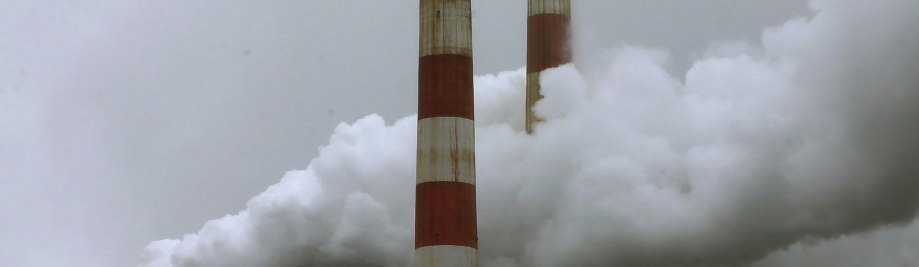 The European Court of Justice ruled today (28 April) on a number of cases brought by undertakings in Italy, the Netherlands and Austria on the emission allocations granted to them by national authorities. The court found that errors in the data received my the Commission means that the amounts will have to be corrected.
The court found that the data collected from EU countries was not always correct – due to misunderstandings in different language versions of the Emissions Trading Scheme (ETS) Directive. This meant that the Commission was not able to accurately determine the maximum annual amount of allowances. The Court has found that the maximum annual amount of allowances could be higher or lower than that thus far determined by the Commission.
In order to avoid serious repercussions on a high number of legal relations entered into in good faith, the Court’s decision will not affect definitive allocations which have already taken place.
Given the legal vacuum created by this decision the ECJ has declared that its judgment will not produce effects until ten months’ time. This will enable the Commission to adopt the necessary measures to rectify this situation.
Conservative MEP Ian Duncan is calling on the European Commission to respond urgently to a legal ruling that places a question mark over its flagship emissions trading scheme. Duncan is drawing up the European Parliament’s report on so-called ‘Phase IV reform’, this concerns the EU emissions trading system for the period after 2020. Duncan said: "We suddenly find ourselves in legal limbo at a time of critical importance to the Phase IV reform. The Commission needs to clarify the situation as quickly as possible.
"This ruling is significant because it will affect how many allowances are to be offered free during Phase IV. According to early analysis, the share could have to move from 57% to 58%."
WWF welcomed today’s decision - they said that the Court had found that too many pollution permits had been received by energy-intensive industries. WWF wants to see a phasing-out of pollution permits.
The Commission is looking into the implications of the judgement:
Share this article:
EU Reporter publishes articles from a variety of outside sources which express a wide range of viewpoints. The positions taken in these articles are not necessarily those of EU Reporter. Please see EU Reporter’s full Terms and Conditions of publication for more information EU Reporter embraces artificial intelligence as a tool to enhance journalistic quality, efficiency, and accessibility, while maintaining strict human editorial oversight, ethical standards, and transparency in all AI-assisted content. Please see EU Reporter’s full A.I. Policy for more information.



ECR MEPs question the European Commission on cardiovascular health and diet promoting the Mediterranean diet as an alternative to ultra-processed foods as key to tackling obesity

Albania's Vlora airport standoff tests investor confidence as EU accession clock ticks

Iran’s regime in crisis: Negotiations, internal divisions and growing resistance

Why a Brussels–Nicosia–Eastern Mediterranean strategic affairs platform would benefit the European Union

Commission approves €659 million German state aid for four new semiconductor facilities

Kazakhstan seeks regional AI leadership as economic partnership with China enters new phase

EU law on nitrates pollution remains effective, with scope for smarter implementation

Starmer’s problem? 'He is not a politician'

The EU’s Forced-Labour Regulation Faces a Credibility Test

European Statistical Monitor: July edition

Commission publishes state aid guidance on carbon contracts for difference

Commission greenlights Estonia's fourth payment request for €135.5 million under NextGenerationEU

Drones, dominance, and the Iranian impasse: The West's strategic blind spot

Kazakhstan's fixed capital investment tops 9.5 trillion tenge in H1 2026

Commission registers two European Citizens' Initiatives on education and housing

Kazakhstan and Belgium: Building a Partnership for the Future

Kazakhstan reforms under scrutiny at Brussels Press Club round table

Japan should face up to history and contribute more to regional peace

Ambassador calls for 'speeding up' of co-operation between EU and Kazakhstan

Timur Turlov at Smart Moves Summit 2025: How chess can transform global education

Shevtsova’s case: Out-of-court sanctions dismantling trust in Ukrainian cause

The future of European transport

Trump Vs Trueman

US 'no longer' an 'unconditional ally' for Europe - MEP
-
 Italy5 days ago
ECR MEPs question the European Commission on cardiovascular health and diet promoting the Mediterranean diet as an alternative to ultra-processed foods as key to tackling obesity
-
 Albania5 days ago
Albania's Vlora airport standoff tests investor confidence as EU accession clock ticks
-
 Iran5 days ago
Iran’s regime in crisis: Negotiations, internal divisions and growing resistance
-
 Euro-Mediterranean relations4 days ago
Why a Brussels–Nicosia–Eastern Mediterranean strategic affairs platform would benefit the European Union