Iran
Iran’s regime in crisis: Negotiations, internal divisions and growing resistance


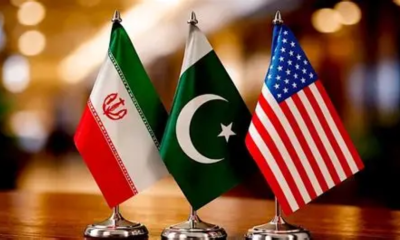
Iran has returned to confrontation with the United States weeks after the Islamabad Memorandum of Understanding sought to halt the war and reopen the Strait of Hormuz. The immediate dispute concerns security and retaliation; the deeper issue is the clerical regime’s survival. Concessions to Washington would weaken policies inseparable from its internal power, writes Firouz Mahvi.
Negotiations and the regime’s survival dilemma
The fourteen-point MOU declared an end to hostilities and envisaged reopening Hormuz, while postponing fundamental disputes. Its ambiguities soon became apparent. Iranian forces resumed attacks on vessels and neighbouring Arab states hosting US forces. Washington answered with strikes, sanctions and a blockade. By 13 July, it considered the ceasefire broken; Tehran accused Washington of violating it.
This conduct reflects regime survival, not strategic confidence. The regime depends on three pillars: repression at home, regional armed networks, and deterrence through missiles, nuclear capability and control of escalation. Concessions could loosen its grip, embolden domestic opponents and intensify factional conflict.
The MOU has not altered the regime’s strategic identity. A normal state would respect international law, abandon armed proxies abroad and accept other countries’ sovereign security choices. For Tehran, retreat would weaken the networks through which it projects power and protects itself. It therefore exploits the MOU’s ambiguities, uses Hormuz as leverage and combines negotiations with military pressure.
A weaker centre of power
The dilemma has deepened since Ali Khamenei’s death and the installation of his son Mojtaba as supreme leader. Mojtaba has neither appeared publicly nor been heard; statements continue to be issued in his name. Injury may explain his concealment, but not the institutional crisis. A system built around one jurist’s authority is now headed by a leader with limited religious standing and heavy dependence on the Islamic Revolutionary Guard Corps.
His post-funeral message promised revenge rather than reconciliation. Hard-line parliamentarians, state broadcasters and IRGC-linked figures have attacked the negotiating team and demanded control over Hormuz. President Masoud Pezeshkian and other negotiators have been denounced as normalisers and traitors. Mojtaba authorised the MOU but distanced himself from it, placing responsibility for failure on the president.
He lacks his father’s authority and appears unable to silence competing factions. Political power is fragmented, the IRGC is increasingly decisive, and some regime-linked commentary has raised the possibility of a coup. Negotiations are stalled by both Washington and a leadership unable to impose a coherent decision.
The regime’s orchestrated rallies reveal its hierarchy of threats. “Death to America” is accompanied by “Death to the Hypocrites”, its designation for the People’s Mojahedin Organisation of Iran (PMOI). America is presented as the external enemy; the PMOI as the organised internal threat capable of converting public anger into a nationwide movement for regime change.
The unfinished January uprising
Iran is substantially weaker than a year ago. The grievances behind the protests beginning in late December 2025 remain unresolved. The rial had fallen to approximately 1.4 million to the dollar, inflation exceeded 42 per cent, and electricity, fuel and water shortages disrupted daily life. War damage, disrupted trade and tighter sanctions have added pressure.
The January massacre remains central to Iran’s political future. The communications blackout prevents a definitive death toll, but hospital-based evidence indicates that thousands were killed, with the heaviest bloodshed on 8 and 9 January. The UN Human Rights Council condemned the repression and extended its investigation to preserve evidence.
Thousands of families still mourn their children and relatives. Mourning ceremonies have become occasions for defiance, while executions and arrests deepen demands for accountability and regime change. By late April, the UN had documented more than 4,000 national-security arrests since the war began and at least twenty-one executions.
The young generation that led the uprising has not reconciled itself to the regime. Many are preparing for another nationwide confrontation and joining clandestine PMOI Resistance Units, which provide organisation under severe repression. Arrests, executions and repeated attacks on the PMOI show the importance the regime attaches to preventing their expansion. This defiance was visible on 9 July, when clandestine broadcasts in Mashhad’s Reza Bazaar and 15 Khordad Square carried “Damnation to Khamenei, Hail to Rajavi” during the regime’s ceremonies for Ali Khamenei, despite security efforts to stop them.
The limits of external solutions
External military action can damage the regime, but cannot produce a democratic transition. Agreements that ignore repression cannot alter its survival logic. Policy must support change from within: pressing for an end to executions, preserving evidence of crimes, restoring communications and recognising the Iranian people’s right to replace dictatorship through their organised movement.
The European Union designated the IRGC as a terrorist organisation on 29 January 2026. On 13 July, the United Kingdom announced its own designation under new national-security powers. These measures shift policy from condemnation towards action against the regime’s principal instrument of repression and regional intervention.
The National Council of Resistance of Iran, led by Maryam Rajavi, proposes free elections, secular republic, gender equality, abolition of the death penalty and a non-nuclear Iran, with a constituent assembly elected within six months of the regime’s overthrow.
These principles are consistent with Europe’s own commitments to democratic government, gender equality, human rights and the abolition of the death penalty.
Iran’s impasse should not be mistaken for stability. Every option threatens the foundations of power. Neither diplomatic accommodation nor foreign war resolves that contradiction. The decisive force is Iranian society and its capacity to transform accumulated anger into organised democratic change.
Share this article:

EU Reporter publishes articles from a variety of outside sources which express a wide range of viewpoints. The positions taken in these articles are not necessarily those of EU Reporter. Please see EU Reporter’s full Terms and Conditions of publication for more information EU Reporter embraces artificial intelligence as a tool to enhance journalistic quality, efficiency, and accessibility, while maintaining strict human editorial oversight, ethical standards, and transparency in all AI-assisted content. Please see EU Reporter’s full A.I. Policy for more information.





European operation dismantles €10 million illicit cigarette network in Spain

Energy Union Task Force takes stock of oil and gas security of supply in the EU

AIFC to host Astana Finance Days 2026 in September

Srebrenica's lesson is prevention. Why isn't the world applying It to Kashmir?

ALROSA Re-elects Supervisory Board with Minimal Changes

EU clarifies rules to allow continued waste recovery shipments to Switzerland

EU launches a Team Gaza Initiative to support early recovery in Gaza with an initial amount of nearly €900 million

Joint statement by High Representative/Vice-President Kallas and Commissioner Kos on the 31st anniversary of the Srebrenica genocide

Starmer’s problem? 'He is not a politician'

Why a Brussels–Nicosia–Eastern Mediterranean strategic affairs platform would benefit the European Union

Albania's Vlora airport standoff tests investor confidence as EU accession clock ticks

ECR MEPs question the European Commission on cardiovascular health and diet promoting the Mediterranean diet as an alternative to ultra-processed foods as key to tackling obesity

Kazakhstan's fixed capital investment tops 9.5 trillion tenge in H1 2026

Commission adopts simpler rules for EU agri-food promotion policy

Commission approves €659 million German state aid for four new semiconductor facilities

EU law on nitrates pollution remains effective, with scope for smarter implementation

Kazakhstan reforms under scrutiny at Brussels Press Club round table

Japan should face up to history and contribute more to regional peace

Ambassador calls for 'speeding up' of co-operation between EU and Kazakhstan

Timur Turlov at Smart Moves Summit 2025: How chess can transform global education

Shevtsova’s case: Out-of-court sanctions dismantling trust in Ukrainian cause

The future of European transport

Trump Vs Trueman

US 'no longer' an 'unconditional ally' for Europe - MEP
-
 Cigarettes5 days ago
European operation dismantles €10 million illicit cigarette network in Spain
-
 Energy market4 days ago
Energy Union Task Force takes stock of oil and gas security of supply in the EU
-
 Kazakhstan4 days ago
AIFC to host Astana Finance Days 2026 in September
-
 Kashmir5 days ago
Srebrenica's lesson is prevention. Why isn't the world applying It to Kashmir?