Albania
Albania's Vlora airport standoff tests investor confidence as EU accession clock ticks

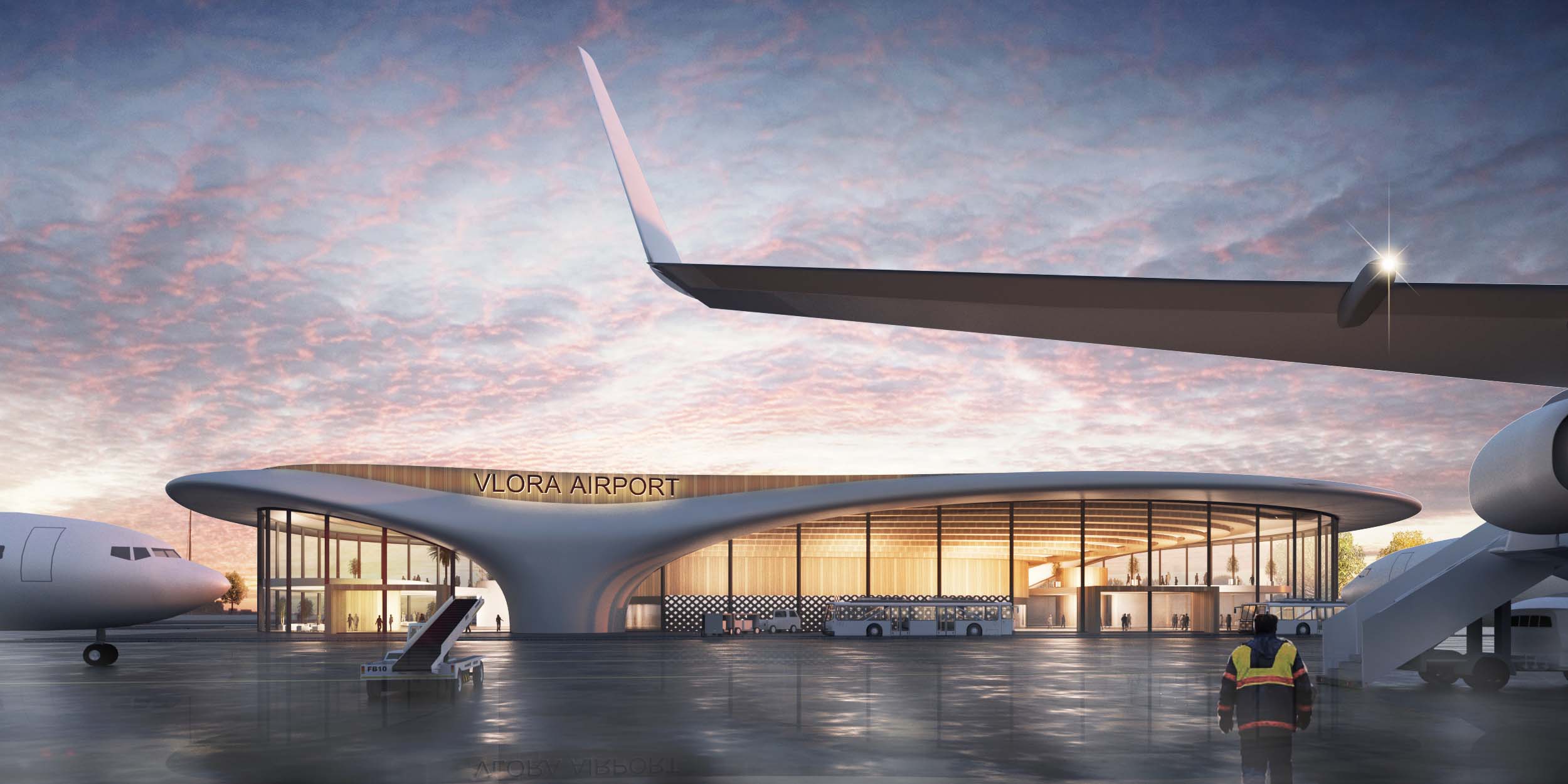
A dispute over one of Albania's flagship infrastructure projects is emerging as a fresh test of the country's institutional credibility, just as Tirana pushes to accelerate its path toward EU membership by 2030.
At issue is Vlora International Airport, a concession project that Prime Minister Edi Rama's government has repeatedly held up as central to Albania's economic development and European ambitions. The airport was meant to open new international access to Albania's Adriatic coast. Instead, it stands unfinished, its completion deadline of February 2026 long passed, while its two shareholders fight for control through a domestic court system that one of them now says has been used against it.
A 98% investor pushed out by a 2% partner
The concessionaire vehicle, Vlora International Airport Sh.P.K ("VIA"), is majority owned by Swiss company Mabco Constructions SA, which holds a 98% stake and has served as VIA's principal financial backer and general contractor. The remaining 2% belongs to 2A Group Sh.p.k, a local contractor originally engaged for runway works rather than as a strategic investor.
According to Mabco, that imbalance has been inverted through the Albanian courts. In August 2025, Mabco discovered that 2A was asserting a claim to 47% of VIA's quota interests, based on a purported share transfer agreement that Mabco says is invalid and was never authorised. Both the Ministry of Infrastructure and Energy and Albania's national business registry have since confirmed that no such transfer was ever requested or approved — a step required under the concession agreement for any transfer to take legal effect.
Despite that, Albanian courts granted a series of interim measures, often without the company being heard, suspending its voting rights in VIA. Mabco says that each time it has won an appeal against those measures, a fresh interim order has followed from a first-instance court, reinstating the restrictions it had just overturned. On 26 May 2026, Mabco prevailed at the Supreme Court, only for 2A to secure new interim measures from a lower court within days, again blocking Mabco from regaining operational control.
The practical result is that a minority shareholder holding 2% of the company has displaced a 98% investor from control of its own project, using the court system as the mechanism.
Governance frozen, project stalled
The consequences on the ground have been tangible. Mabco has been excluded from VIA's governance, denied access to the site, and had representatives removed in the presence of Ministry officials. DAA International, brought in to handle certification and operational readiness, was reportedly barred from the site, and firefighting equipment needed for certification sat uncleared in customs for months.
Mabco has repeatedly called for an independent, internationally recognised audit to establish the financial and contractual facts of the dispute, a step that would be standard practice in a disagreement of this scale over a strategically significant concession. Those calls have gone unanswered, and that the Ministry of Infrastructure and Energy, as the state's partner in the concession, has not meaningfully engaged on resolving the impasse over the better part of a year.
Mabco has now filed a formal notice of dispute against the Albanian state under the Switzerland-Albania bilateral investment treaty. Consultations have taken place, but Albania has so far characterised the matter as a private shareholder dispute rather than one requiring state-level engagement.
Part of a pattern?
The airport dispute is landing against a backdrop that will be familiar to Albania-watchers in Brussels. Italian investor Francesco Becchetti's media and energy investments in Albania became entangled in criminal investigations, asset seizures and licence revocations after a falling-out with the Rama government; Becchetti later won an ICSID arbitration award against Albania of more than €100 million for breaches of investment treaty obligations. Czech utility CEZ, meanwhile, had its electricity distribution licence revoked in 2013 following a regulatory dispute, triggering international arbitration that was eventually settled — but not before damaging Albania's standing with infrastructure investors.
Questions have also been raised about 2A Group's own record. The company was founded by Valon Ademi, a former Albanian Honorary Consul in Kosovo, who is also legal representative of Alko-Impex, a Kosovan construction firm majority-owned by his father. Alko-Impex's Albanian subsidiary has won 52 local government contracts worth some €25 million, and has faced public allegations of tender violations and document falsification — including in connection with a consortium contract for a Tirana ring road built at a cost of roughly €450 million.
That ring-road project has become entangled in one of Albania's highest-profile corruption cases. Anti-corruption body SPAK charged former Deputy Prime Minister Belinda Balluku in October 2025 with interfering in public procurement across seven road-construction cases; parliament has since blocked the lifting of her immunity, drawing criticism from EU officials. Alko-Impex administrator Arbër Abazi, reportedly linked to Balluku by family ties, had his home and office searched by SPAK and was questioned in April 2026.
Why it matters for Brussels
None of this proves that the Vlora Airport case is anything other than a commercial dispute between shareholders. But the pattern — a foreign majority investor sidelined through repeated interim court orders, an unresolved request for independent verification, and a state partner that has declined to engage — is precisely the kind of institutional unpredictability that EU officials have flagged as a concern in Albania's accession process.
With Tirana pressing for EU membership within the decade, episodes like this will be read closely in European capitals not just as a dispute over an airport, but as a live test of whether Albania's courts, regulators and ministries can be relied upon to treat foreign capital even-handedly once a project becomes contested. For now, the airport remains unfinished, and Mabco's investment remains, in practice, out of its hands.
Share this article:

EU Reporter publishes articles from a variety of outside sources which express a wide range of viewpoints. The positions taken in these articles are not necessarily those of EU Reporter. Please see EU Reporter’s full Terms and Conditions of publication for more information EU Reporter embraces artificial intelligence as a tool to enhance journalistic quality, efficiency, and accessibility, while maintaining strict human editorial oversight, ethical standards, and transparency in all AI-assisted content. Please see EU Reporter’s full A.I. Policy for more information.




European operation dismantles €10 million illicit cigarette network in Spain

Energy Union Task Force takes stock of oil and gas security of supply in the EU

Srebrenica's lesson is prevention. Why isn't the world applying It to Kashmir?

AIFC to host Astana Finance Days 2026 in September

ALROSA Re-elects Supervisory Board with Minimal Changes

Joint statement by High Representative/Vice-President Kallas and Commissioner Kos on the 31st anniversary of the Srebrenica genocide

EU clarifies rules to allow continued waste recovery shipments to Switzerland

EU launches a Team Gaza Initiative to support early recovery in Gaza with an initial amount of nearly €900 million

Starmer’s problem? 'He is not a politician'

Why a Brussels–Nicosia–Eastern Mediterranean strategic affairs platform would benefit the European Union

Albania's Vlora airport standoff tests investor confidence as EU accession clock ticks

ECR MEPs question the European Commission on cardiovascular health and diet promoting the Mediterranean diet as an alternative to ultra-processed foods as key to tackling obesity

Kazakhstan's fixed capital investment tops 9.5 trillion tenge in H1 2026

Commission adopts simpler rules for EU agri-food promotion policy

Commission approves €659 million German state aid for four new semiconductor facilities

EU law on nitrates pollution remains effective, with scope for smarter implementation

Kazakhstan reforms under scrutiny at Brussels Press Club round table

Japan should face up to history and contribute more to regional peace

Ambassador calls for 'speeding up' of co-operation between EU and Kazakhstan

Timur Turlov at Smart Moves Summit 2025: How chess can transform global education

Shevtsova’s case: Out-of-court sanctions dismantling trust in Ukrainian cause

The future of European transport

Trump Vs Trueman

US 'no longer' an 'unconditional ally' for Europe - MEP
-
 Cigarettes4 days ago
European operation dismantles €10 million illicit cigarette network in Spain
-
 Energy market3 days ago
Energy Union Task Force takes stock of oil and gas security of supply in the EU
-
 Kashmir4 days ago
Srebrenica's lesson is prevention. Why isn't the world applying It to Kashmir?
-
 Kazakhstan3 days ago
AIFC to host Astana Finance Days 2026 in September