Euro-Mediterranean relations
Why a Brussels–Nicosia–Eastern Mediterranean strategic affairs platform would benefit the European Union

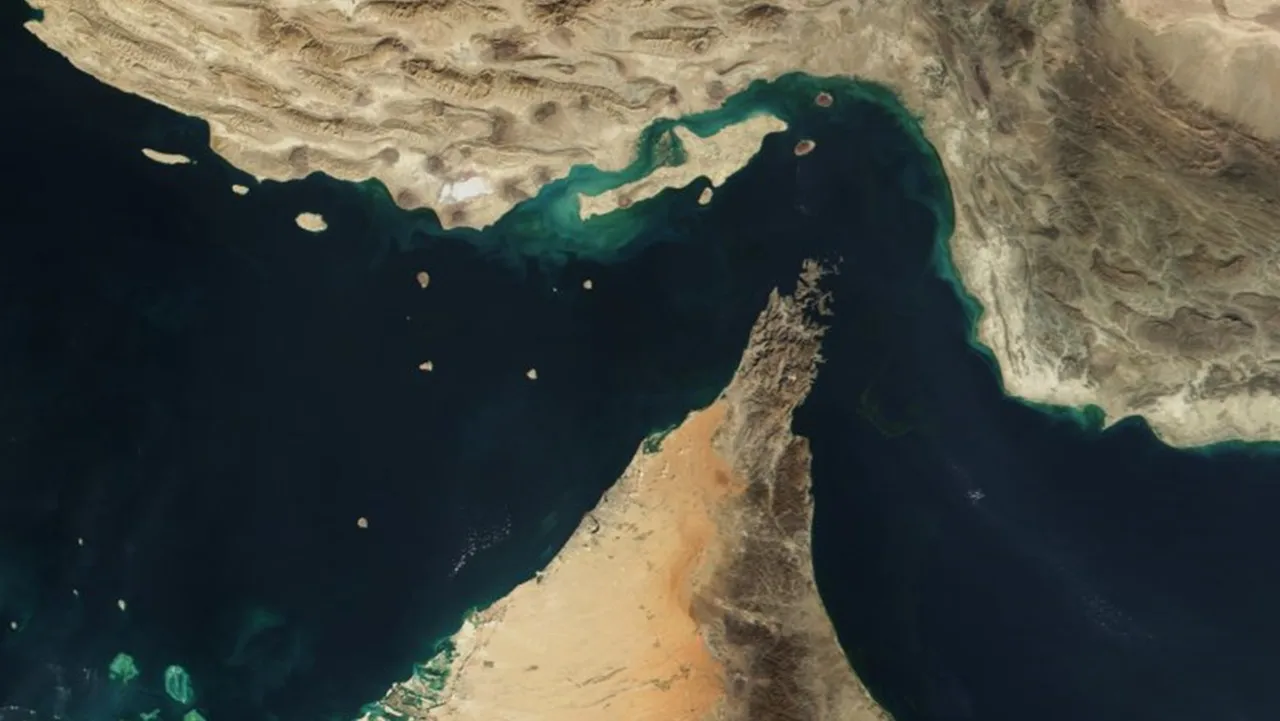
Recent diplomatic strains have once again demonstrated the vulnerability of the Strait of Hormuz, through which approximately one-fifth of the world's traded oil passes. Any disruption to this key maritime chokepoint has immediate implications regarding global energy markets, European industrial competitiveness, and economic stability, writes Stavros Papagianneas, author of Embracing Chaos (2021), Rebranding Europe (2024) and managing director of STP Communications.
As governments and industry explore alternative energy corridors - including proposals to revive historic pipeline connections from Iraq to the Eastern Mediterranean - the debate extends well beyond a single infrastructure project. It conveys a broader strategic priority: diversifying supply routes, strengthening regional resilience, and reducing dependence on a limited number of geopolitical bottlenecks.
For the European Union, this shift presents both a challenge and an opportunity. Energy security has become inseparable from economic security, industrial policy, foreign affairs, and regional stability. New transport corridors linking the Gulf, the Levant, and the Mediterranean have the potential to reshape trade flows, attract investment, stimulate reconstruction, and accelerate cooperation within sectors ranging from energy and logistics to digital infrastructure and clean technologies.
As the EU's easternmost Member State, the Republic of Cyprus occupies a unique strategic position at the intersection of Europe, the Middle East, and North Africa. Combined with Brussels - the centre of European policymaking - Cyprus can provide the geographical, political, and institutional bridge needed to connect European decision-makers with developing opportunities and partners across the Eastern Mediterranean.
Against this backdrop, establishing a Brussels - Nicosia - Eastern Mediterranean Strategic Affairs Platform would provide the European Union with a dedicated mechanism to support strategic dialogue, facilitate investment, strengthen stakeholder engagement, and promote coherent European policies in one of the world's most geopolitically significant regions.
Rather than focusing on any single project or corridor, the platform would serve as a long-term instrument for advancing European resilience, competitiveness, and strategic autonomy in the Eastern Mediterranean: a permanent strategic business-diplomacy platform focused on the region. It could deliver a structured interface between European institutions, Member States, regional governments, investors, international financial institutions, businesses, and civil society.
From an energy perspective, the EU has made diversification of supply routes a strategic priority. While individual infrastructure projects may evolve over time, the wider objective of enhancing resilience through multiple transport corridors remains constant. A dedicated strategic affairs platform would facilitate dialogue on regulatory convergence, infrastructure planning, sustainability standards, and investment frameworks, helping ensure that future projects align with EU legislation and climate objectives.
The platform would also strengthen the EU's role as a trusted convenor. The Eastern Mediterranean is characterised by overlapping political interests and complex regional relationships. Neutral forums for dialogue are often limited, particularly those that can connect regional stakeholders with European decision-makers. By providing a permanent venue for policy talks, stakeholder engagement, and confidence-building initiatives, the platform could contribute to greater regional cooperation while reinforcing the EU's role as a constructive geopolitical actor.
A second major benefit lies in supporting European competitiveness. European engineering firms, logistics providers, financial institutions, technology companies, insurers, and professional services firms are well positioned to participate in infrastructure, digitalisation, renewable energy, maritime, and reconstruction projects throughout the wider Eastern Mediterranean.
However, many corporations lack the institutional networks and policy intelligence vital to navigate this complex environment. The platform could provide market intelligence, support partnerships, organise investment forums, and improve access to relevant EU initiatives, thereby lowering barriers to market entry for European businesses.
The initiative would also support the implementation of key EU policy priorities, including the Global Gateway strategy, economic security, industrial competitiveness, and the Green Deal. Rather than viewing energy security and sustainability as competing objectives, the platform could promote integrated solutions combining conventional infrastructure with renewable energy, electricity interconnections, hydrogen development, digital infrastructure, and environmental monitoring technologies.
Cyprus offers a particularly suitable location for this initiative. As an EU Member State operating under the Union's legal and regulatory framework while continuing longstanding economic and cultural links with neighbouring countries, Cyprus is uniquely positioned to facilitate dialogue between European and regional actors. Its established shipping sector, professional services industry, financial ecosystem, and growing energy sector further strengthen its role as a practical gateway for European engagement.
In addition, the platform would contribute to better-informed policymaking. Through regular policy briefs, strategic dialogues, research partnerships, and high-level conferences, it could generate evidence-based recommendations on issues ranging from regional connectivity and investment to sanctions compliance, supply chain resilience, maritime security, and sustainable development. This would help improve coordination among European institutions, Member States, and private-sector stakeholders.
In an increasingly competitive geopolitical environment, the European Union requires mechanisms that combine diplomacy, economic engagement, and strategic communication. A Brussels - Nicosia -Eastern Mediterranean Strategic Affairs Platform would not only enhance Europe's presence in a strategically important region but also strengthen its capacity to support stability, resilience, and sustainable economic cooperation in line with long-term European interests.
Share this article:

EU Reporter publishes articles from a variety of outside sources which express a wide range of viewpoints. The positions taken in these articles are not necessarily those of EU Reporter. Please see EU Reporter’s full Terms and Conditions of publication for more information EU Reporter embraces artificial intelligence as a tool to enhance journalistic quality, efficiency, and accessibility, while maintaining strict human editorial oversight, ethical standards, and transparency in all AI-assisted content. Please see EU Reporter’s full A.I. Policy for more information.



European operation dismantles €10 million illicit cigarette network in Spain

Energy Union Task Force takes stock of oil and gas security of supply in the EU

Srebrenica's lesson is prevention. Why isn't the world applying It to Kashmir?

AIFC to host Astana Finance Days 2026 in September

ALROSA Re-elects Supervisory Board with Minimal Changes

Joint statement by High Representative/Vice-President Kallas and Commissioner Kos on the 31st anniversary of the Srebrenica genocide

EU clarifies rules to allow continued waste recovery shipments to Switzerland

EU launches a Team Gaza Initiative to support early recovery in Gaza with an initial amount of nearly €900 million

Starmer’s problem? 'He is not a politician'

Why a Brussels–Nicosia–Eastern Mediterranean strategic affairs platform would benefit the European Union

Albania's Vlora airport standoff tests investor confidence as EU accession clock ticks

ECR MEPs question the European Commission on cardiovascular health and diet promoting the Mediterranean diet as an alternative to ultra-processed foods as key to tackling obesity

Kazakhstan's fixed capital investment tops 9.5 trillion tenge in H1 2026

Commission adopts simpler rules for EU agri-food promotion policy

Commission approves €659 million German state aid for four new semiconductor facilities

EU law on nitrates pollution remains effective, with scope for smarter implementation

Kazakhstan reforms under scrutiny at Brussels Press Club round table

Japan should face up to history and contribute more to regional peace

Ambassador calls for 'speeding up' of co-operation between EU and Kazakhstan

Timur Turlov at Smart Moves Summit 2025: How chess can transform global education

Shevtsova’s case: Out-of-court sanctions dismantling trust in Ukrainian cause

The future of European transport

Trump Vs Trueman

US 'no longer' an 'unconditional ally' for Europe - MEP
-
 Cigarettes4 days ago
European operation dismantles €10 million illicit cigarette network in Spain
-
 Energy market3 days ago
Energy Union Task Force takes stock of oil and gas security of supply in the EU
-
 Kashmir4 days ago
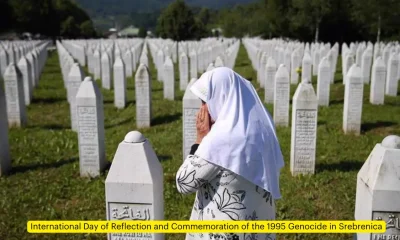
Srebrenica's lesson is prevention. Why isn't the world applying It to Kashmir?
-
 Kazakhstan3 days ago
AIFC to host Astana Finance Days 2026 in September