CO2 emissions
#Climate: MEPs pass law to cut #CO2Emissions and fund

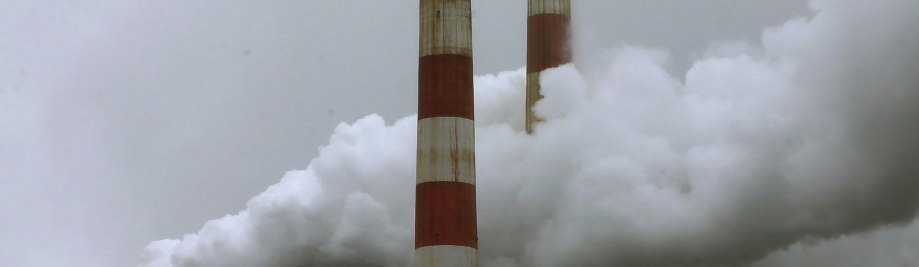
A law to strengthen EU curbs on CO2 emissions from industry, so as to begin delivering on Paris climate accord pledges, was passed by Parliament on Tuesday (6 February).
The new law, already informally agreed with EU ministers, will accelerate the withdrawal of emission allowances available on the EU Emissions Trading System (ETS) “carbon market”, which covers around 40% of EU greenhouse gas emissions. It provides for:
- An increase in the yearly reduction of emission allowances to be placed on the market (so-called “linear reduction factor”) by 2.2% from 2021, up from the 1.74% planned at present; this factor will also be kept under review with a view to increasing it further by 2024 at the earliest, and;
- a doubling of the ETS Market Stability Reserve’s capacity to mop up excess emission allowances on the market: when triggered, it would absorb up to 24% of excess allowances in each auctioning year, for the first four years, thus increasing their price and adding to the incentive to reduce emissions.
Two funds to help foster innovation and spur the transition to a low-carbon economy
A modernization fund will help to upgrade energy systems in lower-income EU member states. MEPs tightened up the financing rules so that the fund is not used for coal-fired projects, except for district heating in the poorest member states.
An innovation fund will provide financial support for renewable energy, carbon capture and storage and low-carbon innovation projects.
Protection against carbon leakage
The law also aims to prevent “carbon leakage”, i.e. the risk that companies might relocate their production outside Europe due to emission reduction policies. The sectors at the highest risk will receive their ETS allowances for free. Less exposed sectors will receive 30% for free.
Julie Girling (ECR, UK), rapporteur, said: “The ETS remains the cornerstone of our EU policy to combat climate change. We have done our best to agree an ambitious update. The ETS has had many detractors over the years. We tackled many problems – from a carbon price that was clearly too low to make the market function to the extremely difficult issue of striking the balance between our environmental ambition and the protection of energy-intensive European industry.”Next steps
The text was approved by 535 votes to 104, with 39 abstentions. It will now goes back to Council for formal adoption before publication in the EU Official Journal.
More information
Share this article:
EU Reporter publishes articles from a variety of outside sources which express a wide range of viewpoints. The positions taken in these articles are not necessarily those of EU Reporter. Please see EU Reporter’s full Terms and Conditions of publication for more information EU Reporter embraces artificial intelligence as a tool to enhance journalistic quality, efficiency, and accessibility, while maintaining strict human editorial oversight, ethical standards, and transparency in all AI-assisted content. Please see EU Reporter’s full A.I. Policy for more information.



ECR MEPs question the European Commission on cardiovascular health and diet promoting the Mediterranean diet as an alternative to ultra-processed foods as key to tackling obesity

Albania's Vlora airport standoff tests investor confidence as EU accession clock ticks

Iran’s regime in crisis: Negotiations, internal divisions and growing resistance

Why a Brussels–Nicosia–Eastern Mediterranean strategic affairs platform would benefit the European Union

Commission approves €659 million German state aid for four new semiconductor facilities

Kazakhstan seeks regional AI leadership as economic partnership with China enters new phase

EU law on nitrates pollution remains effective, with scope for smarter implementation

Starmer’s problem? 'He is not a politician'

The EU’s Forced-Labour Regulation Faces a Credibility Test

European Statistical Monitor: July edition

Commission publishes state aid guidance on carbon contracts for difference

Commission greenlights Estonia's fourth payment request for €135.5 million under NextGenerationEU

Drones, dominance, and the Iranian impasse: The West's strategic blind spot

Kazakhstan's fixed capital investment tops 9.5 trillion tenge in H1 2026

Commission registers two European Citizens' Initiatives on education and housing

Kazakhstan and Belgium: Building a Partnership for the Future

Kazakhstan reforms under scrutiny at Brussels Press Club round table

Japan should face up to history and contribute more to regional peace

Ambassador calls for 'speeding up' of co-operation between EU and Kazakhstan

Timur Turlov at Smart Moves Summit 2025: How chess can transform global education

Shevtsova’s case: Out-of-court sanctions dismantling trust in Ukrainian cause

The future of European transport

Trump Vs Trueman

US 'no longer' an 'unconditional ally' for Europe - MEP
-
 Italy4 days ago
ECR MEPs question the European Commission on cardiovascular health and diet promoting the Mediterranean diet as an alternative to ultra-processed foods as key to tackling obesity
-
 Albania4 days ago
Albania's Vlora airport standoff tests investor confidence as EU accession clock ticks
-
 Iran5 days ago
Iran’s regime in crisis: Negotiations, internal divisions and growing resistance
-
 Euro-Mediterranean relations4 days ago
Why a Brussels–Nicosia–Eastern Mediterranean strategic affairs platform would benefit the European Union