EU
Greece says bailout deal broadly agreed

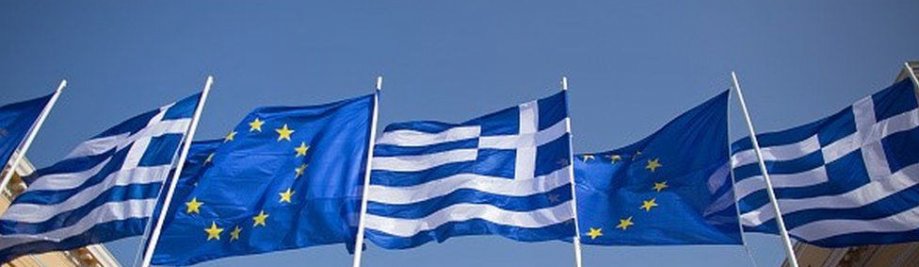 Greece says it has broadly agreed the substance of a bailout deal with its creditors, according to the country's Finance Minister Euclid Tsakalotos.
"Two or three small issues," are pending with lenders, Reuters quoted Mr Tsakalotos as saying.
An agreement is needed keep the country in the eurozone and avert bankruptcy.
The Greek government is hoping to push the new €86bn (£60bn) three-year agreement through parliament later this week.
The country needs a deal by 20 August, when the country has a debt repayment of about €3bn to make to the European Central Bank.
Greece will not be able to make that payment without funds emerging from the country's third bailout in just over five years.
Emerging from all-night talks at a central Athens hotel with negotiators representing Greece's creditors, Tsakalotos said: "I think we are very close."
"Two or three very small details remain,'' he added.
Earlier, Reuters quoted a Greek official as saying an agreement had been reached.
Greece has agreed the function of a new independent privatization fund, and how non-performing bank loans will be administered, according to the official.
Both issues had been key sticking points in negotiations.
"Finally, we have white smoke," the official was quoted as saying.
Deal 'dissent'
Vicky Pryce, chief economic adviser at the Centre for Economics and Business Research in London, told Today that the deal would come under close scrutiny in the Greek parliament.
"There is some dissent. There is no doubt that the very left wing part of the Syriza party - which is the ruling coalition party - is not at all happy with what's been going on," she said.
She added that so far the Syriza prime minister Alexis Tsipras has managed to get support for the third bailout by relying on his opposition parties, which are "determined to see that the whole thing is actually sorted out, so that's not a very sustainable situation for the future".
Though the radical left-led government was elected on a staunchly anti-austerity platform in January, it was forced into a policy U-turn after bailout talks came close to collapse last month.
Greece has relied on international bailouts totalling €240 billion since it lost market confidence and was unable to borrow from anyone else in 2010.
To secure funds from the bailouts, successive governments have had to implement a series of spending cuts, tax hikes and reforms.
The austerity reduced budget overspending, but the measures compounded a deep recession and fuelled record high unemployment.
Figures next week are expected to show that Greece's recession deepened in the second quarter as concerns over the country's euro future dented confidence.
Share this article:
EU Reporter publishes articles from a variety of outside sources which express a wide range of viewpoints. The positions taken in these articles are not necessarily those of EU Reporter. Please see EU Reporter’s full Terms and Conditions of publication for more information EU Reporter embraces artificial intelligence as a tool to enhance journalistic quality, efficiency, and accessibility, while maintaining strict human editorial oversight, ethical standards, and transparency in all AI-assisted content. Please see EU Reporter’s full A.I. Policy for more information.



ECR MEPs question the European Commission on cardiovascular health and diet promoting the Mediterranean diet as an alternative to ultra-processed foods as key to tackling obesity

Albania's Vlora airport standoff tests investor confidence as EU accession clock ticks

Iran’s regime in crisis: Negotiations, internal divisions and growing resistance

Why a Brussels–Nicosia–Eastern Mediterranean strategic affairs platform would benefit the European Union

Commission approves €659 million German state aid for four new semiconductor facilities

Kazakhstan seeks regional AI leadership as economic partnership with China enters new phase

EU law on nitrates pollution remains effective, with scope for smarter implementation

Starmer’s problem? 'He is not a politician'

The EU’s Forced-Labour Regulation Faces a Credibility Test

European Statistical Monitor: July edition

Commission publishes state aid guidance on carbon contracts for difference

Commission greenlights Estonia's fourth payment request for €135.5 million under NextGenerationEU

Drones, dominance, and the Iranian impasse: The West's strategic blind spot

Kazakhstan's fixed capital investment tops 9.5 trillion tenge in H1 2026

Commission registers two European Citizens' Initiatives on education and housing

Kazakhstan and Belgium: Building a Partnership for the Future

Kazakhstan reforms under scrutiny at Brussels Press Club round table

Japan should face up to history and contribute more to regional peace

Ambassador calls for 'speeding up' of co-operation between EU and Kazakhstan

Timur Turlov at Smart Moves Summit 2025: How chess can transform global education

Shevtsova’s case: Out-of-court sanctions dismantling trust in Ukrainian cause

The future of European transport

Trump Vs Trueman

US 'no longer' an 'unconditional ally' for Europe - MEP
-
 Italy5 days ago
ECR MEPs question the European Commission on cardiovascular health and diet promoting the Mediterranean diet as an alternative to ultra-processed foods as key to tackling obesity
-
 Albania5 days ago
Albania's Vlora airport standoff tests investor confidence as EU accession clock ticks
-
 Iran5 days ago
Iran’s regime in crisis: Negotiations, internal divisions and growing resistance
-
 Euro-Mediterranean relations5 days ago
Why a Brussels–Nicosia–Eastern Mediterranean strategic affairs platform would benefit the European Union