Brexit
UK's #Brexit plans useful, but questions remain - Barnier

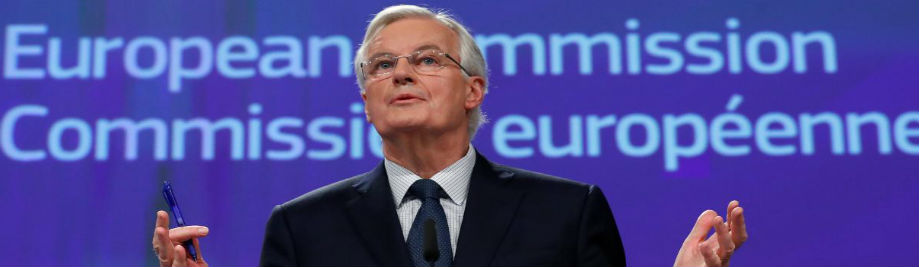
Britain’s proposals on its future relationship with the European Union contain constructive elements, but many questions remain, EU chief Brexit negotiator Michel Barnier (pictured) said on Friday (20 July), write Philip Blenkinsop and Robert-Jan Bartunek.
“As I told the ministers, there are several elements in this white paper that open the way to a constructive discussion regarding the political declaration on our future relationship”, Barnier told a news conference in Brussels following a meeting of EU ministers.
Barnier said Britain shared the EU’s desire for an ambitious trading relationship, a level playing field and a security partnership.
However, he added that he had put many questions to Britain, asking whether the proposals were workable and if they would create more red tape.
“I would simply say that Brexit cannot be and will not be a justification for creating more bureaucracy,” he said.
Barnier noted that there were only 13 weeks until EU leaders meet for a summit, by when the European Union and Britain should have finalised a withdrawal agreement.
Barnier said that 80% of that agreement was already in place, but that there was still no agreement on how to avoid a hard Irish border after Britain leaves the bloc.
“This requires a legally operative backstop, an all weather insurance policy, to address the issues of Ireland and Northern Ireland. All 27 member states insist on this,” he said.
Prime Minister Theresa May said in a speech on Friday she accepted that a hard Irish border was “almost inconceivable”, but dismissed the EU’s current plan as “unworkable”.
Barnier said he had invited British negotiators to work on the backstop issue next week.
EU leaders have avoided going public with criticism, aware of the fragility of May’s government, but many have major reservations, notably about how Britain’s plans could disrupt Europe’s single market.
The EU’s internal market assures the free movement of goods, services, capital and persons. May’s white paper indicates Britain is seeking single market privileges for industrial and agricultural goods alone.
“When you make a proposal limited to agricultural products and goods, you have to ask what about services, what about capital, what about the free movement of people. Those questions will have to be answered in the coming days and weeks,” said German Europe Minister Michael Roth.
Share this article:

EU Reporter publishes articles from a variety of outside sources which express a wide range of viewpoints. The positions taken in these articles are not necessarily those of EU Reporter. Please see EU Reporter’s full Terms and Conditions of publication for more information EU Reporter embraces artificial intelligence as a tool to enhance journalistic quality, efficiency, and accessibility, while maintaining strict human editorial oversight, ethical standards, and transparency in all AI-assisted content. Please see EU Reporter’s full A.I. Policy for more information.



ECR MEPs question the European Commission on cardiovascular health and diet promoting the Mediterranean diet as an alternative to ultra-processed foods as key to tackling obesity

Albania's Vlora airport standoff tests investor confidence as EU accession clock ticks

Iran’s regime in crisis: Negotiations, internal divisions and growing resistance

Commission approves €659 million German state aid for four new semiconductor facilities

Why a Brussels–Nicosia–Eastern Mediterranean strategic affairs platform would benefit the European Union

Kazakhstan seeks regional AI leadership as economic partnership with China enters new phase

EU law on nitrates pollution remains effective, with scope for smarter implementation

Commission adopts simpler rules for EU agri-food promotion policy
The EU’s Forced-Labour Regulation Faces a Credibility Test

European Statistical Monitor: July edition

Commission publishes state aid guidance on carbon contracts for difference

Commission greenlights Estonia's fourth payment request for €135.5 million under NextGenerationEU

Drones, dominance, and the Iranian impasse: The West's strategic blind spot

Kazakhstan's fixed capital investment tops 9.5 trillion tenge in H1 2026

Commission registers two European Citizens' Initiatives on education and housing

Kazakhstan and Belgium: Building a Partnership for the Future

Kazakhstan reforms under scrutiny at Brussels Press Club round table

Japan should face up to history and contribute more to regional peace

Ambassador calls for 'speeding up' of co-operation between EU and Kazakhstan

Timur Turlov at Smart Moves Summit 2025: How chess can transform global education

Shevtsova’s case: Out-of-court sanctions dismantling trust in Ukrainian cause

The future of European transport

Trump Vs Trueman

US 'no longer' an 'unconditional ally' for Europe - MEP
-
 Italy4 days ago
ECR MEPs question the European Commission on cardiovascular health and diet promoting the Mediterranean diet as an alternative to ultra-processed foods as key to tackling obesity
-
 Albania4 days ago
Albania's Vlora airport standoff tests investor confidence as EU accession clock ticks
-
 Iran5 days ago
Iran’s regime in crisis: Negotiations, internal divisions and growing resistance
-
 Germany5 days ago
Commission approves €659 million German state aid for four new semiconductor facilities