General
Space travel, nearly 70 years on: Is the reality disappointing?

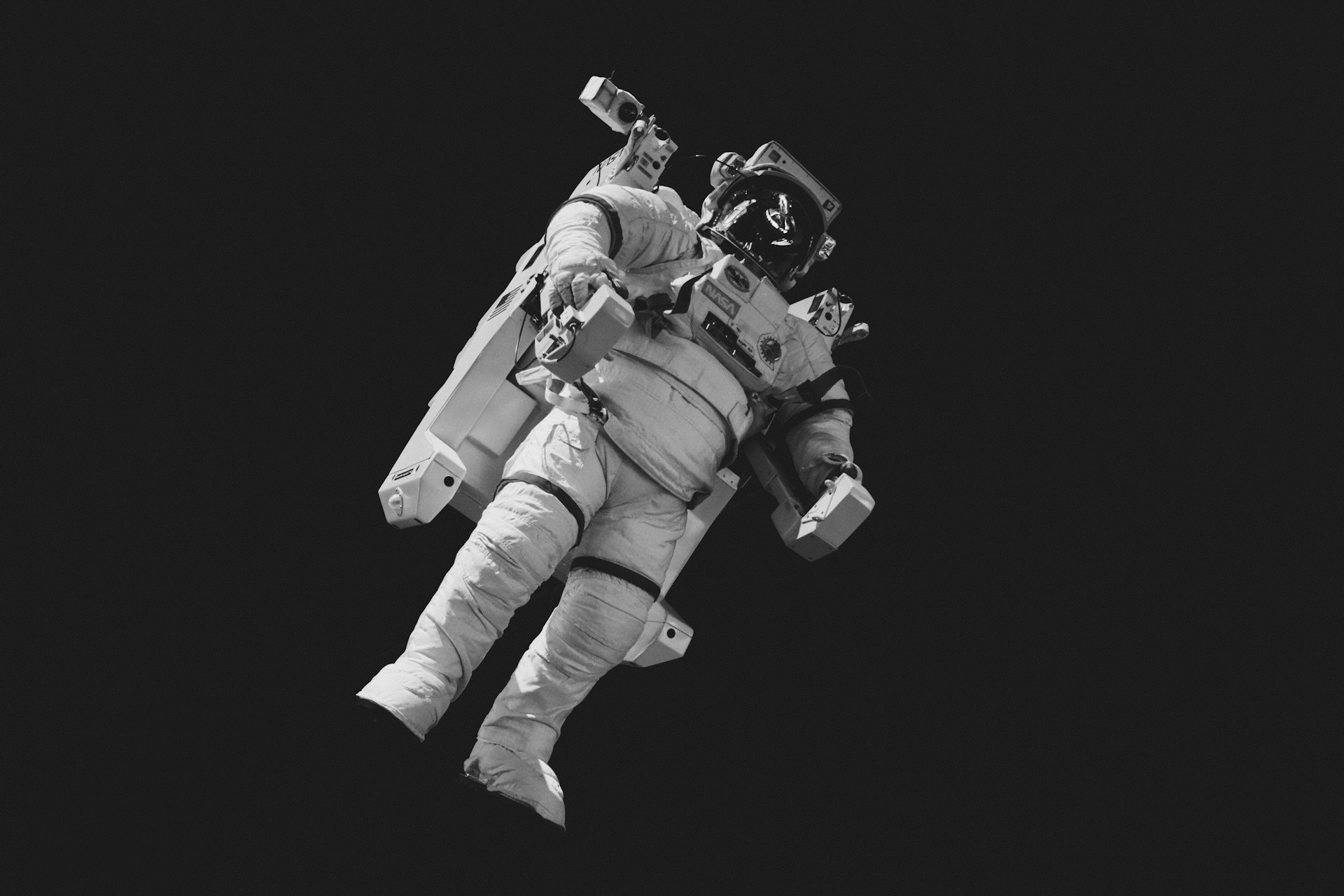
In an article entitled 'Why Go to Space?', NASA doesn’t give us a single answer. The agency claims the reasons are as “vast and varied” as those for exploring the forests or the oceans. Everybody has their take on what’s so exciting about space - the potential for life, the thrill of racing around in a spaceship, or finding the answer to why we’re here at all. Of course, this leads to another question. Are people as excited about the thought of space as they were at the dawn of the space race?
'Guided' by sci-fi
We get much of our fondness for the universe from movies and TV. Classics such as Alien (1979) and Star Trek have found a new audience decades after their inception but the presence of space themes in other kinds of entertainment, like casino games, means that new fans can arrive from anywhere. Starburst Galaxy and Stars Awakening in the Paddy Power slots catalogue feature many elements of movie worlds such as Star Wars, including aliens, planets, and exploding stars. These features have not only bled into the iGaming world, but most major sci-fi franchises have also transplanted their lore into books, too.

Source: Pexels
So, how do fictional universes relate to the real one? Unfortunately, a BBC Sky at Night survey confirmed that 18-24-year-olds are “guided” by sci-fi media rather than what’s actually going on in reality. This is for two reasons. The first, that our use of space is dominated by the mundane, WiFi and weather reporting (etc.), is ironically a consequence of how successful we’ve been at exploring near-Earth orbit. The second reason is a bit more disappointing - we don’t go anywhere anymore.
Martian intentions
Humans haven’t been to the Moon since 1972, on the Apollo 17 mission. The last person to set foot on our rocky companion had some words that would become prophetic - “[…] as I take man's last step from the surface, back home for some time to come.” NASA has been trying to launch another mission to the Moon - Artemis II - since 2017 but to no avail just yet. Artemis II should have lifted off in September 2025 but the agency pushed the date forward to approximately April 2026 at the end of 2024.

Source: Pexels
Of course, the other stellar body on the table is Mars, an important part of sci-fi ever since H.G. Wells revealed Martian intentions in his 1898 book The War of the Worlds. We now know that the Red Planet is a much less interesting place on the macro scale but, as robots like Curiosity and before it, Spirit and Opportunity, have proven, there’s much about Mars that we still don’t understand. The current estimate for a crewed NASA mission to the planet is the 2030s.
Robots
So, what does all that mean for our interest in space? Chris Lee, of the UK Space Agency, told The Week that space exploration with robots has “never had such a high profile with the public”, suggesting that we’re at least happy to explore space vicariously for a while, through our electronic friends. Lee does dampen the public’s hopes of doing anything else, noting that putting humans in space is “more challenging”. The International Space Station is the pinnacle of what we’ve achieved in seventy years.
It’s fair to say that reality hasn’t kept up with the fantasy in space exploration - but, give it another ten years, and we might be walking around.
Share this article:
EU Reporter publishes articles from a variety of outside sources which express a wide range of viewpoints. The positions taken in these articles are not necessarily those of EU Reporter. Please see EU Reporter’s full Terms and Conditions of publication for more information EU Reporter embraces artificial intelligence as a tool to enhance journalistic quality, efficiency, and accessibility, while maintaining strict human editorial oversight, ethical standards, and transparency in all AI-assisted content. Please see EU Reporter’s full A.I. Policy for more information.


ECR MEPs question the European Commission on cardiovascular health and diet promoting the Mediterranean diet as an alternative to ultra-processed foods as key to tackling obesity

Albania's Vlora airport standoff tests investor confidence as EU accession clock ticks

Iran’s regime in crisis: Negotiations, internal divisions and growing resistance

Why a Brussels–Nicosia–Eastern Mediterranean strategic affairs platform would benefit the European Union

Commission approves €659 million German state aid for four new semiconductor facilities

Kazakhstan seeks regional AI leadership as economic partnership with China enters new phase

EU law on nitrates pollution remains effective, with scope for smarter implementation

Starmer’s problem? 'He is not a politician'

The EU’s Forced-Labour Regulation Faces a Credibility Test

European Statistical Monitor: July edition

Commission publishes state aid guidance on carbon contracts for difference

Commission greenlights Estonia's fourth payment request for €135.5 million under NextGenerationEU

Drones, dominance, and the Iranian impasse: The West's strategic blind spot

Kazakhstan's fixed capital investment tops 9.5 trillion tenge in H1 2026

Commission registers two European Citizens' Initiatives on education and housing

Kazakhstan and Belgium: Building a Partnership for the Future

Kazakhstan reforms under scrutiny at Brussels Press Club round table

Japan should face up to history and contribute more to regional peace

Ambassador calls for 'speeding up' of co-operation between EU and Kazakhstan

Timur Turlov at Smart Moves Summit 2025: How chess can transform global education

Shevtsova’s case: Out-of-court sanctions dismantling trust in Ukrainian cause

The future of European transport

Trump Vs Trueman

US 'no longer' an 'unconditional ally' for Europe - MEP
-
 Italy5 days ago
ECR MEPs question the European Commission on cardiovascular health and diet promoting the Mediterranean diet as an alternative to ultra-processed foods as key to tackling obesity
-
 Albania4 days ago
Albania's Vlora airport standoff tests investor confidence as EU accession clock ticks
-
 Iran5 days ago
Iran’s regime in crisis: Negotiations, internal divisions and growing resistance
-
 Euro-Mediterranean relations4 days ago
Why a Brussels–Nicosia–Eastern Mediterranean strategic affairs platform would benefit the European Union