EU
Białowieża Forest: Nature without borders

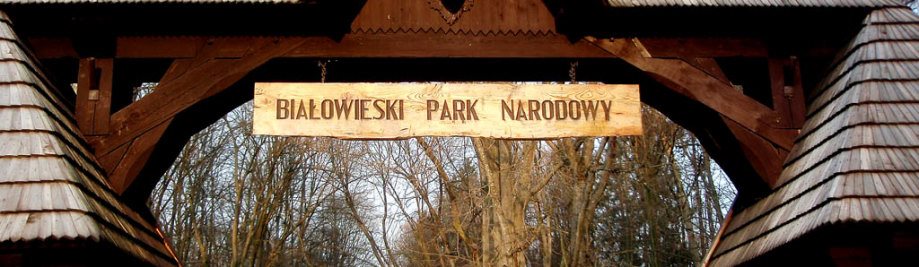
Białowieża National Park in Poland
For the animals of the primeval Białowieża Forest, stretching from the north-eastern part of Poland into Belarus, there are no borders. Boars and wolves regularly make an appearance on both sides of the frontier. “Countries are walled off with solid fences, but animals dig under them and cross the border easily,” explained Karol Wojciechowski, who works on the Polish side in Białowieża National Park. Because of its unique biodiversity, the park is designated as a World Heritage Site.
Białowieża Forest is the only place where the European bison, Europe’s biggest land mammal, can still roam freely like in the old days. With its majestic build, the animal more than deserves its nickname of King of the Forest. One of the first sights after passing the gate of Białowieża National Park is a huge bison head made of wood. Sculptor Sławomir Dowbysz said: “People here have a special link with the bison – the symbol of Białowieża.”
The forest is not only famous for its bison but also for the enormous diversity of habitats and species – including those that are scarce or even extinct elsewhere in Europe. One of the typical sights of the forest landscape is a large amount of dead, uprooted trees. They are a true haven for many species of insects to develop and live.
Every season is special in Białowieża Forest. For example, in early spring visitors can listen to birds and frogs trying to impress potential partners with a 'concert' at the start of the mating season. The forest is famous for the birds that inhabit is, especially the Eurasian three-toed woodpecker, the white-backed woodpecker and various species of owls.
The EU plays a key role in preserving this diversity. Białowieża National Park benefits from being in the Natura 2000 network, an EU scheme that sets out to protect Europe’s most valuable species and their habitats. In addition the park also receives money from several European funds, including the European Regional Development Fund (ERDF), to better protect animals . For example, thanks to European funding, bisons are kept in a semi-natural reserve, where they can be observed online by means of a live webcam.
Białowieża Biodiversity Academy is able to organize workshops thanks to funding from the Rural Development Programme for 2007 – 2013. The main goal of the workshops is to improve people’s understanding of nature and to explore the biodiversity of the Białowieża National Park. “We are open for all nature enthusiasts: for families, children, and professionals,” said Olimpia Pabian, who is the academy’s coordinator. Workshop participants come not only from Poland, but also from other European countries.
Tourism in this area is also co-funded by the EU, especially thanks to the Neighbourhood Programme Poland–Belarus-Ukraine.
Share this article:
EU Reporter publishes articles from a variety of outside sources which express a wide range of viewpoints. The positions taken in these articles are not necessarily those of EU Reporter. Please see EU Reporter’s full Terms and Conditions of publication for more information EU Reporter embraces artificial intelligence as a tool to enhance journalistic quality, efficiency, and accessibility, while maintaining strict human editorial oversight, ethical standards, and transparency in all AI-assisted content. Please see EU Reporter’s full A.I. Policy for more information.



ECR MEPs question the European Commission on cardiovascular health and diet promoting the Mediterranean diet as an alternative to ultra-processed foods as key to tackling obesity

Albania's Vlora airport standoff tests investor confidence as EU accession clock ticks

Iran’s regime in crisis: Negotiations, internal divisions and growing resistance

Commission approves €659 million German state aid for four new semiconductor facilities

Why a Brussels–Nicosia–Eastern Mediterranean strategic affairs platform would benefit the European Union

Kazakhstan seeks regional AI leadership as economic partnership with China enters new phase

EU law on nitrates pollution remains effective, with scope for smarter implementation

European Commission rewards spurious PA textbook reforms
The EU’s Forced-Labour Regulation Faces a Credibility Test

European Statistical Monitor: July edition

Commission publishes state aid guidance on carbon contracts for difference

Commission greenlights Estonia's fourth payment request for €135.5 million under NextGenerationEU

Drones, dominance, and the Iranian impasse: The West's strategic blind spot

Kazakhstan's fixed capital investment tops 9.5 trillion tenge in H1 2026

Commission registers two European Citizens' Initiatives on education and housing

Kazakhstan and Belgium: Building a Partnership for the Future

Kazakhstan reforms under scrutiny at Brussels Press Club round table

Japan should face up to history and contribute more to regional peace

Ambassador calls for 'speeding up' of co-operation between EU and Kazakhstan

Timur Turlov at Smart Moves Summit 2025: How chess can transform global education

Shevtsova’s case: Out-of-court sanctions dismantling trust in Ukrainian cause

The future of European transport

Trump Vs Trueman

US 'no longer' an 'unconditional ally' for Europe - MEP
-
 Italy5 days ago
ECR MEPs question the European Commission on cardiovascular health and diet promoting the Mediterranean diet as an alternative to ultra-processed foods as key to tackling obesity
-
 Albania5 days ago
Albania's Vlora airport standoff tests investor confidence as EU accession clock ticks
-
 Iran5 days ago
Iran’s regime in crisis: Negotiations, internal divisions and growing resistance
-
 Germany5 days ago
Commission approves €659 million German state aid for four new semiconductor facilities