European Neighbourhood Policy
Learn more about candidate and neighbouring countries

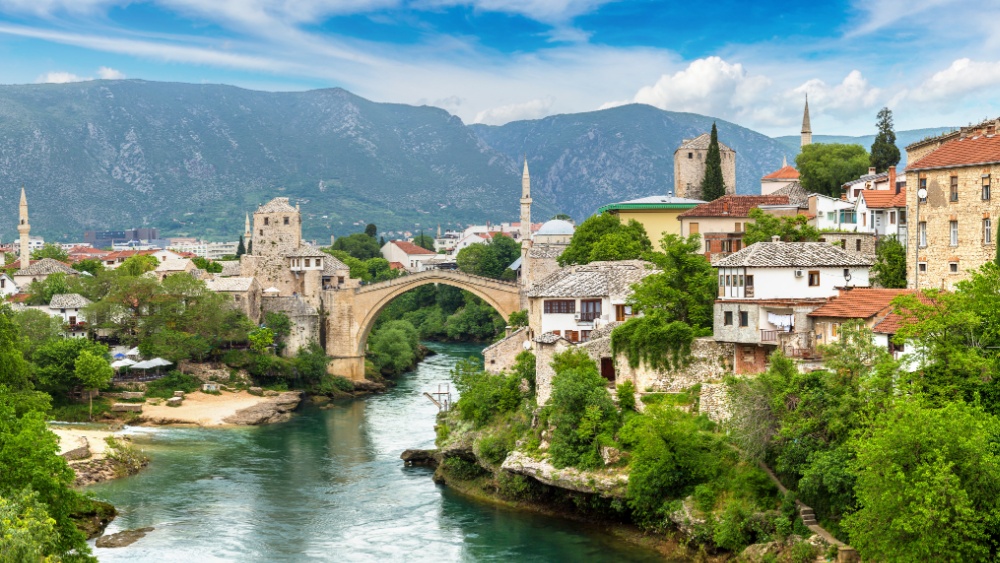
Many countries are closely linked to the EU, whether they are working towards membership or cooperating through neighbourhood partnerships. Eurostat keeps track of the fresh data on candidate and neighbouring countries, offering insights into their lives, economies and societies.
The online publication Enlargement countries - statistical overview presents an overview of key data on 10 countries currently in the EU enlargement process: Albania, Bosnia and Herzegovina, Georgia, Moldova, Montenegro, North Macedonia, Serbia, Türkiye, Ukraine and Kosovo*. It covers a broad range of indicators, including population, living conditions, inequality, economic developments, technology and resources and green transformation.
To learn more about other neighbouring countries, the publication European Neighbourhood Policy countries – statistical overview offers extensive information about population, economic developments, living conditions and more in 14 countries neighbouring the EU with whom Eurostat collaborates through the European Neighbourhood Policy. These include Algeria, Egypt, Israel, Jordan, Lebanon, Libya, Morocco, Palestine** and Tunisia as southern neighbours, and Armenia, Azerbaijan, Georgia, Moldova and Ukraine as eastern neighbours (with the last 3 now also recognized as candidate countries).
Both publications are great resources if you want to explore the EU’s broader neighbourhood using reliable, up-to-date statistics that allow you to see how these countries compare to the EU.
For more information
- Statistic Explained article on enlargement countries
- Statistics Explained article on European Neighbourhood Policy countries
- Thematic section on enlargement
- Database on enlargement
- Thematic section on international co-operation
Notes
- *Kosovo - This designation is without prejudice to positions on status and is in line with UNSCR 1244/1999 and the ICJ Opinion on the Kosovo Declaration of Independence.
- **Palestine - This designation shall not be construed as recognition of a State of Palestine and is without prejudice to the individual positions of the Member States on this issue.
Share this article:
EU Reporter publishes articles from a variety of outside sources which express a wide range of viewpoints. The positions taken in these articles are not necessarily those of EU Reporter. Please see EU Reporter’s full Terms and Conditions of publication for more information EU Reporter embraces artificial intelligence as a tool to enhance journalistic quality, efficiency, and accessibility, while maintaining strict human editorial oversight, ethical standards, and transparency in all AI-assisted content. Please see EU Reporter’s full A.I. Policy for more information.



ECR MEPs question the European Commission on cardiovascular health and diet promoting the Mediterranean diet as an alternative to ultra-processed foods as key to tackling obesity

Albania's Vlora airport standoff tests investor confidence as EU accession clock ticks

Iran’s regime in crisis: Negotiations, internal divisions and growing resistance

Commission approves €659 million German state aid for four new semiconductor facilities

Why a Brussels–Nicosia–Eastern Mediterranean strategic affairs platform would benefit the European Union

Kazakhstan seeks regional AI leadership as economic partnership with China enters new phase

EU law on nitrates pollution remains effective, with scope for smarter implementation

Starmer’s problem? 'He is not a politician'
The EU’s Forced-Labour Regulation Faces a Credibility Test

European Statistical Monitor: July edition

Commission publishes state aid guidance on carbon contracts for difference

Commission greenlights Estonia's fourth payment request for €135.5 million under NextGenerationEU

Drones, dominance, and the Iranian impasse: The West's strategic blind spot

Kazakhstan's fixed capital investment tops 9.5 trillion tenge in H1 2026

Commission registers two European Citizens' Initiatives on education and housing

Kazakhstan and Belgium: Building a Partnership for the Future

Kazakhstan reforms under scrutiny at Brussels Press Club round table

Japan should face up to history and contribute more to regional peace

Ambassador calls for 'speeding up' of co-operation between EU and Kazakhstan

Timur Turlov at Smart Moves Summit 2025: How chess can transform global education

Shevtsova’s case: Out-of-court sanctions dismantling trust in Ukrainian cause

The future of European transport

Trump Vs Trueman

US 'no longer' an 'unconditional ally' for Europe - MEP
-
 Italy5 days ago
ECR MEPs question the European Commission on cardiovascular health and diet promoting the Mediterranean diet as an alternative to ultra-processed foods as key to tackling obesity
-
 Albania5 days ago
Albania's Vlora airport standoff tests investor confidence as EU accession clock ticks
-
 Iran5 days ago
Iran’s regime in crisis: Negotiations, internal divisions and growing resistance
-
 Germany5 days ago
Commission approves €659 million German state aid for four new semiconductor facilities