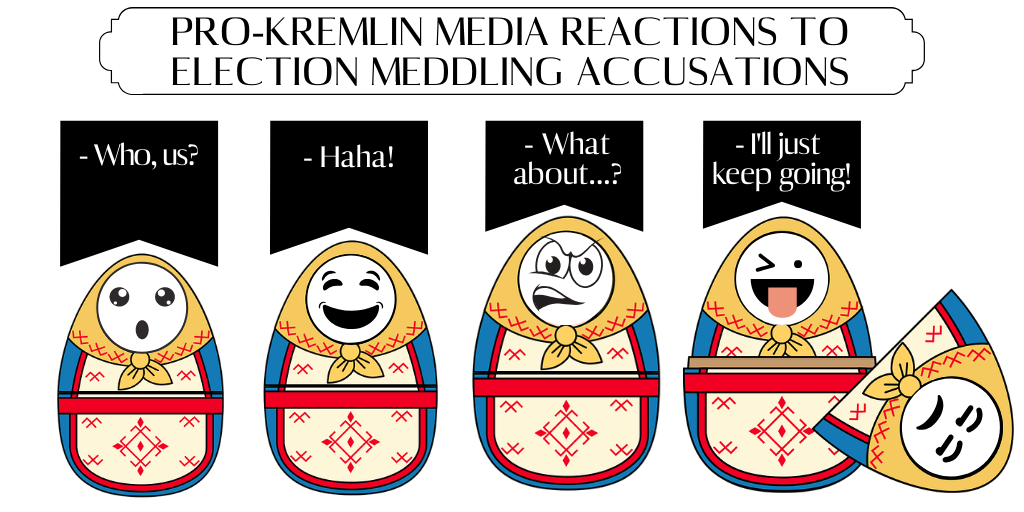
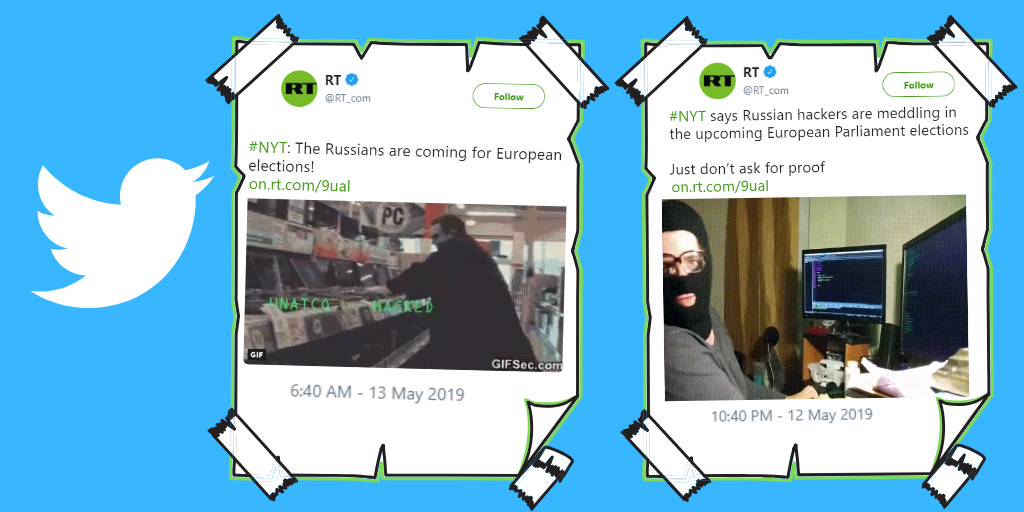
| It’s almost a tradition: As soon as elections take place, usually in Western countries, warnings of possible Russian influence make the rounds. This is also the case in the elections to the European Parliament, says an article in Sputnik Deutschland, writes EU East StratCom Task Force.
It’s not a tradition. It’s a legitimate concern, deriving from the fact that the Kremlin has a track record of interference in numerous elections around the world. Disinformation campaigns were observed across Europe, too, with the leading role of the Internet Research Agency reaching as far as the United Kingdom (Brexit referendum), Greece and Bulgaria, to name just a few examples. Bots were activated in discussions around the unofficial Catalan referendum, anti-migrant messages were spread in Italy and Germany, lies about a presidential candidate multiplied in France; false historical narratives and accusations of Russophobia are continuously directed at Poland and the Baltic states, respectively.
Of course, the evidence from recent years, even as substantial and coming from so many different sources as it has, doesn’t have to indicate future events. And even if we have not seen a massive blackout or a hacking attack targeting servers all across Europe, it's definitely too late to say that nothing at all has happened in the run-up to the EU elections. EUvsDisinfo has continuously reported about pro-Kremlin disinformation narratives surrounding these elections. Continuously, little by little, constant pro-Kremlin dropping is trying to wear away a stone. Some question the existence of EU institutions, their democratic legitimacy, their influence on EU’s future and their independence. Others underline that being in the EU equals losing sovereignty. These messages were spread in at least eight languages, serving the Kremlin's aim to weaken Europe.
How do pro-Kremlin outlets react to evidence and cold, hard facts? |