
Digital economy
Facebook whistleblower outlines three areas where MEPs should shape the Digital Services Act


MEPs met with whistleblower and former Facebook employee Frances Haugen (8 November). The hearing came at an important time as the revelations will have an impact on the Digital Services Act, which will soon be adopted by the parliament.
Haugen was excoriating on what she described as “Toxic Facebook” which put its own profits ahead of safety and amplified division. She welcomed the EU’s proposed Digital Services Act, but called for caution.
On transparency she said: “Almost no one outside of Facebook knows what happens inside of Facebook. The company's leadership keeps vital information from the public, the US government, its shareholders and governments around the world. The documents I have provided prove that Facebook has repeatedly misled us about what its own research reveals about the safety of children. Its role in spreading hateful and polarizing messages, and so much more.” Haugen called for full access to data for research and more experts to study the data. She said that there should not be a broad exemption for trade secrets, otherwise Facebook will classify everything as a trade secret.
Secondly, Haugen described engagement based ranking systems as dangerous. She quotes Marc Zuckerberg in 2018 saying that it was dangerous because people are more drawn to extreme content than more mainline content, therefore giving a larger fraction of the public platform to the most extreme.
Thirdly, Haugen warned of the dangers of loopholes and exemptions. In particular, she warned against exemptions for news media content, saying that ‘neutral’ rules means that nothing is singled out and nothing is exempted: “Let me be very clear. Every modern disinformation campaign will exploit news media channels on digital platforms by gaming the system. If the DSA makes it illegal for platforms to address these issues, we risk undermining the effectiveness of the law.”
Share this article:




ECR MEPs question the European Commission on cardiovascular health and diet promoting the Mediterranean diet as an alternative to ultra-processed foods as key to tackling obesity

Falling in love with the Maldives

Kurmuk gold project highlights Africa’s changing investment landscape

Albania's Vlora airport standoff tests investor confidence as EU accession clock ticks

EU steps up international support for Palestinians with major initiative for Gaza's early recovery and stronger international coordination

Commission adds exemptions to rules on removability of portable batteries

Iran’s regime in crisis: Negotiations, internal divisions and growing resistance

Natura 2000 Network offers opportunities for sustainable tourism across Europe

Kazakhstan and Belgium: Building a Partnership for the Future

New court ruling questions 'proportionality' of Mayor Erion Veliaj’s detention

Rome–Washington Axis: Italian Diplomat Zanardi Landi to Help Save Bosnia

Burnham as PM? 'Wait and see'

Ban on destruction of unsold clothes and shoes enters into application

Survey on an EU Blueprint for intellectual property licensing and spinoff creation

Rule of law report strengthens EU democracy and fundamental rights

EU launches Ukraine defence industrial partnership, Drone Deal and disburses €1 billion for drones *

Kazakhstan reforms under scrutiny at Brussels Press Club round table

Japan should face up to history and contribute more to regional peace

Ambassador calls for 'speeding up' of co-operation between EU and Kazakhstan

Timur Turlov at Smart Moves Summit 2025: How chess can transform global education

Shevtsova’s case: Out-of-court sanctions dismantling trust in Ukrainian cause

The future of European transport

Trump Vs Trueman

US 'no longer' an 'unconditional ally' for Europe - MEP
-
 Italy3 days ago
ECR MEPs question the European Commission on cardiovascular health and diet promoting the Mediterranean diet as an alternative to ultra-processed foods as key to tackling obesity
-
 Tourism5 days ago
Falling in love with the Maldives
-
 China4 days ago
Kurmuk gold project highlights Africa’s changing investment landscape
-
 Albania3 days ago
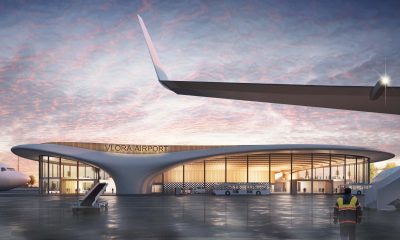
Albania's Vlora airport standoff tests investor confidence as EU accession clock ticks