Catalonia
#Catalonia votes in election pivotal for independence campaign


Catalonia on Thursday (21 December) holds a regional election which the Spanish government hopes will strip pro-independence parties of their control of the Catalan parliament and end their campaign to force a split with Spain, write Angus Berwick and Sonya Dowsett.
Spanish Prime Minister Mariano Rajoy called the 21 December vote in October in the hopes of returning Catalonia to “normality” under a unionist government. He sacked its previous government for holding a banned referendum and declaring independence.
A new separatist majority would further dampen investors’ confidence in Catalonia, which by itself has an economy larger than that of Portugal and is the main driver of Spain’s economic growth. However, pro-independence leaders recently have backed away from demands for unilateral secession.
Voting stations in the affluent region of northeastern Spain will open on Thursday at 8h GMT and close at 19h GMT. The election is expected to draw a record turnout.
Thursday’s vote became a de facto referendum on how support for the independence movement has fared in recent months.
So, analysts expect the next Catalan government to result from weeks of haggling between parties over viable coalitions.
An analysis of polling data by the Madrid daily El Pais published on Tuesday found that the most likely scenario is separatists securing a majority with the backing or abstention of the Catalan offshoot of anti-austerity party Podemos.
In this, analysts say, Podemos is caught between two options it does not particularly like, but would prefer to back the separatists rather than a coalition involving Rajoy’s PP.
Separatist parties campaigned against the backdrop of Spanish courts investigating their leaders on allegations of rebellion for their roles in the Oct. 1 referendum, which was ruled unconstitutional.
Deposed Catalan President Carles Puigdemont has campaigned from self-imposed exile in Brussels and his former deputy and now rival candidate, Oriol Junqueras, has done so from behind bars at a prison outside Madrid.
In a written interview with Reuters published on Monday, Junqueras struck a conciliatory tone and opened the door to building bridges with the Spanish state.
Share this article:
EU Reporter publishes articles from a variety of outside sources which express a wide range of viewpoints. The positions taken in these articles are not necessarily those of EU Reporter. Please see EU Reporter’s full Terms and Conditions of publication for more information EU Reporter embraces artificial intelligence as a tool to enhance journalistic quality, efficiency, and accessibility, while maintaining strict human editorial oversight, ethical standards, and transparency in all AI-assisted content. Please see EU Reporter’s full A.I. Policy for more information.








The South Caucasus at a historic turning point: Between lasting peace and renewed confrontation

As Ireland chairs the EU Presidency, what impact has over fifty years of EU membership had on Ireland

British political shifts and the future of UK-China ties

The Digital Markets Act Is Hurting Europeans. It’s Time to Put Progress, Free Markets, and Competition First

Become a European Commission trainee – applications are now open

Commission outlines measures to strengthen Europe's banking sector and support growth

JoinCare explores scientific exchange during visit to Japan’s National Institute of Infectious Diseases

From Ukraine to Suez: Why the Mediterranean has become the strategic centre of gravity

Commission approves €54 million Luxembourgish state aid for road and rail transport firms facing increased fuel prices

Commission invites comments on draft new rescue and restructuring state aid guidelines

Commission proposes more than €410,000 from the European Globalisation Adjustment Fund to support dismissed car industry workers in Finland

Commission welcomes the Council's adoption of a renewed Interim Regulation to detect child sexual abuse online

Commission provides €1.5 billion in macro-financial assistance to Egypt

ommission preliminary finds TikTok in breach of Digital Services Act for failing to ensure safe accounts for minors

Europe’s AI crossroads: Regulation and the race to keep up

Freedom holding corp: How Kazakhstan is turning a transit corridor into a global logistics hub

Kazakhstan reforms under scrutiny at Brussels Press Club round table

Japan should face up to history and contribute more to regional peace

Ambassador calls for 'speeding up' of co-operation between EU and Kazakhstan

Timur Turlov at Smart Moves Summit 2025: How chess can transform global education

Shevtsova’s case: Out-of-court sanctions dismantling trust in Ukrainian cause

The future of European transport

Trump Vs Trueman

US 'no longer' an 'unconditional ally' for Europe - MEP
-
 South Caucasus4 days ago
The South Caucasus at a historic turning point: Between lasting peace and renewed confrontation
-
 EU Presidency4 days ago
As Ireland chairs the EU Presidency, what impact has over fifty years of EU membership had on Ireland
-
 China4 days ago
British political shifts and the future of UK-China ties
-
 Digital economy5 days ago
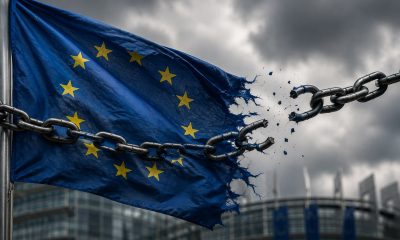
The Digital Markets Act Is Hurting Europeans. It’s Time to Put Progress, Free Markets, and Competition First