General
Freedom holding corp: How Kazakhstan is turning a transit corridor into a global logistics hub

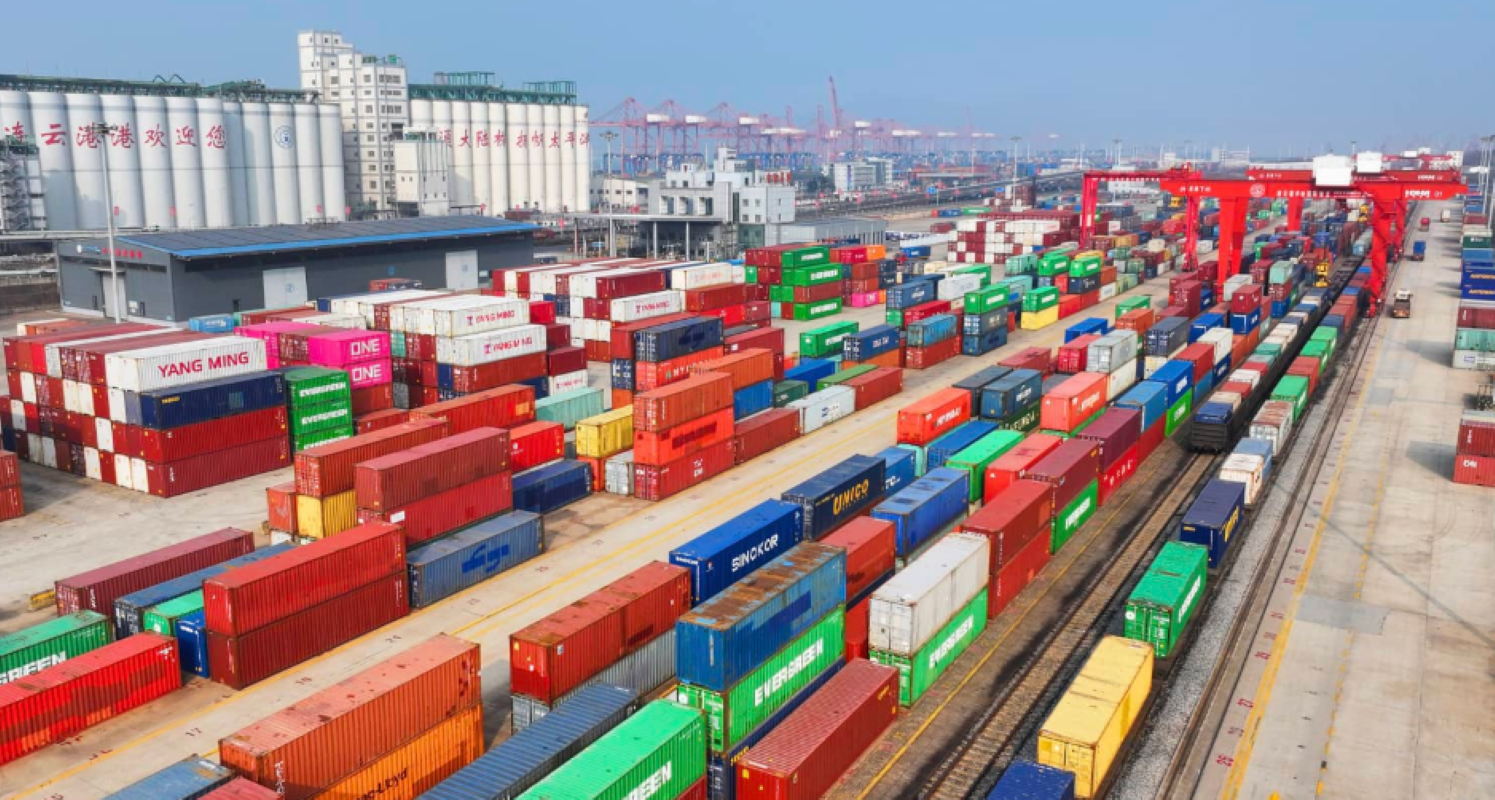
The Trans-Caspian Transport Corridor is becoming a test of how Eurasia’s trade routes can adapt to a changing geopolitical landscape.
The Trans-Caspian Transport Corridor is becoming a test of how Eurasia’s trade routes can adapt to a changing geopolitical landscape. Kazakhstan, the corridor’s longest transit section, is using its geographic position to attract infrastructure investment and build a multimodal logistics network with participation from both global partners and local businesses. The growing role of domestic investors reflects a broader shift: logistics infrastructure is becoming an area of interest not only for governments and international institutions, but also for private companies.
A new route, a new race
In late June, the European Commission reached agreements with international financial institutions to mobilize up to €2 billion in investment for transport connectivity projects linked to the Trans-Caspian Transport Corridor (TCTC). The funding will support transport infrastructure, border crossing points and trade facilitation across the route. Also known as the Middle Corridor, TCTC is one of the infrastructure initiatives supported by the European Union under its Global Gateway strategy, Europe’s global infrastructure and connectivity initiative designed to strengthen links with partner countries. The program is often viewed as Europe’s counterpart to China’s Belt and Road Initiative.
The Middle Corridor connects Europe with Central Asia through the South Caucasus. The route is designed to strengthen supply chains, shorten delivery times and boost regional trade. It runs through Kazakhstan, across the Caspian Sea, and further through Azerbaijan and Georgia. From there, cargo can reach Europe via Black Sea ports in Bulgaria and Romania or through Turkey.
The longest leg, the biggest role
In a broader context, the corridor is part of a longer Eurasian logistics chain connecting Chinese and European markets. Its strategic importance has increased as companies and governments seek alternative trade routes amid geopolitical uncertainty.
Kazakhstan plays a central role in this network as the longest transit section of the Middle Corridor. The country is the only Central Asian state that combines a land border with China, with five active border crossings, and access to the Caspian Sea through the ports of Aktau and Kuryk, giving it a unique position along the Middle Corridor.
Growing demand for alternative routes is reflected in cargo volumes. According to the International Association “Trans-Caspian International Transport Route” (TITR Association), container traffic along the corridor reached 76,900 TEU in 2025, up 36% year-on-year. Five years earlier, in 2020, container traffic stood at 21,000 TEU. The total volume of cargo transported along the route reached 1.867 million tons in 2025, compared with 784,000 tons in 2020, according to TITR Association data.
From tracks to terminals
Key elements of the TCTC in Kazakhstan include railway lines connecting the country’s eastern regions with the Caspian coast, as well as the ports of Aktau and Kuryk, which serve as gateways for cargo moving across the Caspian Sea. A major focus of investment is expanding the capacity of the transport system through railway upgrades, port development and the construction of logistics terminals.
One of the largest infrastructure projects in the region was the construction of the second railway line on the Dostyk–Moiynty route, spanning 836 kilometers. The project, valued at 543 billion tenge (approximately US$1.14 billion, based on the National Bank of Kazakhstan’s average official exchange rate for Q2 2026), was implemented between 2022 and 2025, according to the Government of Kazakhstan portal. Kazakhstan’s Prime Minister’s Office indicates, that the second line increased the capacity of the route fivefold, creating additional opportunities for transit flows between China, Kazakhstan and beyond.
Kazakhstan is also advancing several major projects to expand Caspian port infrastructure. Among them, according to the Government of Kazakhstan portal, is the Sarzha International Multifunctional Terminal (Sarzha IMT) at the Port of Kuryk. The project is being developed by Semurg Invest, a Kazakh developer, with the participation of AD Ports Group (UAE). Total investment is estimated at US$330 million. The project includes the construction of several terminals for grain, general cargo, liquid cargo and universal cargo, as well as a transport and logistics complex. According to Semurg Invest, completion of all Sarzha IMT terminals by 2030 will increase the Middle Corridor’s throughput capacity by 10 million tons per year.
Another large-scale project planned for the Port of Kuryk is the construction of a multifunctional terminal by China’s Guoyou Materials Group, which plans to invest 470 billion tenge (approximately US$987 million). Once the full project is completed by 2032, the terminal’s capacity is expected to reach approximately 25 million tons.
Kazakhstan is also developing a container hub at the Port of Aktau. An investment agreement has been signed with China’s Lianyungang Port Group. The project’s investment volume totals 47.6 billion tenge (approximately US$100 million ).
Adding wings to the route
The development of the Middle Corridor is part of a broader transformation of Kazakhstan’s transport system. Alongside railway and maritime routes, Kazakhstan is also modernizing its ports and developing the aviation component of its transport system.
One of the tools supporting this effort is the “open skies” regime, which applies at international airports across the country. It allows foreign airlines to operate flights without restrictions on frequency and exercise fifth freedom rights, enabling airlines to operate transit routes through Kazakhstan between third countries.
The development of air routes adds another layer to Kazakhstan’s transport network, expanding its role as a regional logistics hub. By combining rail, Caspian shipping, aviation and logistics facilities, Kazakhstan is moving beyond its traditional role as a transit route and developing into a multimodal transport hub.
From fintech to freight
Alongside foreign private investors, domestic companies are playing an increasingly important role in building Kazakhstan’s new logistics system. One of the largest domestic investors in transport and logistics assets is Freedom Holding, a multi-industry fintech group based in Kazakhstan and listed on Nasdaq.
In spring 2026, Turlov Private Holding, a company controlled by Freedom Holding Corp. founder and CEO Timur Turlov, acquired a majority stake (50.98%) in KTZ Air Cargo (later renamed Alatau Air Cargo), a cargo airline established in 2025 at the instruction of Kazakhstan’s President Kassym-Jomart Tokayev. The project is being developed with the participation of Kazakhstan’s national railway operator. It is designed to strengthen the aviation component of the country’s transport system and expand Kazakhstan’s capabilities in international air cargo transportation.
Timur Turlov also holds a majority stake in the Sary-Arka Airport. In 2024, he acquired 60% of Sky Service, the company that owns it. The airport is expected to become a major cargo aviation hub integrated with rail and road infrastructure. According to Forbes Kazakhstan, which cited Sary-Arka Airport’s 2025 report, “The strategy envisages a large-scale transformation of the company into an international multimodal air hub and the creation of a major cargo ecosystem, QarGoCity.” The document states that the airport’s cargo turnover is expected to reach 100,000 tons by the end of 2026. Until recently, Karaganda handled only around 15,000 tonnes of cargo annually.
The project also includes the construction of the country’s first aviation fuel terminal capable of handling high-quality Jet A-1 fuel. According to Timur Turlov, there is currently no such facility in Kazakhstan. Turlov named PetroChina, a subsidiary of China’s state-owned CNPC, as a strategic partner for the project.
Turlov Private Holding also owns 30% Tranzit Trans Logistics, a company specializing in railway transportation and freight forwarding. Together with other acquisitions by Freedom’s founder, the deal helped bring railway logistics, air transportation and airport infrastructure into a single ecosystem.
Funding the next chapter
Transport infrastructure investments are part of Freedom Holding’s broader expansion strategy. By adding logistics capabilities to its existing fintech ecosystem, which includes financial services, telecommunications and lifestyle products, the holding is building a new business vertical that also supports Kazakhstan’s wider ambition to develop as a multimodal transport hub.
Freedom Holding’s financial performance supports its expansion into new business areas. In fiscal year 2026, Freedom Holding Corp. reported record revenue of $2.19 billion, up 9.3% year-on-year. The group’s strong credit ratings and market position also provide flexibility to support further investments when needed.
Share this article:

EU Reporter publishes articles from a variety of outside sources which express a wide range of viewpoints. The positions taken in these articles are not necessarily those of EU Reporter. Please see EU Reporter’s full Terms and Conditions of publication for more information EU Reporter embraces artificial intelligence as a tool to enhance journalistic quality, efficiency, and accessibility, while maintaining strict human editorial oversight, ethical standards, and transparency in all AI-assisted content. Please see EU Reporter’s full A.I. Policy for more information.





The South Caucasus at a historic turning point: Between lasting peace and renewed confrontation
The security environment of the South Caucasus amid changing geopolitical realities

Commission endorses Latvia’s €617 million Social Climate Plan to support vulnerable households and transport users in the clean transition

Commission sends Statements of Objections to several companies and trade associations in suspected construction chemicals cartel

As Ireland chairs the EU Presidency, what impact has over fifty years of EU membership had on Ireland

Why the US is losing its legitimacy as a global superpower and the trust of the comity of nations

Commission fines AliExpress €550 million for breaching the Digital Services Act

British political shifts and the future of UK-China ties

Europe’s AI crossroads: Regulation and the race to keep up

Freedom holding corp: How Kazakhstan is turning a transit corridor into a global logistics hub

Oil Coordination Group confirms no immediate supply concerns in the EU

EU adopts 21st package of sanctions against Russia

Why Vučić is stepping down

New EU energy rules: Cleaner, more secure energy and stronger consumer protection

France is right to ban social media for children

Belgium's best tourist attraction just got even better

Kazakhstan reforms under scrutiny at Brussels Press Club round table

Japan should face up to history and contribute more to regional peace

Ambassador calls for 'speeding up' of co-operation between EU and Kazakhstan

Timur Turlov at Smart Moves Summit 2025: How chess can transform global education

Shevtsova’s case: Out-of-court sanctions dismantling trust in Ukrainian cause

The future of European transport

Trump Vs Trueman

US 'no longer' an 'unconditional ally' for Europe - MEP
-
 South Caucasus5 days ago
The security environment of the South Caucasus amid changing geopolitical realities
-
South Caucasus4 days ago
The South Caucasus at a historic turning point: Between lasting peace and renewed confrontation
-
 European Commission5 days ago
Commission endorses Latvia’s €617 million Social Climate Plan to support vulnerable households and transport users in the clean transition
-
 European Commission5 days ago
Commission sends Statements of Objections to several companies and trade associations in suspected construction chemicals cartel