EU
#Migrants in #Libya: MEPs to discuss how to ease returns and fight smuggling

 The mistreatment of migrants and refugees in Libya, and arrangements for their resettlement or return, will be debated with UNHCR in the European Parliament at 15h on Monday (5 March).
How to end the mistreatment of migrants and refugees stranded in Libya, the point of departure of up to 90% of people crossing the Mediterranean Sea to Europe, will be discussed by Civil Liberties Committee and Foreign Affairs Committee MEPs, members of the delegation for relations with Maghreb countries and UNHCR, Commission and External Action Service representatives.
Following several media reports that migrants have fallen victim to the slave trade in Libya, the EU and the African Union, together with the UN, agreed in November 2017 to set up a joint Task Force to save and protect lives along the African migration routes and in particular inside Libya, accelerating assisted voluntary returns to countries of origin, and the resettlement of those in need of international protection.
Fighting smuggling and easing returns to countries of origin are EU priorities.
Recent months have seen reductions in the number of arrivals in Europe and in deaths at sea but the International Organisation for Migration (IOM) estimates that there are still around 800,000 migrants in an irregular situation in Libya, many of them in detention centres in dire conditions.
When: Monday, 5 March, from 15-16h
Where: European Parliament in Brussels, József Antall building, room 4Q2
You can follow the event live.
Share this article:
EU Reporter publishes articles from a variety of outside sources which express a wide range of viewpoints. The positions taken in these articles are not necessarily those of EU Reporter. Please see EU Reporter’s full Terms and Conditions of publication for more information EU Reporter embraces artificial intelligence as a tool to enhance journalistic quality, efficiency, and accessibility, while maintaining strict human editorial oversight, ethical standards, and transparency in all AI-assisted content. Please see EU Reporter’s full A.I. Policy for more information.



Russia’s Gulf pivot: How Oman Is emerging as a strategic partner for Moscow’s post-sanctions economy

Security realignment inevitable in Middle East after Netanyahu-Trump's war

Better enforcement of passenger rights: New EU agreement strengthens protection across all modes of transport

The Third International Maqom Art Forum and the New Uzbekistan

'Ukraine does not need investment out of sympathy': Seyar Kurshutov on the rational case for early entry

Shen Yun - The Abuses and Human Rights Violations

EU deploys emergency assistance to Venezuela following earthquakes

Bangladeshis waking up to reality of Yunus government

EU and Canada conclude the Energy Security Business Roundtable to deepen transatlantic business relations

New rules to protect EU steel industry from damaging impacts of global overcapacity enter into application

Going a long way to help boost the fight against ovarian cancer

Safeguarding meaning in the age of AI: The faith-AI covenant

European Inventor Award 2026

Campaigners call for action to 'end the cage age'

Region Trade Bank strengthens international governance as Iraq's banking sector deepens global engagement

Commissioner Brunner participates in youth policy dialogue in Austria

Kazakhstan reforms under scrutiny at Brussels Press Club round table

Japan should face up to history and contribute more to regional peace

Ambassador calls for 'speeding up' of co-operation between EU and Kazakhstan

Timur Turlov at Smart Moves Summit 2025: How chess can transform global education

Shevtsova’s case: Out-of-court sanctions dismantling trust in Ukrainian cause

The future of European transport

Trump Vs Trueman

US 'no longer' an 'unconditional ally' for Europe - MEP
-
 Oman5 days ago
Russia’s Gulf pivot: How Oman Is emerging as a strategic partner for Moscow’s post-sanctions economy
-
 Middle East3 days ago
Security realignment inevitable in Middle East after Netanyahu-Trump's war
-
 Transport3 days ago
Better enforcement of passenger rights: New EU agreement strengthens protection across all modes of transport
-
 Uzbekistan4 days ago
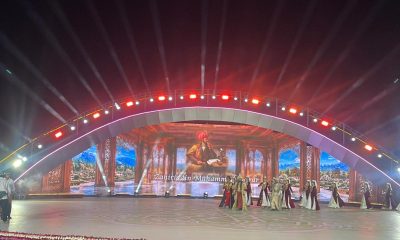
The Third International Maqom Art Forum and the New Uzbekistan