coronavirus
#EuropeanParliament ready to play its part in mitigating #COVID-19 impact


The Parliament is committed to helping EU countries deal with the coronavirus and address the socio-economic impact of the outbreak.
Parliament support
On 13 March, the European Commission set out the EU-co-ordinated response to counter the impact of the coronavirus.
The measures announced by the Commission to address Covid-19 were welcomed by Parliament President David Sassoli.
President Sassoli said the Parliament was committed to getting these measures approved as soon as possible.
"To save our countries, we must act together in Europe. We should do more. Today the watchword for Europe is solidarity. No one will be left alone and no one will act alone."
EU strategy to manage the outbreak
The Commission proposes measures to:
- Ensure the necessary supplies to health systems by preserving the integrity of the Single Market and of production and distribution chains.
- Support people so that income and jobs are not affected disproportionally and to avoid permanent effects of the crisis.
- Support firms and ensure that the liquidity of the financial sector can continue to support the economy.
- Allow EU countries to act decisively in a coordinated way, including by relaxing rules on state aid and support measures.
Support for regions
Part of the EU response will be to amend funding rules, which must be approved by both the Parliament and the Council. Parliament’s regional development committee aims to conclude its examination of the proposal as quickly as possible. The measure would mean it would be easier to channel funding to affected areas and sectors.
Additional resources
Parliament’s budget committee also committed to deal with all initiatives to mitigate the impact of the outbreak as quickly as possible.
Measures to ease impact on aviation industry
The Commission has proposed suspending EU rules obliging airlines to operate most of their take-off and landing slots. Companies need to do so to avoid losing them, but in the current situation, the rules has led to so-called ghost flights with few passengers.
Parliament’s transport committee welcomed the plans and pledged to work on the legislation as quickly as possible.
Share this article:
EU Reporter publishes articles from a variety of outside sources which express a wide range of viewpoints. The positions taken in these articles are not necessarily those of EU Reporter. Please see EU Reporter’s full Terms and Conditions of publication for more information EU Reporter embraces artificial intelligence as a tool to enhance journalistic quality, efficiency, and accessibility, while maintaining strict human editorial oversight, ethical standards, and transparency in all AI-assisted content. Please see EU Reporter’s full A.I. Policy for more information.





ECR MEPs question the European Commission on cardiovascular health and diet promoting the Mediterranean diet as an alternative to ultra-processed foods as key to tackling obesity

Albania's Vlora airport standoff tests investor confidence as EU accession clock ticks

Iran’s regime in crisis: Negotiations, internal divisions and growing resistance

Why a Brussels–Nicosia–Eastern Mediterranean strategic affairs platform would benefit the European Union

Commission approves €659 million German state aid for four new semiconductor facilities

Kazakhstan seeks regional AI leadership as economic partnership with China enters new phase

EU law on nitrates pollution remains effective, with scope for smarter implementation

Starmer’s problem? 'He is not a politician'

The EU’s Forced-Labour Regulation Faces a Credibility Test

European Statistical Monitor: July edition

Commission publishes state aid guidance on carbon contracts for difference

Commission greenlights Estonia's fourth payment request for €135.5 million under NextGenerationEU

Drones, dominance, and the Iranian impasse: The West's strategic blind spot

Kazakhstan's fixed capital investment tops 9.5 trillion tenge in H1 2026

Commission registers two European Citizens' Initiatives on education and housing

Kazakhstan and Belgium: Building a Partnership for the Future

Kazakhstan reforms under scrutiny at Brussels Press Club round table

Japan should face up to history and contribute more to regional peace

Ambassador calls for 'speeding up' of co-operation between EU and Kazakhstan

Timur Turlov at Smart Moves Summit 2025: How chess can transform global education

Shevtsova’s case: Out-of-court sanctions dismantling trust in Ukrainian cause

The future of European transport

Trump Vs Trueman

US 'no longer' an 'unconditional ally' for Europe - MEP
-
 Italy4 days ago
ECR MEPs question the European Commission on cardiovascular health and diet promoting the Mediterranean diet as an alternative to ultra-processed foods as key to tackling obesity
-
 Albania4 days ago
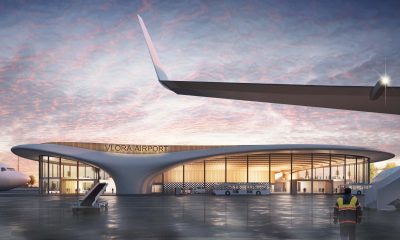
Albania's Vlora airport standoff tests investor confidence as EU accession clock ticks
-
 Iran5 days ago
Iran’s regime in crisis: Negotiations, internal divisions and growing resistance
-
 Euro-Mediterranean relations4 days ago
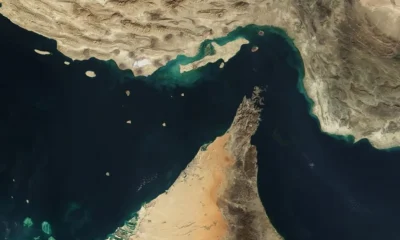
Why a Brussels–Nicosia–Eastern Mediterranean strategic affairs platform would benefit the European Union