China-EU
Chinese “leadership and coordination”

China’s response to the devastating typhoon that has hit the country in recent days is evidence of an effective political leadership.
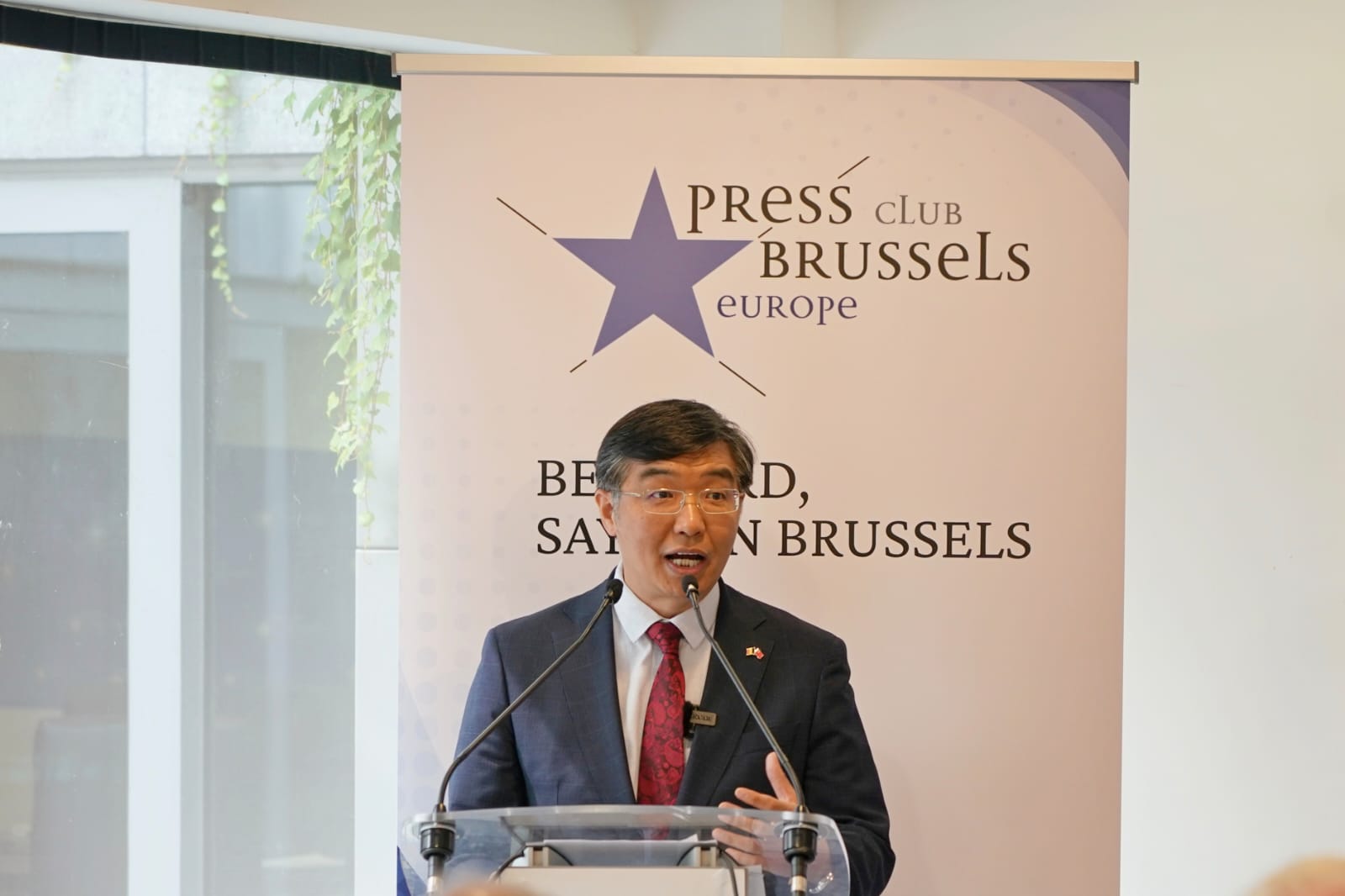
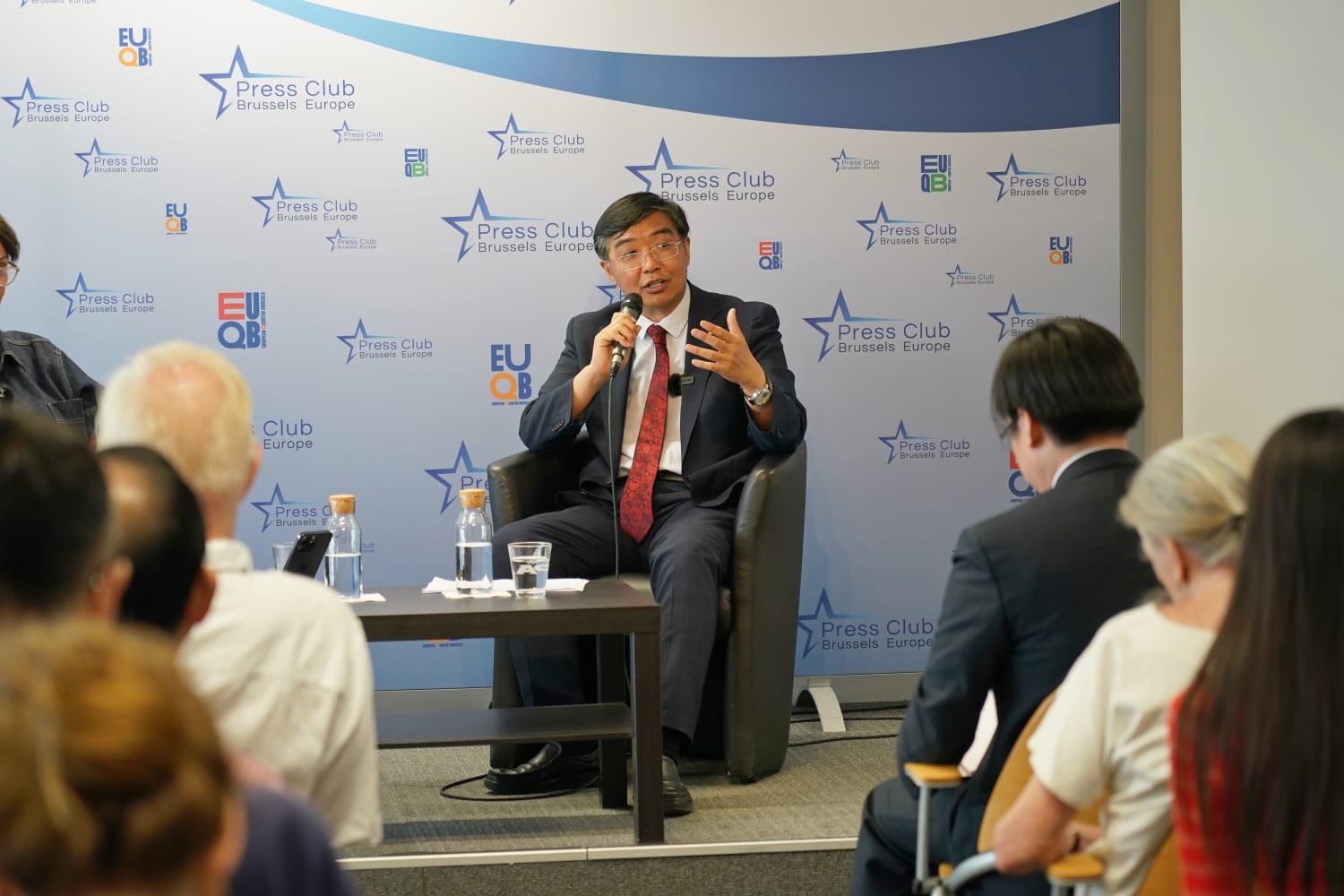
That was one message to emerge from Fei Shengchao, China’s ambassador to Belgium when he spoke at Brussels Press Club on Monday (13 July).
The extreme conditions came after Typhoon Bavi, the most powerful storm to strike mainland China this year, brought heavy rain and strong winds to eastern regions.
More than 1.7 million people were successfully evacuated in Zhejiang and thousands more in neighbouring provinces.
Speaking at an event on EU/China relations, the ambassador highlighted the official response to the natural disaster as the latest evidence of Chinese “leadership and coordination” capability.
Its experience in dealing with climate change, he said, is something it wanted to share with the West, adding it was "better to do this together".
All this, he noted, should be considered in light of the "rapid" progress the country has made since the founding of the Chinese Communist Party.
His comments are especially timely as the party celebrates its 105th anniversary this month.
He reminded the packed audience that when the party was created, China “looked very different” to how it does today with 80 percent of the population unable to read or write, little or no public medical care and an average lifespan of well below 40 years.
He said, “I remember my own father telling me how, after high school, he would go into the local village to teach the peasants how to read and write.”
But he said that over a 5-10 year period China “popularised” adult literacy and provided basic healthcare for the masses.
“We also tried to learn from others, both Europe and the old Soviet Union,” he added.
“It was not all plain sailing and there were some bitter lessons learned.”
It was during China’s renowned opening up phase that major changes started to take hold, he added, saying this peaked in 2025 when its GDP topped $20 trillion, about the equivalent for the entire EU.
The scale of its progress is also, he said, measured in the personal well being of its citizens with GDP per capita of some $14,000.
China’s GDP is now 1,500 times the size it was in 1949, he said.
“This is the first time in human history we have witnessed such economic growth.”
“We have come a long way and this,” he told the audience, “is the level of economic growth that we have achieved.”
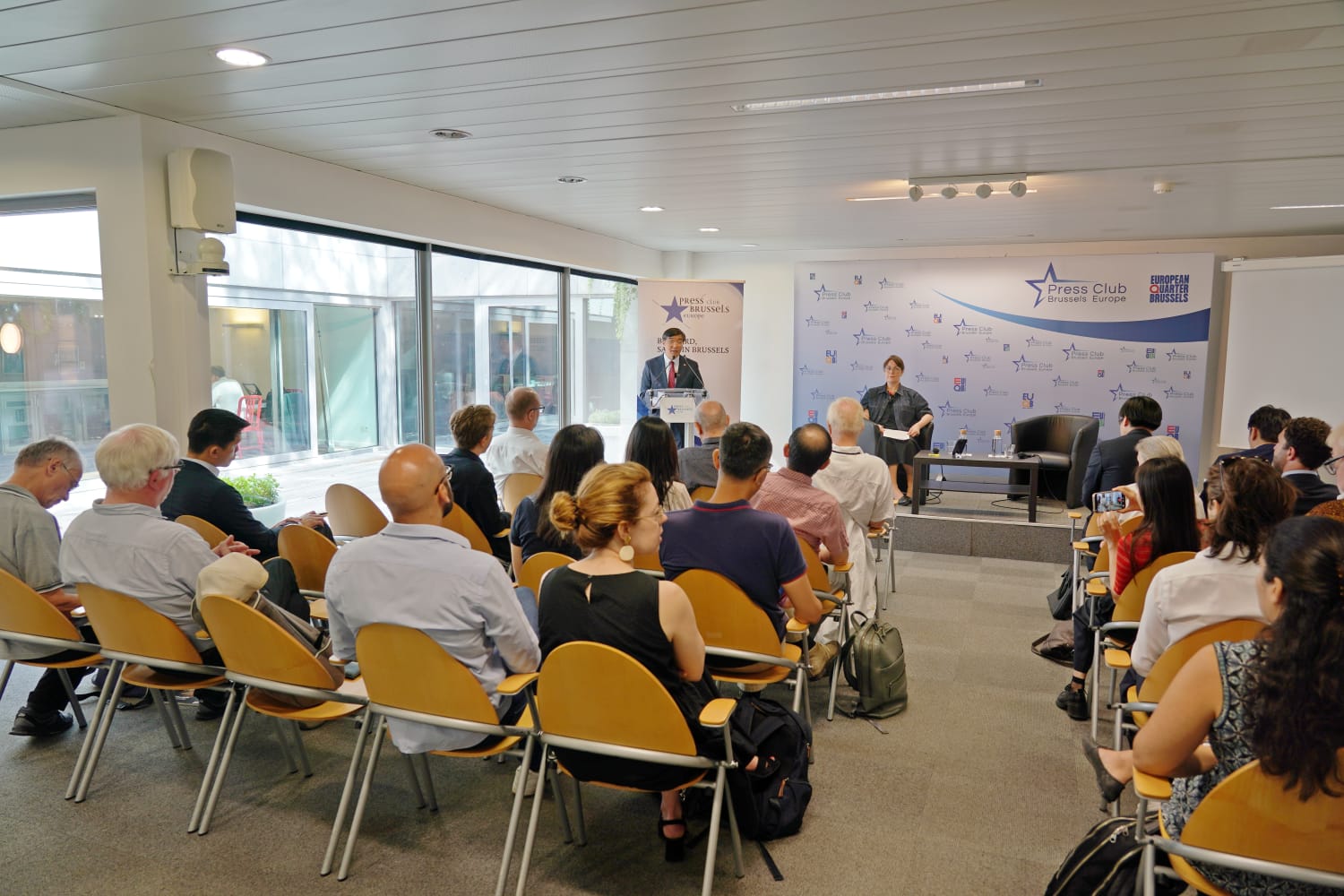
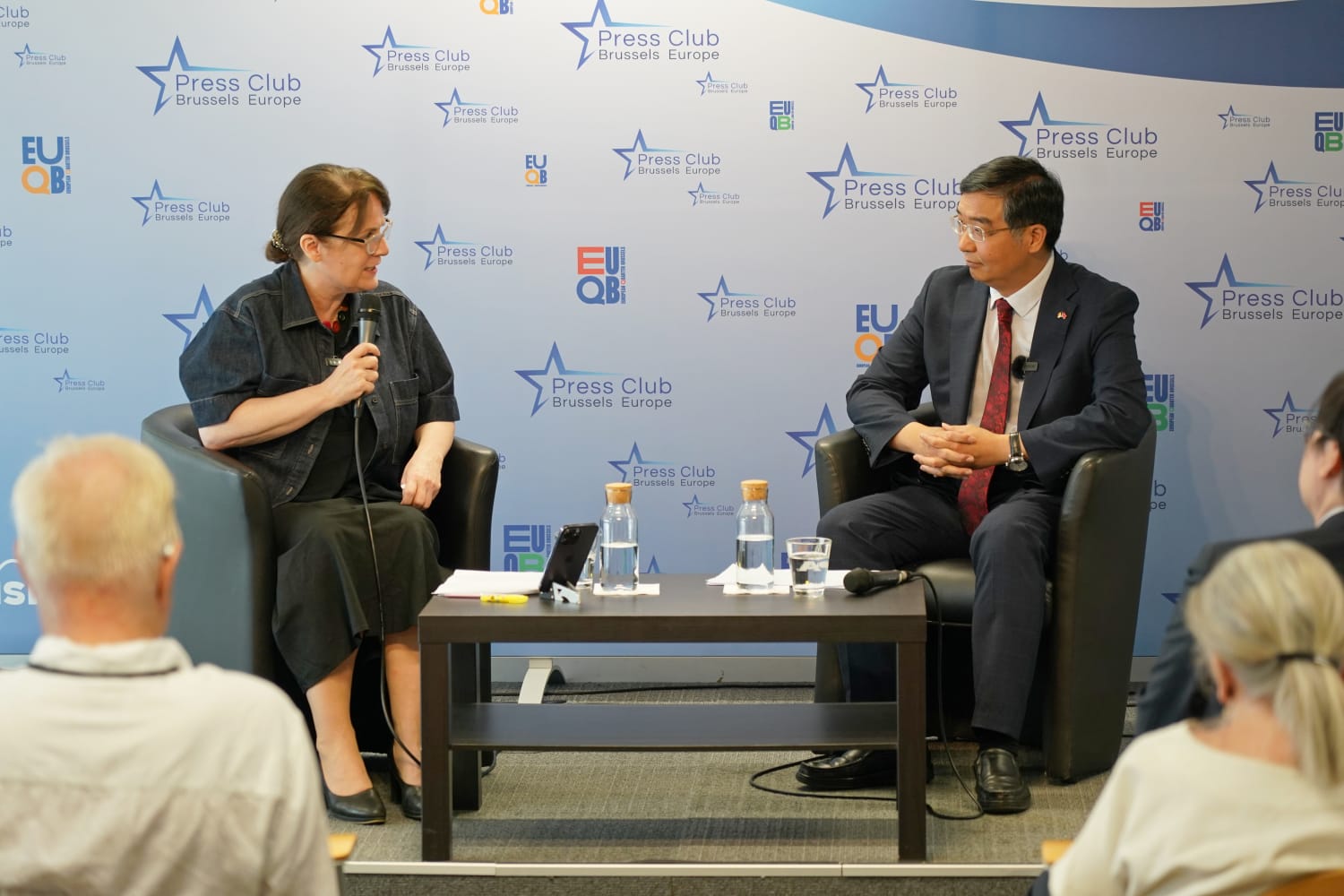
The event, organised by EUReporter, was a chance for the diplomat to outline China’s economic development under the leadership of the Communist Party of China, its future prospects, and the evolving relationship between China and the European Union.
He noted that China, with the US and EU, was the main driver of global economic growth but also warned of the risks of being “shut out” of such shared prosperity.
One example he cited were the so called “tariff wars” started last year by the US against Canada and Mexico which he described as “not very helpful.”
He questioned the logic of imposing trade restrictions on things such as agricultural products saying, “do you think this will do anything to rebalance trade? I think not.”
The fall out from last year’s experience, he said, was one reason why the US and China both now needed to “stabilise” relations.
He said, “Yes, we could all survive without each other but I ask: Would that be for the best? Certainly not and that is the message I want to convey.”
The diplomat, formerly his country’s ambassador to Somalia, also called for more effort to foster mutual trust between his country and the West.
On this, he said “Some see Chinas as a threat, others as an opportunity. Some think both. What you cannot ignore is that China is always ‘hot’ as a topic of discussion and debate.
“The problem is that we still do not yet know each other enough. But whatever differences may exist some what remains unchanged is that the world, today, is more connected than ever before.”
“There are immense opportunities that we have to offer each other.”
“However, this high level of mistrust and misconceptions about each other persists so we must all do more to put an end to this and to reduce suspicion.”
He said it “takes two to tango” and while China could learn a lot from Europe this applied both ways.
Better mutual understanding, he argued, could be advanced with more “people to people” contact.
Here,he pointed out that there were 30 flights per week to China from Brussels alone and there was no visa waiver programme for Belgian nationals. He also praised efforts by authorities in West Flanders to enhance partnerships with China.
In a Q&A session after his speech he was asked about Hong Kong's pro-democracy media tycoon Jimmy Lai who was sentenced to 20 years in prison for colluding with foreign forces under the city's controversial national security law.
The ambassador said that all individual’s had to comply and respect the laws and regulations of his or her country and he had full confidence in the legitimacy of Hong Kong’s judicial system.
“The question is whether someone has, or not, broken the law.”
He was also quizzed about media freedom, and he agreed that this was vital in any functioning democracy.
He said, “China is a socialist democracy and media and press freedom is one of our six common values. It applies all the more so in the case of the media but we have to remember also that such freedom is exercised within the parameters of the law.
Share this article:
EU Reporter publishes articles from a variety of outside sources which express a wide range of viewpoints. The positions taken in these articles are not necessarily those of EU Reporter. Please see EU Reporter’s full Terms and Conditions of publication for more information EU Reporter embraces artificial intelligence as a tool to enhance journalistic quality, efficiency, and accessibility, while maintaining strict human editorial oversight, ethical standards, and transparency in all AI-assisted content. Please see EU Reporter’s full A.I. Policy for more information.






EU foreign ministers to discuss options for restricting trade with Israeli communities in Judea and Samaria

European operation dismantles €10 million illicit cigarette network in Spain

Srebrenica's lesson is prevention. Why isn't the world applying It to Kashmir?

ALROSA Re-elects Supervisory Board with Minimal Changes

AIFC to host Astana Finance Days 2026 in September

Energy Union Task Force takes stock of oil and gas security of supply in the EU

Joint statement by High Representative/Vice-President Kallas and Commissioner Kos on the 31st anniversary of the Srebrenica genocide

EU launches a Team Gaza Initiative to support early recovery in Gaza with an initial amount of nearly €900 million

Britain’s leadership crisis is a symptom, not the disease

Chinese “leadership and coordination”

Shared commitment to advance EOSC through new EOSC Nodes and EOSC projects

Why young jobseekers struggle to find roles abroad that fit their expertise

Farmers, fair markets and consumers: new report highlights the role of EU competition rules in agriculture

EU and South Africa kick off intergovernmental dialogue on Clean Trade and Investment Partnership

Seveso - 50 years on: EU strengthens its commitment to industrial safety in a changing landscape of risk

Commission opens formal investigation into possible gun jumping in XXXLutz's acquisition of Porta

Kazakhstan reforms under scrutiny at Brussels Press Club round table

Japan should face up to history and contribute more to regional peace

Ambassador calls for 'speeding up' of co-operation between EU and Kazakhstan

Timur Turlov at Smart Moves Summit 2025: How chess can transform global education

Shevtsova’s case: Out-of-court sanctions dismantling trust in Ukrainian cause

The future of European transport

Trump Vs Trueman

US 'no longer' an 'unconditional ally' for Europe - MEP
-
 Israel3 days ago
EU foreign ministers to discuss options for restricting trade with Israeli communities in Judea and Samaria
-
 Cigarettes2 days ago
European operation dismantles €10 million illicit cigarette network in Spain
-
 Kashmir2 days ago
Srebrenica's lesson is prevention. Why isn't the world applying It to Kashmir?
-
 Economy1 day ago
ALROSA Re-elects Supervisory Board with Minimal Changes