coronavirus
Does my insurance cover #Coronavirus testing and treatment in Europe?

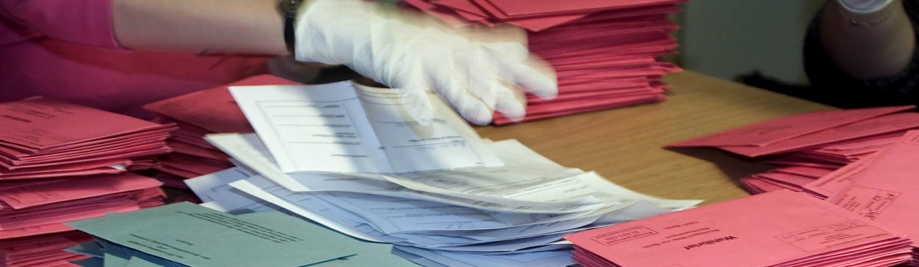
Financial coverage of testing and medical treatment in case of a coronavirus infection is currently one of the main concerns of many Europeans and foreign travellers stranded in a Europe with closed borders and travel restrictions all over the place, writes Valmir Mehmeti.
Amid a financial crisis in sight with many companies in the brink of bankruptcy, Europeans have turned to their health insurance and EHIC cards to check if in case of a coronavirus infection they would need to cover the expenses themselves, or their provider/EHIC covers that already.
The thing is that all European Union citizens possessing a European Health Insurance Card, who are currently in their home country or another EU country are covered for both COVID-19 testing and treatment at public hospitals in case of infection.
The EHIC, however, does not cover repatriation of remains in case of death. It is not valid in the non-EU countries either.
It is worth noting that the EHIC does not necessarily mean free healthcare, since an EU citizen who is not a resident of the EU country where he/she is currently testing or receiving treatment will be held to the same standard as the citizens of the country. Meaning if citizens of that country have to pay something for a medical service, then so does the non-resident person getting tested/receiving treatment.
As per those who do not own an EHIC card, including the rest of the EEA countries, which are not members of the European Union, nationals of these countries depend on their health insurance provider.
In these countries, citizens will either receive free testing and treatment, which will be covered with by the healthcare fund, or the by the patient’s own health insurance, whether private, public or combined.
Since insurance rules for third-country nationals residing in the EEA countries are different most of the time, coronavirus testing and treatment depends on the policy of insurance provider. For example, students in Germany that are covered by the public provider Techniker Krankenkasse (TK) will be fully covered, in case they fall ill of the Coronavirus and need treatment.
Portugal, on the other hand, has moved on to grant all asylum seekers and migrants with pending requests with citizenship rights until the end of the coronavirus pandemic, in order to ensure they have access to medical care.
Travellers’ health insurance in the EU
It is unknown how many third-country citizens have been stuck in the EU on a short-term visa or short-stay visa-free basis, but the number is clearly high.
While these travellers do not need to worry about violating terms of stay while being unable to leave due to travel restrictions placed all over the world, whether their travel health insurance will cover costs for the possible need for testing and treatment, is quite worrying.
The pandemic has highlighted the importance of paying attention to the print of a health insurance policy, so a traveller knows what it includes and how he/she will be covered in such extraordinary occasions.
Following the outbreak of the Coronavirus in Italy, many travel insurance providers started updating their websites noting that the policies purchased after the date of that note’s publication would not cover trip cancellation or disruption relating to the virus, including testing and treatment.
Therefore, travellers who bought travel insurance after COVID-19 was already an epidemic, chances are very high they won’t be covered for medical expenses relating to contracting the disease. Despite there may be companies who have made exemptions and are covering their clients in case of need, such cases are very rare.
Additionally, even travellers who purchase travel insurance before the COVID-19 was widely spread in Italy, if they travelled to Europe after the Foreign Authority in their country of residence advised against all non-essential travel to Europe, these travellers won’t be covered either.
Share this article:

EU Reporter publishes articles from a variety of outside sources which express a wide range of viewpoints. The positions taken in these articles are not necessarily those of EU Reporter. Please see EU Reporter’s full Terms and Conditions of publication for more information EU Reporter embraces artificial intelligence as a tool to enhance journalistic quality, efficiency, and accessibility, while maintaining strict human editorial oversight, ethical standards, and transparency in all AI-assisted content. Please see EU Reporter’s full A.I. Policy for more information.





ECR MEPs question the European Commission on cardiovascular health and diet promoting the Mediterranean diet as an alternative to ultra-processed foods as key to tackling obesity

Albania's Vlora airport standoff tests investor confidence as EU accession clock ticks

Iran’s regime in crisis: Negotiations, internal divisions and growing resistance

Commission approves €659 million German state aid for four new semiconductor facilities

Why a Brussels–Nicosia–Eastern Mediterranean strategic affairs platform would benefit the European Union

Kazakhstan seeks regional AI leadership as economic partnership with China enters new phase

EU law on nitrates pollution remains effective, with scope for smarter implementation

Starmer’s problem? 'He is not a politician'

The EU’s Forced-Labour Regulation Faces a Credibility Test

European Statistical Monitor: July edition

Commission publishes state aid guidance on carbon contracts for difference

Commission greenlights Estonia's fourth payment request for €135.5 million under NextGenerationEU

Drones, dominance, and the Iranian impasse: The West's strategic blind spot

Kazakhstan's fixed capital investment tops 9.5 trillion tenge in H1 2026

Commission registers two European Citizens' Initiatives on education and housing

Kazakhstan and Belgium: Building a Partnership for the Future

Kazakhstan reforms under scrutiny at Brussels Press Club round table

Japan should face up to history and contribute more to regional peace

Ambassador calls for 'speeding up' of co-operation between EU and Kazakhstan

Timur Turlov at Smart Moves Summit 2025: How chess can transform global education

Shevtsova’s case: Out-of-court sanctions dismantling trust in Ukrainian cause

The future of European transport

Trump Vs Trueman

US 'no longer' an 'unconditional ally' for Europe - MEP
-
 Italy5 days ago
ECR MEPs question the European Commission on cardiovascular health and diet promoting the Mediterranean diet as an alternative to ultra-processed foods as key to tackling obesity
-
 Albania5 days ago
Albania's Vlora airport standoff tests investor confidence as EU accession clock ticks
-
 Iran5 days ago
Iran’s regime in crisis: Negotiations, internal divisions and growing resistance
-
 Germany5 days ago
Commission approves €659 million German state aid for four new semiconductor facilities