Defence
'Europe's trains at risk'


European security forces will increase spot checks on trains and expand the exchange of information about terror suspects, European officials said after a meeting to confront the risk of attacks on the continent’s rail networks.
The interior and transport ministers also said they’ll consider listing passenger names on all international rail tickets, and asked the European Union to work on a plan to better track trade in illegal guns, French Interior Minister Bernard Cazeneuve said after Saturday’s (29 August) meeting in Paris, called following the thwarted 21 August attack on a high-speed Thalys train from Amsterdam to Paris.
“As a first stage, we’ll greatly increase sporadic ID checks and luggage inspection, not just on international routes but also on national high-speed trains,” French Transport Minister Alain Vidalies told reporters. “At a later stage, we’re going to work on giving more powers to the train networks’ own security forces and developing passenger lists.”
The attack underscored the risks facing Europe’s trains, which unlike airplanes depart from open stations with passengers able to buy tickets and board at the last minute. Identity checks are not currently required for boarding trains in most European countries.
Cazeneuve said the EU will use ‘‘all its tools” to help secure trains, while insisting that the ministers intended to “guarantee fluid international train traffic.”
Cazeneuve also used the meeting to renew his call to the EU parliament to allow the creation of Passengers Name Records for flights within the EU, which faces opposition on privacy grounds.
Saturday’s meeting was attended by ministers from France, Germany, the UK, Italy, Spain, Belgium, the Netherlands, Luxembourg and Switzerland, as well as EU commissioners (Bloomberg).
Share this article:
EU Reporter publishes articles from a variety of outside sources which express a wide range of viewpoints. The positions taken in these articles are not necessarily those of EU Reporter. Please see EU Reporter’s full Terms and Conditions of publication for more information EU Reporter embraces artificial intelligence as a tool to enhance journalistic quality, efficiency, and accessibility, while maintaining strict human editorial oversight, ethical standards, and transparency in all AI-assisted content. Please see EU Reporter’s full A.I. Policy for more information.



ECR MEPs question the European Commission on cardiovascular health and diet promoting the Mediterranean diet as an alternative to ultra-processed foods as key to tackling obesity

Albania's Vlora airport standoff tests investor confidence as EU accession clock ticks

Iran’s regime in crisis: Negotiations, internal divisions and growing resistance

Why a Brussels–Nicosia–Eastern Mediterranean strategic affairs platform would benefit the European Union

Commission approves €659 million German state aid for four new semiconductor facilities

Kazakhstan seeks regional AI leadership as economic partnership with China enters new phase

EU law on nitrates pollution remains effective, with scope for smarter implementation

Starmer’s problem? 'He is not a politician'
The EU’s Forced-Labour Regulation Faces a Credibility Test

European Statistical Monitor: July edition

Commission publishes state aid guidance on carbon contracts for difference

Commission greenlights Estonia's fourth payment request for €135.5 million under NextGenerationEU

Drones, dominance, and the Iranian impasse: The West's strategic blind spot

Kazakhstan's fixed capital investment tops 9.5 trillion tenge in H1 2026

Commission registers two European Citizens' Initiatives on education and housing

Kazakhstan and Belgium: Building a Partnership for the Future

Kazakhstan reforms under scrutiny at Brussels Press Club round table

Japan should face up to history and contribute more to regional peace

Ambassador calls for 'speeding up' of co-operation between EU and Kazakhstan

Timur Turlov at Smart Moves Summit 2025: How chess can transform global education

Shevtsova’s case: Out-of-court sanctions dismantling trust in Ukrainian cause

The future of European transport

Trump Vs Trueman

US 'no longer' an 'unconditional ally' for Europe - MEP
-
 Italy5 days ago
ECR MEPs question the European Commission on cardiovascular health and diet promoting the Mediterranean diet as an alternative to ultra-processed foods as key to tackling obesity
-
 Albania5 days ago
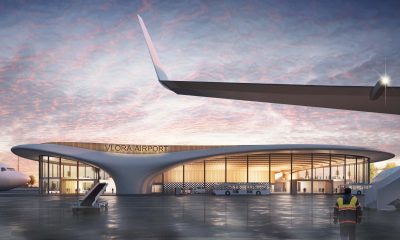
Albania's Vlora airport standoff tests investor confidence as EU accession clock ticks
-
 Iran5 days ago
Iran’s regime in crisis: Negotiations, internal divisions and growing resistance
-
 Euro-Mediterranean relations5 days ago
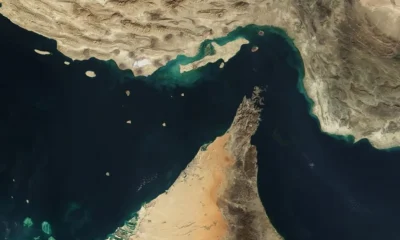
Why a Brussels–Nicosia–Eastern Mediterranean strategic affairs platform would benefit the European Union