China
Taxation and aviation safety pacts consolidate peaceful cross-strait development between Taiwan and mainland China

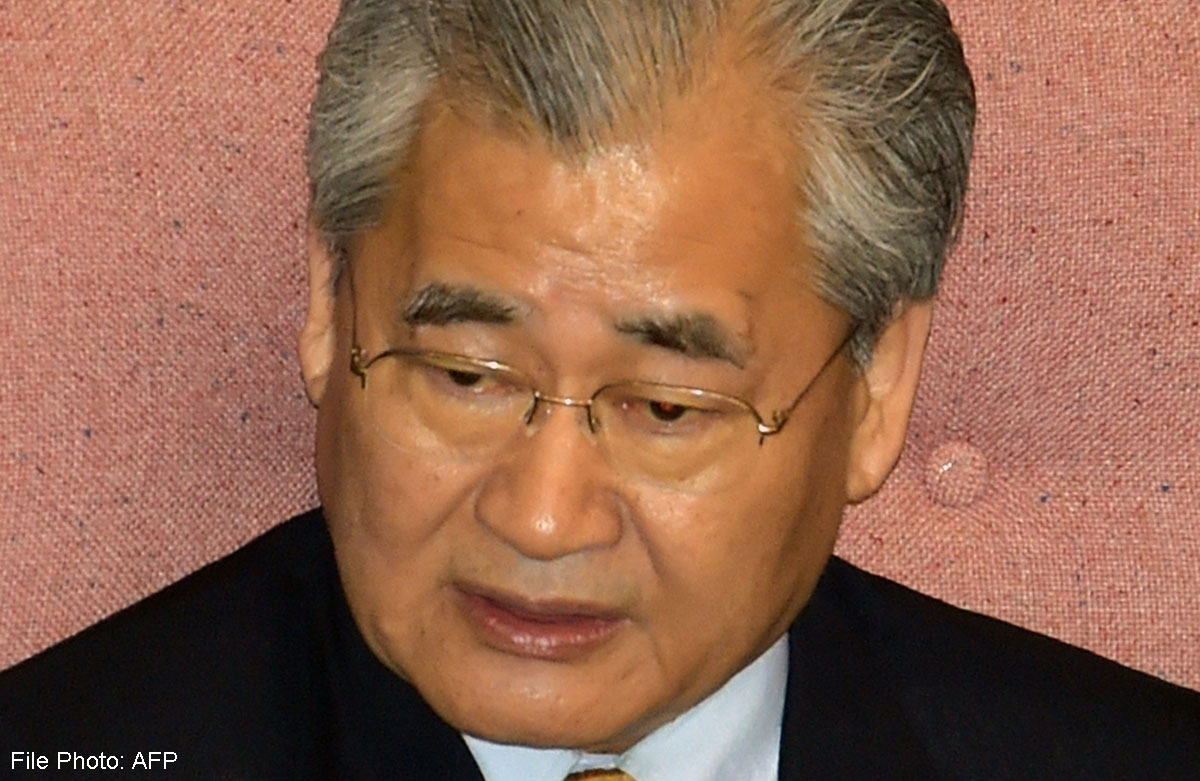
Agreements on taxation cooperation and aviation safety were signed on 25 August by Taiwan’s Straits Exchange Foundation and mainland China’s Association for Relations Across the Taiwan Straits, further strengthening the basis for peaceful ties and mutual prosperity.
The taxation accord covers avoidance of double taxation and the enhancement of cooperation on tax issues. The flight agreement allows cross-strait carriers to use local personnel and facilities for maintenance services, as well as safety and airworthiness inspections. The pacts were signed during the 11th round of SEF-ARATS talks in Fuzhou, mainland China.
ROC Premier Mao Chi-kuo (pictured) said at a news conference on 26 August that implementation of the tax agreement would create a better environment for investment by Taiwan’s businesses and boost their competitiveness in the world market, thus stimulating the country’s economy. The aviation pact will help guarantee the safety of travelers, he added.
Premier Mao noted that while a bill on the oversight of cross-strait agreements has not yet been passed, in the negotiations on these two accords the government abided by the spirit of the bill by keeping relevant parties informed and evaluating national security risks, thereby allowing for widespread understanding of the content of the accords, resolving doubts, and garnering support for their signing.
Mainland Affairs Council Minister Hsia Li-yan said at the news conference that major issues for negotiation in upcoming SEF-ARATS meetings include the opening of reciprocal offices, an agreement on trade in goods, dispute settlement, and cooperation on environmental protection.
The 1992 consensus on “one China, with respective interpretations” has been the key to institutionalized cross-strait negotiations and exchanges, as well as the basis for the government’s promotion of cross-strait policy, Minister Hsia said. Maintaining peace is the responsibility of both sides of the strait, and the shared hope of the people, ruling party, and opposition parties in Taiwan, he pointed out.
For the last seven years, the government has put Taiwan first for the benefit of the people, maintaining the status quo of no unification, no independence, and no use of force under the framework of the ROC Constitution, Minister Hsia said, adding that he looks forward to the government’s continued application of these principles in promoting cross-strait relations.
Share this article:
EU Reporter publishes articles from a variety of outside sources which express a wide range of viewpoints. The positions taken in these articles are not necessarily those of EU Reporter. Please see EU Reporter’s full Terms and Conditions of publication for more information EU Reporter embraces artificial intelligence as a tool to enhance journalistic quality, efficiency, and accessibility, while maintaining strict human editorial oversight, ethical standards, and transparency in all AI-assisted content. Please see EU Reporter’s full A.I. Policy for more information.



Security realignment inevitable in Middle East after Netanyahu-Trump's war

Better enforcement of passenger rights: New EU agreement strengthens protection across all modes of transport

EU deploys emergency assistance to Venezuela following earthquakes

EU steps up support for Ukraine's defence, recovery and reconstruction at the Ukraine Recovery Conference 2026

Dismantling 'high walls' for a shared European-Asian future

Bangladeshis waking up to reality of Yunus government

From imitation to leadership: The production-based rise of Japan and China

Copernicus: Europe’s air quality improves despite persistent pollution episodes

Europe must double down on nuclear progress to achieve its long-term ambitions

Solana Company Partners with Kazakhstan on $6B Alatau Crypto Megacity

Astana's congress of world religions: A global platform for dialogue in an age of division

How Schuman lost Its way

Rating of American Express casino sites in the UK

PMI defends AI consultation tool as scrutiny grows over EU tobacco rules review

Civil society from across the EU gathers in Cork to reinforce Europe’s sustainability agenda

The Iran war changed Pakistan's strategic value, not its political trajectory

Kazakhstan reforms under scrutiny at Brussels Press Club round table

Japan should face up to history and contribute more to regional peace

Ambassador calls for 'speeding up' of co-operation between EU and Kazakhstan

Timur Turlov at Smart Moves Summit 2025: How chess can transform global education

Shevtsova’s case: Out-of-court sanctions dismantling trust in Ukrainian cause

The future of European transport

Trump Vs Trueman

US 'no longer' an 'unconditional ally' for Europe - MEP
-
 Middle East5 days ago
Security realignment inevitable in Middle East after Netanyahu-Trump's war
-
 Transport5 days ago
Better enforcement of passenger rights: New EU agreement strengthens protection across all modes of transport
-
 Earthquake5 days ago
EU deploys emergency assistance to Venezuela following earthquakes
-
 Ukraine5 days ago
EU steps up support for Ukraine's defence, recovery and reconstruction at the Ukraine Recovery Conference 2026