Bangladesh
Bangladesh 50 years on: 'We should be the Switzerland of the East'

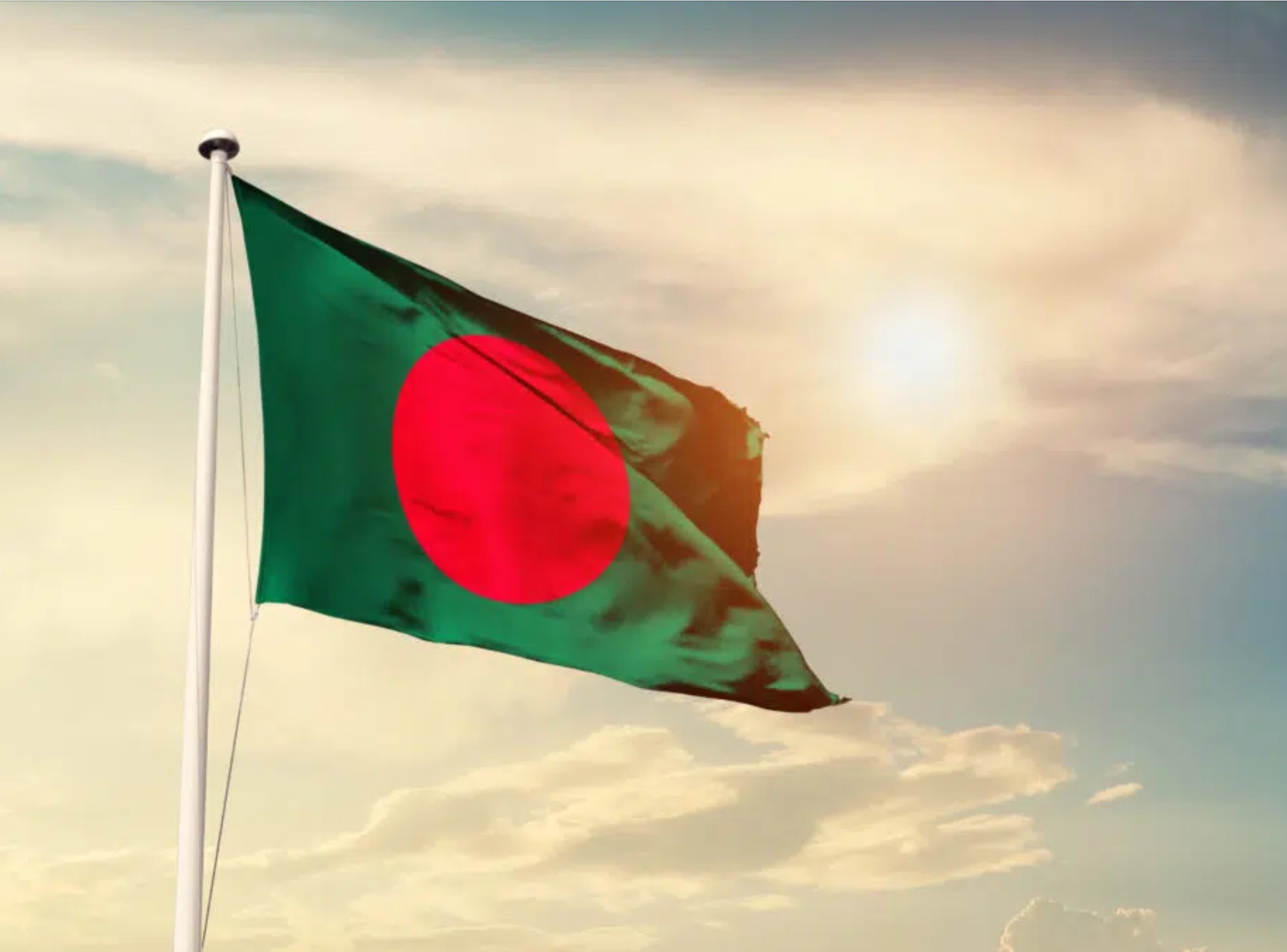
When Bangladesh achieved independence in 1971, it was as a war-ravaged and impoverished country. There was a spirit of determination in the people but much would depend on a successful foreign policy. Involved in that task from the beginning was Tariq Karim, whose diplomatic career would include serving as Ambassador to the United States and then High Commissioner to India. In a keynote address at the Vrije Universiteit Brussel, Ambassador Karim examined how his country has been transformed, both at home and on the world stage, writes Political Editor Nick Powell.
Even after 50 years, a memory still rankles with Tariq Karim, now director of the Centre for Bay of Bengal Studies at the Independent University in Bangladesh. His country was referred to as a ‘bottomless basket case’ by westerners quick to write off the newly born nation.
Despite the grim reality of overwhelming poverty in the former East Pakistan, with its limited infrastructure and industry destroyed by war, he believed that his country would become the ‘aroused tiger’ of today. “It almost reads like a fairytale” Tariq Karim said in his keynote address to a seminar organised by the Bangladesh Embassy in Brussels in partnership with the Brussels Diplomatic Academy and the VUB Chair of Asia-Pacific studies, Professor Kim Van der Borght.
Now recognised by the World Bank as a model for poverty reduction and one of the fastest growing economies in the world over the last ten years, Bangladesh’s transformation has been ‘messy’ Ambassdor Karim conceded. The early years saw the assassination of the Father of the Nation, Bangabandhu Sheikh Mujibur Rahman, followed by military rule. The return of democracy had also seen political instability before it brought the present government to power.
But under Bangabandhu’s leadership, a foreign policy had been established that included a hard-nosed pragmatism based on the knowledge that one can choose one’s friends but not one’s neighbours. The guiding principles were a respect for sovereignty, non-interference in other countries’ internal affairs and non-alignment. This was at a time when world affairs were viewed through the prism of the cold war, with Pakistan allied to America and India close to Russia.
An early initiative was a partnership in 1973 with the EU’s predecessor, the European Economic Community. Another participant in the seminar, Ambassador Rensje Teerink from the European External Action Service, noted how Bangladesh had grasped the opportunity of tariff-free and quota-free access to the European market “like no other country”. Professor Van der Borght observed that Bangladesh’s dominant industry of garment manufacturing had thrived because it had met the European standards that had so often proved a problem for other developing countries’ industries.
Seth Oldmixon, from the American NGO Liberty South Asia, observed how 50 years ago, Bangladesh “wasn’t at the starting line, it wasn’t even in the stadium” but has now outperformed both Pakistan and India, gaining a reputation as an international hotspot for global investment. Its plans for switching to renewable energy were on a par with Denmark and Sweden’s, rightly for a country vulnerable to flooding and the consequences of global warming.
Several speakers acknowledged the need to diversify the economy. Seth Oldmixon praised the emerging pharmaceutical industry for obtaining US regulatory approval. Tariq Karim said the emergence of shipbuilding was in a welcome return of an old tradition; ships built in Bengal had been part of Admiral Nelson’s fleet at Trafalgar.
Runa Khan, from the Bangladeshi NGO Friendship, referred to how what was formerly one of the richest states in India had become a newly poor country in the twentieth century. But for her, Bangladesh’s people were its goldmine, with an indomitable spirit in the face of adversity. Even when faced with flooding, “with our feet in the mud, we look at the stars”.
For Seth Oldmixon, that spirit of a people with a national identity based on language, not religion, was a reward for being the first constitutionally secular country in South Asia. He praised Prime Minister Sheikh Hasina for her stance, unique in the region, for religious freedom and tolerance.
Bangladesh’s Ambassador to the European Union, Mahbub Hassan Saleh, said Bangladesh shares the vision of a free, open, inclusive, peaceful and secure Indo-Pacific region with shared prosperity for all. He noted how his country has peacefully resolved its maritime boundary disputes with India and Myanmar.
Professor Jakub Zajaczkowski, from the University of Warsaw, thought that the international strategic interest in the Bay of Bengal is to the advantage of Bangladesh. Tariq Karim invited his audience to look at the globe as if from outer space, with Bangladesh “the epicentre of an oceanic planet”.
“It is an inescapable fact that global warming has made us one of the nations most at risk,” he said. “We cannot afford to align ourselves with anyone, against anyone. We should truly transform ourselves into the Switzerland of the East, with friendship to all, with malice to none.”
Share this article:
EU Reporter publishes articles from a variety of outside sources which express a wide range of viewpoints. The positions taken in these articles are not necessarily those of EU Reporter. Please see EU Reporter’s full Terms and Conditions of publication for more information EU Reporter embraces artificial intelligence as a tool to enhance journalistic quality, efficiency, and accessibility, while maintaining strict human editorial oversight, ethical standards, and transparency in all AI-assisted content. Please see EU Reporter’s full A.I. Policy for more information.





ECR MEPs question the European Commission on cardiovascular health and diet promoting the Mediterranean diet as an alternative to ultra-processed foods as key to tackling obesity

Albania's Vlora airport standoff tests investor confidence as EU accession clock ticks

Iran’s regime in crisis: Negotiations, internal divisions and growing resistance

Commission approves €659 million German state aid for four new semiconductor facilities

Why a Brussels–Nicosia–Eastern Mediterranean strategic affairs platform would benefit the European Union

Kazakhstan seeks regional AI leadership as economic partnership with China enters new phase

EU law on nitrates pollution remains effective, with scope for smarter implementation

Commission adopts simpler rules for EU agri-food promotion policy
The EU’s Forced-Labour Regulation Faces a Credibility Test

European Statistical Monitor: July edition

Commission publishes state aid guidance on carbon contracts for difference

Commission greenlights Estonia's fourth payment request for €135.5 million under NextGenerationEU

Drones, dominance, and the Iranian impasse: The West's strategic blind spot

Kazakhstan's fixed capital investment tops 9.5 trillion tenge in H1 2026

Commission registers two European Citizens' Initiatives on education and housing

Kazakhstan and Belgium: Building a Partnership for the Future

Kazakhstan reforms under scrutiny at Brussels Press Club round table

Japan should face up to history and contribute more to regional peace

Ambassador calls for 'speeding up' of co-operation between EU and Kazakhstan

Timur Turlov at Smart Moves Summit 2025: How chess can transform global education

Shevtsova’s case: Out-of-court sanctions dismantling trust in Ukrainian cause

The future of European transport

Trump Vs Trueman

US 'no longer' an 'unconditional ally' for Europe - MEP
-
 Italy4 days ago
ECR MEPs question the European Commission on cardiovascular health and diet promoting the Mediterranean diet as an alternative to ultra-processed foods as key to tackling obesity
-
 Albania4 days ago
Albania's Vlora airport standoff tests investor confidence as EU accession clock ticks
-
 Iran5 days ago
Iran’s regime in crisis: Negotiations, internal divisions and growing resistance
-
 Germany5 days ago
Commission approves €659 million German state aid for four new semiconductor facilities