Albania
Mike Pompeo urges greater support for Iranian resistance on visit to main Iranian opposition headquarters in Albania


On Monday (16 May), former US Secretary of State Mike Pompeo travelled to Albania to visit Ashraf 3, a large modern compound housing thousands of members of the principal Iranian opposition group, the People’s Mojahedin Organization of Iran (PMOI/MEK). Over the course of a five-hour visit, Pompeo viewed on-site exhibits describing the history of Iran’s protest movements, the actions of “Resistance Units” affiliated to the MEK, and the plight of Iranian political prisoners and dissidents, including the 30,000 who were killed in prisons throughout the country during the summer of 1988.
Pompeo directly addressed the 1988 massacre in remarks he delivered during the visit, underscoring its connection to the current Iranian President Ebrahim Raisi, whom Pompeo labeled a “butcher”. Raisi was one of four officials who served on the “death commission” in the capital city of Tehran and oversaw the interrogation and mass killing of political prisoners in Evin and Gohardasht Prisons. The MEK estimates that out of 30,000 total victims, approximately 90 percent were its members and supporters.
The former Secretary of State went on to note that threats against the leading pro-democracy opposition group persist to this day, and that many of those threats have been realized in the form of arrests, targeted attacks, and terrorist plots.
In June 2018, three terrorist operatives under the direction of a high-ranking Iranian diplomat attempted to smuggle an explosive device into a gathering of Iranian expatriates near Paris, which had been organized by the National Council of Resistance of Iran. The MEK is the main constituent of the NCRI. Experts testified that had the plot not been thwarted, it likely would have resulted in hundreds if not thousands of deaths.
Last year, the conspirators were handed sentences of between 14 and 20 years by a Belgian court. The underlying investigation ascertained that the main target of the plot had been Maryam Rajavi, the event’s key note speaker and the official designated by the NCRI to serve as transitional president of Iran when the current regime is overthrown. Rajavi met with the former US Secretary of State to discuss the progress of the Iranian Resistance movement and the policy that the US and its allies should pursue, to assist the Iranian people to achieve their goal of establishing a free, democratic, and non-nuclear Iran.
“We can and must free Iran, the Middle East, and the world of the evil of the nuclear mullahs,” Mrs. Rajavi said on Monday in the meeting attended by Mike Pompeo. Thousands of residents of Ashraf 3 participated in the meeting. Rajavi reiterated her longstanding recommendations for Western policymakers. These include “comprehensive sanctions and international isolation of the religious dictatorship” in accordance with Chapter 7, Article 41 of the United Nations Charter, as well as referring the dossier on Iran’s human rights violations and terrorist activities to the UN Security Council.
Rajavi also urged the international community to formally recognize and affirm the legitimacy of “the struggle of the entire Iranian nation to overthrow the mullahs’ regime.” This recommendation was arguably made more poignant on Monday by various reports in international media which noted the increasingly political character of protests which began in earnest after the Raisi administration cut flour subsidies and forced an already economically distressed population to cope with price increases of up to 300 percent.
While Iranian state media have remained largely silent about those demonstrations, the MEK network in Iran, independent outlets and social media groups have provided accounts of protesters burning images of Supreme Leader Ali Khamenei and chanting slogans such as “death to the dictator” and “death to Raisi”. These same slogans have become especially familiar in recent years, being strongly associated with nationwide uprisings in January 2018 and November 2019. The latter uprising resulted in a government crackdown that killed an estimated 1,500 people, but this did not stop Iran’s activist community or Resistance Units affiliated to the MEK from organizing further large-scale protests in subsequent months.
Mike Pompeo presumably had the ongoing impact of those events in mind on Monday when he declared, “The regime is clearly at its weakest point in decades.” The former Secretary of State also made reference to a boycott of the tightly-controlled presidential election which brought Raisi to power last June. Even by Tehran’s own account, the turnout for that election was the lowest since the 1979 revolution – a fact that Pompeo described as evidence of the Iranian people’s rejection not only of the “butcher” Raisi, but also of the clerical regime as a whole.
In light of the apparent domestic popularity of the Iranian Resistance movement, Pompeo emphasized that American support for it was both a moral and a practical imperative. “We must continue to support the Iranian people as they fight for a freer and more democratic Iran in any way we can,” he said. “There is so much good work that American civil society can do to further this goal.”
Implying that Tehran’s aggression toward the MEK and the NCRI reflect nervousness over their “tremendous capabilities”, Pompeo declared that it is “a necessity” for the current US government and any future government to “reach out to the Iranian Resistance” and develop a coordinated strategy. And to underscore the significance of his own visit, he also suggested that some of the relevant coordination could take place on the grounds of Ashraf 3.
A number of other American and European policymakers have visited the Iranian Resistance headquarter in Albanian since it was established in the wake of the MEK members’ relocation from their former residence in eastern Iraq.
Share this article:
EU Reporter publishes articles from a variety of outside sources which express a wide range of viewpoints. The positions taken in these articles are not necessarily those of EU Reporter. Please see EU Reporter’s full Terms and Conditions of publication for more information EU Reporter embraces artificial intelligence as a tool to enhance journalistic quality, efficiency, and accessibility, while maintaining strict human editorial oversight, ethical standards, and transparency in all AI-assisted content. Please see EU Reporter’s full A.I. Policy for more information.



ECR MEPs question the European Commission on cardiovascular health and diet promoting the Mediterranean diet as an alternative to ultra-processed foods as key to tackling obesity

Albania's Vlora airport standoff tests investor confidence as EU accession clock ticks

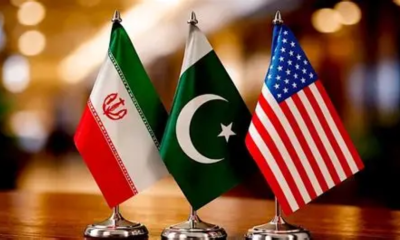
Iran’s regime in crisis: Negotiations, internal divisions and growing resistance

Commission approves €659 million German state aid for four new semiconductor facilities

Why a Brussels–Nicosia–Eastern Mediterranean strategic affairs platform would benefit the European Union

Kazakhstan seeks regional AI leadership as economic partnership with China enters new phase

EU law on nitrates pollution remains effective, with scope for smarter implementation

European Commission rewards spurious PA textbook reforms

The EU’s Forced-Labour Regulation Faces a Credibility Test

European Statistical Monitor: July edition

Commission publishes state aid guidance on carbon contracts for difference

Commission greenlights Estonia's fourth payment request for €135.5 million under NextGenerationEU

Drones, dominance, and the Iranian impasse: The West's strategic blind spot

Kazakhstan's fixed capital investment tops 9.5 trillion tenge in H1 2026

Commission registers two European Citizens' Initiatives on education and housing

Kazakhstan and Belgium: Building a Partnership for the Future

Kazakhstan reforms under scrutiny at Brussels Press Club round table

Japan should face up to history and contribute more to regional peace

Ambassador calls for 'speeding up' of co-operation between EU and Kazakhstan

Timur Turlov at Smart Moves Summit 2025: How chess can transform global education

Shevtsova’s case: Out-of-court sanctions dismantling trust in Ukrainian cause

The future of European transport

Trump Vs Trueman

US 'no longer' an 'unconditional ally' for Europe - MEP
-
 Italy4 days ago
ECR MEPs question the European Commission on cardiovascular health and diet promoting the Mediterranean diet as an alternative to ultra-processed foods as key to tackling obesity
-
 Albania4 days ago
Albania's Vlora airport standoff tests investor confidence as EU accession clock ticks
-
 Iran5 days ago
Iran’s regime in crisis: Negotiations, internal divisions and growing resistance
-
 Germany5 days ago
Commission approves €659 million German state aid for four new semiconductor facilities