Eurostat
Extra-EU coconut imports worth €146 million

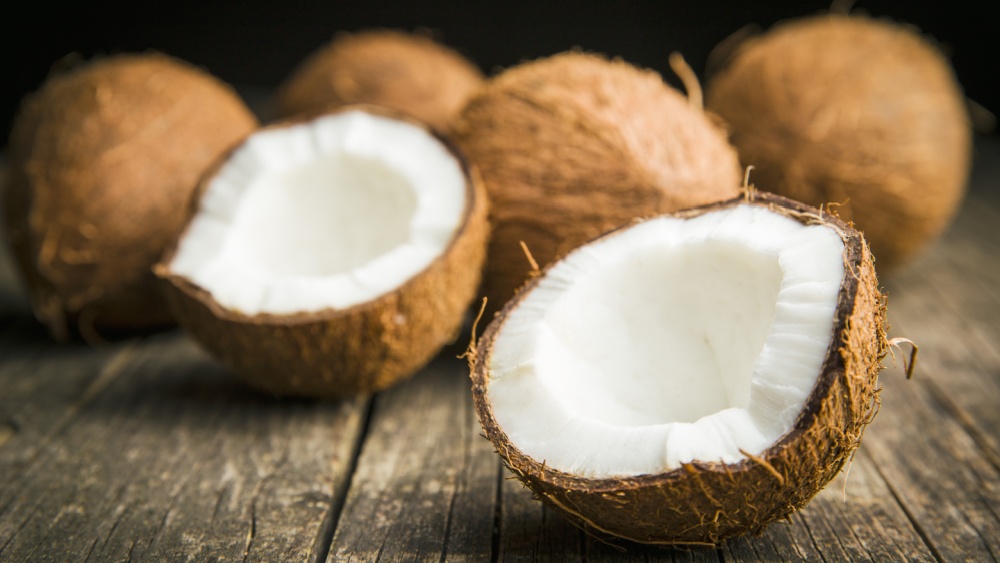
In 2023, EU members imported 105 104 tonnes of coconuts from extra-EU countries, valued at €146.0 million. Two-thirds (67%) of these imports were desiccated coconuts (70,330 tonnes), while the remaining one-third (33%) consisted of fresh coconuts, either shelled or peeled (20,328 tonnes), or in the inner shell ‘endocarp’ (14,447 tonnes).
Imports of coconuts from countries outside of the EU primarily came from 5 extra-EU partners, accounting for 86% of all coconut imports. The Philippines was by far the largest supplier, providing 41,944 tonnes, which represented 40% of the total extra-EU coconut imports. This was followed by Indonesia (17,992 tonnes, 17%), Côte d'Ivoire (14,642 tonnes, 14%), Sri Lanka (8,206 tonnes, 8%) and Vietnam (8,065 tonnes, 8%).

Source dataset: ds-045409
The Netherlands stood out as the largest importer of coconuts among EU countries in 2023, importing nearly half of the EU imports (48,937 tonnes, or 47% of all coconut imports from extra-EU countries). Germany was the second largest importer with 15,400 tonnes, accounting for 15% of all extra-EU coconut imports, followed by Spain (10 743 tonnes, 10%), France (7,793 tonnes, 7%) and Italy (4,643 tonnes, 4%). These five EU countries contributed to nearly three quarters (83%) of the total EU import of coconuts from countries outside of the EU.
For more information
Methodological notes:
- Coconuts include: 080111 – desiccated coconuts, 080112 – fresh coconuts in the inner shell ‘endocarp’, 080119 – fresh coconuts, whether or not shelled or peeled.
- Dutch imports are over-estimated because of the so-called ‘Rotterdam effect’ (or quasi-transit trade): imports from countries outside the EU that arrive in Dutch ports include imports that are re-exported to other EU countries.
Share this article:
EU Reporter publishes articles from a variety of outside sources which express a wide range of viewpoints. The positions taken in these articles are not necessarily those of EU Reporter. Please see EU Reporter’s full Terms and Conditions of publication for more information EU Reporter embraces artificial intelligence as a tool to enhance journalistic quality, efficiency, and accessibility, while maintaining strict human editorial oversight, ethical standards, and transparency in all AI-assisted content. Please see EU Reporter’s full A.I. Policy for more information.



Shoot the messenger: How Europe learned to silence its own warnings

New migration and asylum rules enter into application: What is changing?

The Earth is accumulating heat at an accelerating rate: Global warming reached 1.37°C in 2025

EU and Republic of Korea bolster strategic partnership with new areas of cooperation

When Brussels messes up: The people always pay

EU finance ministers back EIB Group strategy for a stronger, more secure Europe in a more stable world

Commission proposes €540 million in financial relief and other supports for farmers facing fertiliser crisis

European Sustainable Energy Week 2026: That’s a wrap

In focus: Improving the energy performance of buildings

Finland and Sweden prepare procurement of Arctic mobility vehicles developed under the European Defence Fund-supported FAMOUS project

Signals from the front and the future of Ukraine

Who are Europe’s next gender equality champions? Applications are now open

Electric car sales surge as high oil prices drive shift away from fossil fuels

2026 could be decisive for the future of Europe’s hypersonic shield

A new chapter for Europe and Africa begins in Nairobi

Commission approves €8 million Croatian state aid for fishing companies facing increased fuel prices

Kazakhstan reforms under scrutiny at Brussels Press Club round table

Japan should face up to history and contribute more to regional peace

Ambassador calls for 'speeding up' of co-operation between EU and Kazakhstan

Timur Turlov at Smart Moves Summit 2025: How chess can transform global education

Shevtsova’s case: Out-of-court sanctions dismantling trust in Ukrainian cause

The future of European transport

Trump Vs Trueman

US 'no longer' an 'unconditional ally' for Europe - MEP
-
 Defence4 days ago
Shoot the messenger: How Europe learned to silence its own warnings
-
 Asylum policy3 days ago
New migration and asylum rules enter into application: What is changing?
-
 Climate change3 days ago
The Earth is accumulating heat at an accelerating rate: Global warming reached 1.37°C in 2025
-
 South Korea3 days ago
EU and Republic of Korea bolster strategic partnership with new areas of cooperation