Croatia
Commission approves €8 million Croatian state aid for fishing companies facing increased fuel prices

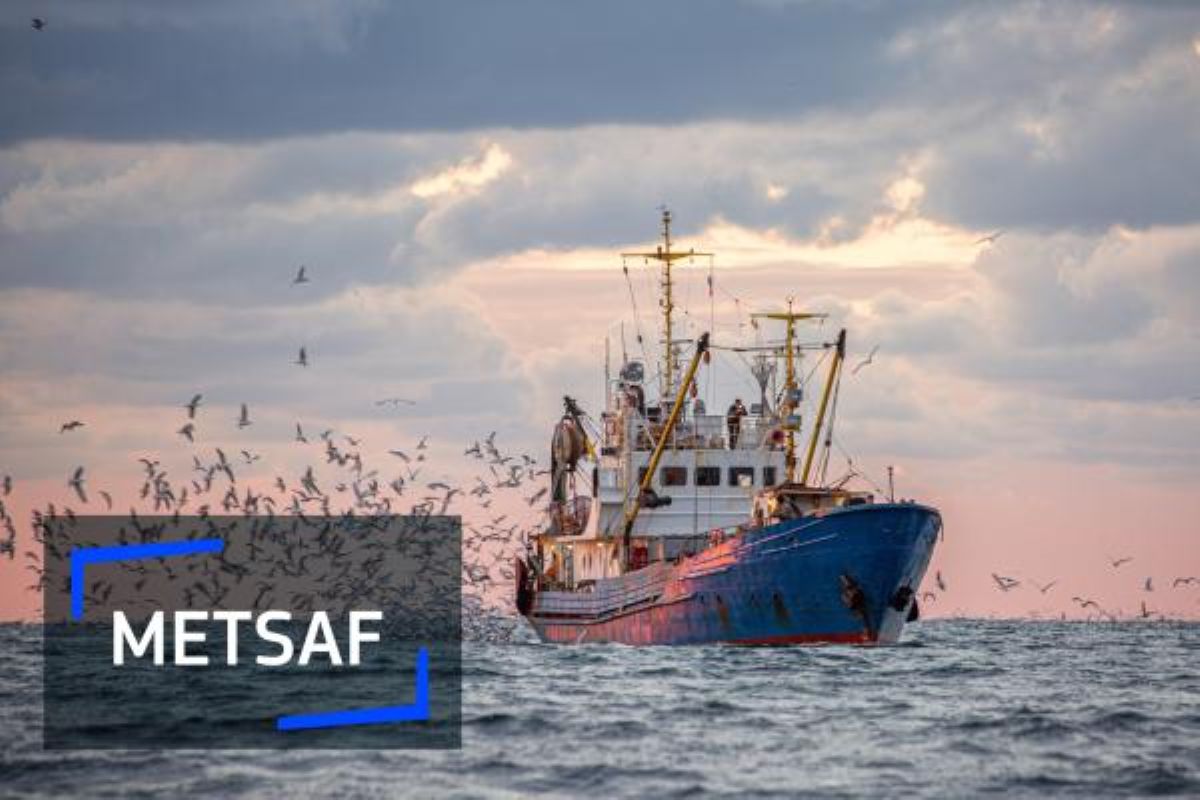
The European Commission has approved an €8 million Croatian state aid scheme to support fishing companies facing increased fuel prices due to the Middle East crisis.
The scheme was approved under the Middle East Crisis Temporary State Aid Framework (METSAF) adopted by the Commission on 29 April 2026.
The Croatian measure
Croatia notified to the Commission an €8 million scheme to support companies active in the primary production of fishery products. The scheme aims to mitigate the impact of the increase in fuel prices resulting from the Middle East crisis incurred between 1 March and 31 December 2026. It will run until 31 December 2026.
The aid will take the form of direct grants. Depending on the type of fishing vessel, the aid can cover up to 70% of the additional fuel costs or be capped at €50,000 per company.
The Commission assessed the scheme under EU State aid rules, in particular Article 107(3)(c) of the Treaty on the Functioning of the EU, which enables member states to support the development of certain economic activities subject to certain conditions, as well as Sections 1 and 2.1 of the METSAF.
The Commission found that the scheme is in line with the conditions set out in the METSAF. In particular, aid will be granted based on a scheme with a clear estimated budget, and aid will be provided to temporarily support the development of companies active in primary production of fishery products. The Commission concluded that the scheme is necessary, appropriate and proportionate to facilitate the development of an economic activity and does not adversely affect trading conditions to an extent contrary to the common interest.
On this basis, the Commission approved the Croatian scheme under EU state aid rules.
Background
On 29 April 2026, the Commission adopted the METSAF to enable member states to support the EU economy in the context of the Middle East crisis. The METSAF is a targeted and temporary framework to address the effects of the crisis on some of the most exposed sectors of the economy: agriculture, fishery, transport and energy-intensive industries. The METSAF will be in place until 31 December 2026. During its period of application, the Commission will keep the content, scope and duration of the framework under review in the light of developments in the Middle East and of the general economic situation.
While the transition towards a clean economy remains the long-term solution to shield EU companies from the effects of global energy shocks, the METSAF allows Member States to act immediately to make sure that the growth of the most exposed companies is not irreparably hampered by the current crisis.
To this end, support can take various forms for companies active in the agriculture, fishery and transport sectors. This includes aid based on actual consumption to cover part of the price increases for fuel or fertilisers, and a simplified approach for small amounts of aid.
The METSAF also includes a temporary adjustment to the Clean Industrial Deal State aid Framework allowing for further flexibility and higher aid intensities to address electricity price spikes.
More information on the METSAF can be found online.
For more information
The non-confidential version of today's decision will be made available under case number SA.123451, in the state aid register on the Commission's competition website. New publications of State aid decisions on the internet and in the Official Journal are listed in the Competition Weekly e-News.
Related topics
Share this article:
EU Reporter publishes articles from a variety of outside sources which express a wide range of viewpoints. The positions taken in these articles are not necessarily those of EU Reporter. Please see EU Reporter’s full Terms and Conditions of publication for more information EU Reporter embraces artificial intelligence as a tool to enhance journalistic quality, efficiency, and accessibility, while maintaining strict human editorial oversight, ethical standards, and transparency in all AI-assisted content. Please see EU Reporter’s full A.I. Policy for more information.





The Iran war changed Pakistan's strategic value, not its political trajectory

Open letter to president of the European Commission on the Schengen Entry/Exit System (EES)

EU policy toward Azerbaijan: Why Brussels must move beyond political dialogue

PMI defends AI consultation tool as scrutiny grows over EU tobacco rules review

Democracy cannot be selective: Why Europe must apply the same standards abroad that it demands at home

Civil society from across the EU gathers in Cork to reinforce Europe’s sustainability agenda

Majority think EU is a 'place of stability in a troubled world'

Rating of American Express casino sites in the UK

Can the EU resist US pressure on medicine prices?

Energy Union: New Spain-Portugal electricity interconnection inaugurated

Timing of the publication of the EU ETS auction calendar

Commissioner Šuica travels to Cairo to strengthen euro-mediterranean parliamentary cooperation and youth engagement

Commission seeks feedback on targeted amendment of EMFAF

Commission proposes five joint defence projects to strengthen Europe's industrial capabilities

Study: Europe's defense runs on American servers

The ancient myths that tourism boards (and slot designers) can't stop selling

Kazakhstan reforms under scrutiny at Brussels Press Club round table

Japan should face up to history and contribute more to regional peace

Ambassador calls for 'speeding up' of co-operation between EU and Kazakhstan

Timur Turlov at Smart Moves Summit 2025: How chess can transform global education

Shevtsova’s case: Out-of-court sanctions dismantling trust in Ukrainian cause

The future of European transport

Trump Vs Trueman

US 'no longer' an 'unconditional ally' for Europe - MEP
-
 Iran4 days ago
The Iran war changed Pakistan's strategic value, not its political trajectory
-
 Schengen4 days ago
Open letter to president of the European Commission on the Schengen Entry/Exit System (EES)
-
 Azerbaijan4 days ago
EU policy toward Azerbaijan: Why Brussels must move beyond political dialogue
-
 European Commission4 days ago
PMI defends AI consultation tool as scrutiny grows over EU tobacco rules review