European Commission
Commission imposes anti-dumping duties on imports of BDO from three countries


The European Commission has published a Regulation imposing definitive anti-dumping duties on imports of 1,4-Butanediol (‘BDO’) originating in the People’s Republic of China, Saudi Arabia and the United States of America.
The definitive anti-dumping duties range from 105.6% to 113.7% for China; 52.4% for Saudi Arabia, and from 135.7% to 142.5% for the United States. The imposition of definitive duties follows an investigation which found that imports of BDO from the three countries investigated were entering the EU at dumped prices. This is causing injury to the EU’s BDO industry, which is in Germany, the Netherlands and Italy.
BDO is an intermediate chemical used in the production of a wide range of downstream chemical products including polybutylene terephthalate (PBT), polybutylene adipate terephthalate (PBAT), polyurethane (PU), saturated polyester (SAT), tetrahydrofuran (THF), n-methyl pyrrolidone (NMP), thermoplastic copolyester (TPC) and gamma-butyrolactone (GBL), which are ultimately used in a wide range of applications, including in the automotive, defence, textiles, plastics, electronics, construction, batteries, pharmaceutical, and cosmetics industries.
In 2024, the EU was importing BDO to the value of €140 million from the three countries investigated.
More information
Share this article:
EU Reporter publishes articles from a variety of outside sources which express a wide range of viewpoints. The positions taken in these articles are not necessarily those of EU Reporter. Please see EU Reporter’s full Terms and Conditions of publication for more information EU Reporter embraces artificial intelligence as a tool to enhance journalistic quality, efficiency, and accessibility, while maintaining strict human editorial oversight, ethical standards, and transparency in all AI-assisted content. Please see EU Reporter’s full A.I. Policy for more information.



Does Europe need tech sovereignty?

Azerbaijan’ s foreign policy as a middle power and its role in promoting regional peace

Kallas responds to Sa’ar: ‘The EU and Israel have a lot that binds us’

Thousands of Iranians from Belgium to join the Free Iran Rally in Paris

Support for EU accession remains high across enlargement partners, latest surveys show

Philip Morris urges von der Leyen to include tobacco sector in EU competitiveness debate

CEF Transport: €1.1 billion available for infrastructure projects across the EU

EU-funded technology strengthening Europe’s security

UK building long-term economic strategy in Kyrgyzstan

EQAVET Peer Review on stakeholder engagement in VET in Portugal

Commission proposes new measures to better tackle cross-border crime and terrorism

Commission simplifies and makes energy and tyre labelling rules more accessible to European consumers

Kassym-Jomart Tokayev visit to Brussels 'important milestone'

More EU financial aid for war-torn Ukraine

Commission imposes anti-dumping duties on imports of BDO from three countries

'Millit Project' aims to tackle agriculture challenge

Kazakhstan reforms under scrutiny at Brussels Press Club round table

Japan should face up to history and contribute more to regional peace

Ambassador calls for 'speeding up' of co-operation between EU and Kazakhstan

Timur Turlov at Smart Moves Summit 2025: How chess can transform global education

Shevtsova’s case: Out-of-court sanctions dismantling trust in Ukrainian cause

The future of European transport

Trump Vs Trueman

US 'no longer' an 'unconditional ally' for Europe - MEP
-
 Digital economy4 days ago
Does Europe need tech sovereignty?
-
 Azerbaijan3 days ago
Azerbaijan’ s foreign policy as a middle power and its role in promoting regional peace
-
 Israel4 days ago
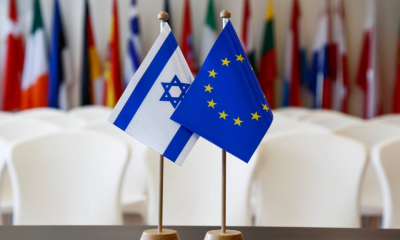
Kallas responds to Sa’ar: ‘The EU and Israel have a lot that binds us’
-
 Iran4 days ago
Thousands of Iranians from Belgium to join the Free Iran Rally in Paris