Economy
European Parliament approves EU budgets for 2014 and 2015

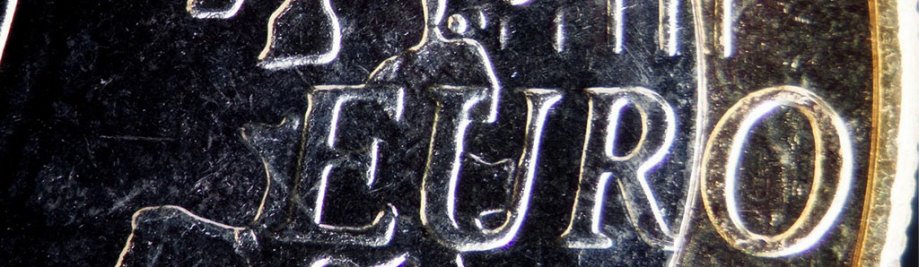
Parliament approved the draft EU budget for 2015 and a top-up of the 2014 one on Wednesday (17 December). The budget foresees €145.32 billion in commitments and €141.21bn in payments for 2015, and an extra €4.25bn to settle unpaid bills in 2014.
ˮIt is clear that the amounts that we are to accept will at best only stabilize the level of European debt. What gives me hope is the payment plan aimed at decreasing the amount of unpaid bills,ˮ said Budgets Committee Chairman Jean Arthuis (ALDE, FR), in the final debate on the budgets on 16 December. ˮGovernments had accepted the political commitments but then they failed to pay what they owed. Do we have to recall yet again that payments are only technical consequences of commitments?ˮ he asked.
Parliament’s priorities have been to secure enough money to pay off the most urgent outstanding bills from contractors working on EU-funded projects in the member states; to agree a detailed plan to wind down an accumulated pile of bills; and to secure investment financing in areas that EU institutions prioritized in their political commitments.
Payments: €4.25bn more for 2014, mid-way compromise for 2015
Parliament’s negotiators secured extra resources to pay bills from EU contractors such as local collectives, non-government organizations, and small firms. The 2015 compromise safeguards the payments to beneficiaries in areas that were most hit by delayed payments.
Payment plan
At Parliament’s insistence, the European Commission is to present a plan to wind down the unpaid bills backlog, which reached €23.4bn by the end of 2013 and is set to hit €25bn by the end of 2014, according to the latest Commission forecast. The plan will define a “sustainable level” that the amount of unpaid bills must not exceed.
Use extra revenue to reduce backlog
Parliament wanted all the €8.88bn in extra revenues from fines against companies breaching EU competition law to be used to reduce the backlog. EU member states agreed to use €3.53bn of this sum for this purpose, but decided to channel the remainder back into their national budgets.
Slightly more for growth and foreign policy
Parliament reversed €0.5bn in Council's cuts in commitments, mostly affecting competitiveness, citizenship and external action. It also negotiated €45 million more for the EU’s Horizon 2020 R&D programme and €16m more for the Erasmus+ student exchange programme. For foreign policy, the payments budget was increased by €32m. Banking supervisory agencies and Frontex also received more funding.
Background
The EU's budget for 2015 pledges 2% more money for projects than in 2014 and is enough to deliver 1% more in payments. Of this amount, 88% is spent in and by the member states, 6% goes on external policy, and another 6% is used to run the EU. The entire EU budget represents slightly more than 1% of the EU-28 GNI. The draft budget is presented by the Commission and amended by the Council and Parliament.
In addition to the budget for 2015, the following votes are also part of the budget package:
- Use of the flexibility instrument for Cyprus for €83.3m in commitments in 2015 (payments to be made 2015-2018)
- Use of the contingency margin for €3.1bn
- Advance of €50m for 2015 tapping European Solidarity Fund
- Draft Amending Budget (DAB) 3/2014: a revision of revenue forecast for 2014 by €1.568bn, call for additional payment appropriations of €4.246bn, to be used mostly for cohesion bills.
- DAB4/2014: further revision of fines revenue for 2014 by €2.433bn
- DAB5/2014, and corresponding decision: European Solidarity Fund commitment of €46.9m to Greece, Slovenia, Croatia and Italy; payment in 2015
- DAB6/2014: another revision of customs revenue forecast at €420m; revision of VAT and GNI balances of €9.5bn. On 1 December, of the €9.5bn, €4.1bn was paid.
- DAB7/2014, and corresponding decision: European Solidarity Fund commitment of €79.7m to Serbia, Croatia and Bulgaria; payment in 2015
- DAB8/2014 (identical to former DAB2/2014): surplus from 2013 of €1.005bn
Share this article:
EU Reporter publishes articles from a variety of outside sources which express a wide range of viewpoints. The positions taken in these articles are not necessarily those of EU Reporter. Please see EU Reporter’s full Terms and Conditions of publication for more information EU Reporter embraces artificial intelligence as a tool to enhance journalistic quality, efficiency, and accessibility, while maintaining strict human editorial oversight, ethical standards, and transparency in all AI-assisted content. Please see EU Reporter’s full A.I. Policy for more information.



Azerbaijan’ s foreign policy as a middle power and its role in promoting regional peace

Support for EU accession remains high across enlargement partners, latest surveys show

Philip Morris urges von der Leyen to include tobacco sector in EU competitiveness debate

Rotary : Another brick in the wall against plastic waste

Kazakhstan and the European Union: Building the next chapter of a strategic partnership

CEF Transport: €1.1 billion available for infrastructure projects across the EU

Take a splash: European bathing waters remain clean

European Commission proposes landmark tax simplification package to streamline compliance and boost competitiveness

'Ukraine does not need investment out of sympathy': Seyar Kurshutov on the rational case for early entry

Russia’s Gulf pivot: How Oman Is emerging as a strategic partner for Moscow’s post-sanctions economy

North Sea storm: The tempest buffeting an Italian oil man's ambition

Commission opens disparagement investigation into Sanofi

UK building long-term economic strategy in Kyrgyzstan

EQAVET Peer Review on stakeholder engagement in VET in Portugal

Commission proposes new measures to better tackle cross-border crime and terrorism

Commission simplifies and makes energy and tyre labelling rules more accessible to European consumers

Kazakhstan reforms under scrutiny at Brussels Press Club round table

Japan should face up to history and contribute more to regional peace

Ambassador calls for 'speeding up' of co-operation between EU and Kazakhstan

Timur Turlov at Smart Moves Summit 2025: How chess can transform global education

Shevtsova’s case: Out-of-court sanctions dismantling trust in Ukrainian cause
The future of European transport

Trump Vs Trueman

US 'no longer' an 'unconditional ally' for Europe - MEP
-
 Azerbaijan5 days ago
Azerbaijan’ s foreign policy as a middle power and its role in promoting regional peace
-
 Accession5 days ago
Support for EU accession remains high across enlargement partners, latest surveys show
-
 European Commission5 days ago
Philip Morris urges von der Leyen to include tobacco sector in EU competitiveness debate
-
 Environment5 days ago
Rotary : Another brick in the wall against plastic waste