Economy
#Greece: Eurogroup reject Tsipras plans

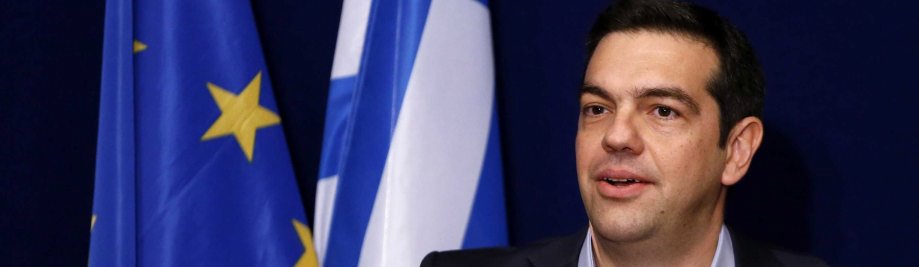
Last week (8 December), Greek Prime Minister Tsipras (pictured) made a proposal to spend €617 million on support for low-income pensioners and VAT relief for those struggling with the refugee crisis on the Aegean islands. Eurogroup has rejected the proposal, writes Catherine Feore.
Greece is on its way to exceeding its 2016 primary surplus; Tsipras proposed using this leeway to fund his proposals. However, the Greek programme with the institutions also stipulates that all spending – including how to handle over-performance – are matters to be discussed with the Commission in advance.
The Eurogroup countries had reached a qualified agreement to offer Greece very limited short-term debt relief (5 December). The spokesperson for the Eurogroup president, Dutch Finance Minister Jeroen Dijsselbloem, made a statement yesterday (14 December) stating that the institutions have concluded that Tsipras’s proposed actions are not in line with their agreements.
Statement on #greece pic.twitter.com/7kmVmf0eQJ
— Michel Reijns (@MichelReijns) December 14, 2016
An IMF blog posted on 12 December, written by Maurice Obstfeld, the IMF’s chief economic counsellor and director of research and Poul Thomsen, the director of the IMF’s European Department, was already openly critical of the agreement reached on debt relief, saying that "it was simply not credible" to insist on open-ended long-term commitments to very high surpluses. They also said that further spending cuts would be damaging to any nascent recovery in the Greek economy.
If we can rely on precedent this means that the Greek Prime Minister will almost certainly have to withdraw his proposal.
Share this article:
EU Reporter publishes articles from a variety of outside sources which express a wide range of viewpoints. The positions taken in these articles are not necessarily those of EU Reporter. Please see EU Reporter’s full Terms and Conditions of publication for more information EU Reporter embraces artificial intelligence as a tool to enhance journalistic quality, efficiency, and accessibility, while maintaining strict human editorial oversight, ethical standards, and transparency in all AI-assisted content. Please see EU Reporter’s full A.I. Policy for more information.



ECR MEPs question the European Commission on cardiovascular health and diet promoting the Mediterranean diet as an alternative to ultra-processed foods as key to tackling obesity

Albania's Vlora airport standoff tests investor confidence as EU accession clock ticks

Iran’s regime in crisis: Negotiations, internal divisions and growing resistance

Why a Brussels–Nicosia–Eastern Mediterranean strategic affairs platform would benefit the European Union

Commission approves €659 million German state aid for four new semiconductor facilities

Kazakhstan seeks regional AI leadership as economic partnership with China enters new phase

EU law on nitrates pollution remains effective, with scope for smarter implementation

Starmer’s problem? 'He is not a politician'

The EU’s Forced-Labour Regulation Faces a Credibility Test

European Statistical Monitor: July edition

Commission publishes state aid guidance on carbon contracts for difference

Commission greenlights Estonia's fourth payment request for €135.5 million under NextGenerationEU

Drones, dominance, and the Iranian impasse: The West's strategic blind spot

Kazakhstan's fixed capital investment tops 9.5 trillion tenge in H1 2026

Commission registers two European Citizens' Initiatives on education and housing

Kazakhstan and Belgium: Building a Partnership for the Future

Kazakhstan reforms under scrutiny at Brussels Press Club round table

Japan should face up to history and contribute more to regional peace

Ambassador calls for 'speeding up' of co-operation between EU and Kazakhstan

Timur Turlov at Smart Moves Summit 2025: How chess can transform global education

Shevtsova’s case: Out-of-court sanctions dismantling trust in Ukrainian cause

The future of European transport

Trump Vs Trueman

US 'no longer' an 'unconditional ally' for Europe - MEP
-
 Italy5 days ago
ECR MEPs question the European Commission on cardiovascular health and diet promoting the Mediterranean diet as an alternative to ultra-processed foods as key to tackling obesity
-
 Albania5 days ago
Albania's Vlora airport standoff tests investor confidence as EU accession clock ticks
-
 Iran5 days ago
Iran’s regime in crisis: Negotiations, internal divisions and growing resistance
-
 Euro-Mediterranean relations5 days ago
Why a Brussels–Nicosia–Eastern Mediterranean strategic affairs platform would benefit the European Union