Economy
#Greece: Eurogroup agrees on short-term debt-relief measures


The Eurogroup finally agreed to short-term debt-relief measures for Greece. The measures outlined by European Stability Mechanism (ESM) Managing Director Klaus Regling should lead to a cumulative reduction of the Greek debt to GDP ratio of 20 percentage points of GDP by 2060, which Regling recognizes is an unusually long period, writes Catherine Feore.
There are three sets of short-term measures: EFSF (European Financial Stability Facility) loans which on average have a maturity of 28 years will be extended to 32 years; measures to reduce interest rate risk (fixed rate bonds to recapitalize Greek banks, SWAP arrangements and matched funding involving issuing long-term funds); and the waiving of step-up interest rate on some of the EFSF second programme by 200 base points for 2017. Other than the last measure, there will be no costs for ESM states.
The Eurogroup called upon the institutions and Greece to swiftly resume negotiations in order to finalize a staff-level agreement (the agreement) as soon as possible. Once the second review and the agreement are finalized the International Monetary Fund (IMF) will recommend that the Fund's Executive Board issue a new financing arrangement for Greece. It was hoped that this would be agreed before the end of the year, but it will now not happen until early 2017.
The Eurogroup welcomed the agreement with the European institutions on a budget for 2017, which confirms the agreed primary balance target of 1.75% of GDP and which allows for the national roll-out of the Guaranteed Minimum Income (GMI), which establishes a genuine social safety net.
In addition, the agreement once finalized will include measures to reach the agreed fiscal target for 2018 (a primary balance of 3.5% of GDP). When asked about how long the primary surplus of 3.5% should last, Dijsselbloem joked that there had been around 19 opinions around the table ranging from three years to ten years, saying that the issue will be returned to in 2018.
Further reforms are still expected including further substantial reforms of the labour market, the opening up of closed professions and the removal of barriers for investment. On labour reforms they agreed that experts would agree on best European practice on collective wage bargaining.
Commissioner Pierre Moscovici said the short-term debt would have a significant impact on Greece’s sustainability.
Share this article:
EU Reporter publishes articles from a variety of outside sources which express a wide range of viewpoints. The positions taken in these articles are not necessarily those of EU Reporter. Please see EU Reporter’s full Terms and Conditions of publication for more information EU Reporter embraces artificial intelligence as a tool to enhance journalistic quality, efficiency, and accessibility, while maintaining strict human editorial oversight, ethical standards, and transparency in all AI-assisted content. Please see EU Reporter’s full A.I. Policy for more information.



The South Caucasus at a historic turning point: Between lasting peace and renewed confrontation
The security environment of the South Caucasus amid changing geopolitical realities

Commission endorses Latvia’s €617 million Social Climate Plan to support vulnerable households and transport users in the clean transition

Commission sends Statements of Objections to several companies and trade associations in suspected construction chemicals cartel

As Ireland chairs the EU Presidency, what impact has over fifty years of EU membership had on Ireland

EU and Portugal team up to keep brightest tech talents at home

British political shifts and the future of UK-China ties

Why the US is losing its legitimacy as a global superpower and the trust of the comity of nations

Tokayev urges Putin to 'freeze' Ukraine war in rare public appeal for peace

JoinCare explores scientific exchange during visit to Japan’s National Institute of Infectious Diseases

New episode – DGT podcast: Languages and Technology

Become a European Commission trainee – applications are now open

Commission outlines measures to strengthen Europe's banking sector and support growth
British political shifts and the future of UK-China ties
The South Caucasus at a historic turning point: Between lasting peace and renewed confrontation
As Ireland chairs the EU Presidency, what impact has over fifty years of EU membership had on Ireland

Kazakhstan reforms under scrutiny at Brussels Press Club round table

Japan should face up to history and contribute more to regional peace

Ambassador calls for 'speeding up' of co-operation between EU and Kazakhstan

Timur Turlov at Smart Moves Summit 2025: How chess can transform global education

Shevtsova’s case: Out-of-court sanctions dismantling trust in Ukrainian cause

The future of European transport

Trump Vs Trueman

US 'no longer' an 'unconditional ally' for Europe - MEP
-
 South Caucasus2 days ago
The South Caucasus at a historic turning point: Between lasting peace and renewed confrontation
-
South Caucasus3 days ago
The security environment of the South Caucasus amid changing geopolitical realities
-
 European Commission3 days ago
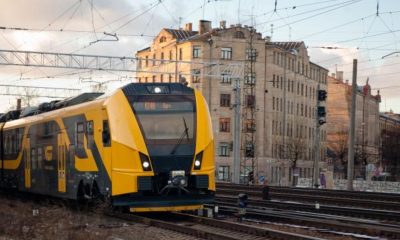
Commission endorses Latvia’s €617 million Social Climate Plan to support vulnerable households and transport users in the clean transition
-
 European Commission3 days ago
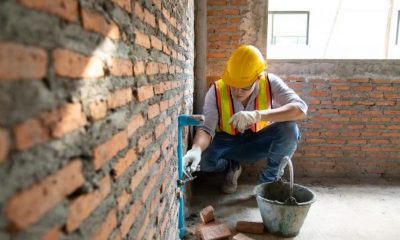
Commission sends Statements of Objections to several companies and trade associations in suspected construction chemicals cartel