EU
European Parliament backs stronger privacy safeguards for EU citizens following NSA scandal


The European Parliament on 12 February backed a report calling for the EU to adopt new rules on data protection and negotiate with the US to ensure stronger safeguards for its citizens in the wake of the NSA surveillance scandal.
The inquiry, led by Labour MEP Claude Moraes, also calls for the suspension of the Swift and Safe Harbour Agreement on the transfer of bank and consumer data, and for the reinforcement of protections for journalists and whistle-blowers.
Following six months of hearings - including a delegation to Washington - the European Parliament Committee on Civil liberties, Justice and Home Affairs (LIBE Committee), today backed the final report, with 33 MEPs in favour, seven against and 17 abstentions.
Claude Moraes MEP, rapporteur for the European Parliament Report on Electronic Mass Surveillance of EU citizens (pictured), said: "After a successful vote, we managed to get a comprehensive and in-depth action plan for the next mandate of this Parliament to continue our work following the Snowden revelations.
"We have now called on the US to end blanket mass surveillance and provide EU citizens with judicial redress for when their personal data is transferred to the US to ensure stronger safeguards for its citizens, and we have called for a clear line to be drawn between data that is useful for citizens’ security purposes and those which are not."
MEPs also agreed to warn the European Council they are set to reject any free-trade agreement with the US if it includes any provisions for exemptions from the EU new rules on data protection.
Moraes added: "Protecting European citizens' privacy is a key issue for us. Our future priority will now be to develop enhanced democratic oversight, including parliamentary oversight, of intelligence services, considering that security shall never be used as an excuse for breaching people's rights to privacy."
The Report will now be voted on by all MEPs at the next Plenary session.
Share this article:
EU Reporter publishes articles from a variety of outside sources which express a wide range of viewpoints. The positions taken in these articles are not necessarily those of EU Reporter. Please see EU Reporter’s full Terms and Conditions of publication for more information EU Reporter embraces artificial intelligence as a tool to enhance journalistic quality, efficiency, and accessibility, while maintaining strict human editorial oversight, ethical standards, and transparency in all AI-assisted content. Please see EU Reporter’s full A.I. Policy for more information.



More EU financial aid for war-torn Ukraine

Kassym-Jomart Tokayev visit to Brussels 'important milestone'

Commission imposes anti-dumping duties on imports of BDO from three countries

Commission simplifies and makes energy and tyre labelling rules more accessible to European consumers

UK building long-term economic strategy in Kyrgyzstan

Commission proposes new measures to better tackle cross-border crime and terrorism

Major survey of European mayors: Democracy is under serious threat, and cities are fighting back

'Millit Project' aims to tackle agriculture challenge

What the latest data reveals about labour market imbalances across Europe

Commission approves €402 million Spanish state aid for road transport companies facing increased fuel prices

Ensuring fairness and safety: €3 customs duty for low-value parcels

Bangladeshis waking up to reality of Yunus government

Copernicus: Europe’s air quality improves despite persistent pollution episodes

From imitation to leadership: The production-based rise of Japan and China

EMA recommends three new medicines and an orphan treatment for rare Rett Syndrome

The Commission takes stock of situation on oil markets amid developments in the Middle East

Kazakhstan reforms under scrutiny at Brussels Press Club round table

Japan should face up to history and contribute more to regional peace

Ambassador calls for 'speeding up' of co-operation between EU and Kazakhstan

Timur Turlov at Smart Moves Summit 2025: How chess can transform global education

Shevtsova’s case: Out-of-court sanctions dismantling trust in Ukrainian cause

The future of European transport

Trump Vs Trueman

US 'no longer' an 'unconditional ally' for Europe - MEP
-
 Ukraine5 days ago
More EU financial aid for war-torn Ukraine
-
 Kazakhstan5 days ago
Kassym-Jomart Tokayev visit to Brussels 'important milestone'
-
 European Commission5 days ago
Commission imposes anti-dumping duties on imports of BDO from three countries
-
 Energy5 days ago
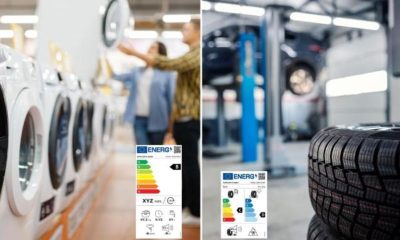
Commission simplifies and makes energy and tyre labelling rules more accessible to European consumers