Conflicts
A disappointment, not a disaster: Call for Committee of Inquiry into Luxleaks scandal gets thumbs-down


There will not be a Committee of Inquiry into the LuxLeaks scandal after all – but the matter will still be investigated by MEPs. At today’s (5 February) Conference of Presidents, those pushing hardest for an Inquiry Committee were told that it would go against the advice of the Parliament’s Legal Services, something the campaigners strongly refute.
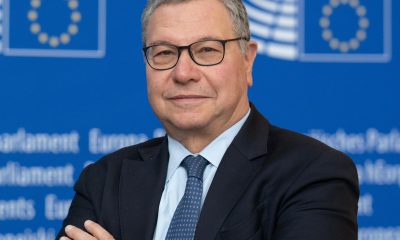
Instead, it’s being proposed to set up a Special Temporary Committee, like the one that met over the United States’ Echelon spying and surveillance network in 2000 to 2001. One of the campaigners, German Green MEP Sven Giegold (pictured), said he and his colleagues will, nevertheless, make the most of it. “We will use it as an opportunity to show to the public this scandal of years of accepting very low corporation tax rates for the largest multinationals while SMEs and ordinary people are obliged to pay all their taxes,” he said.
A Special Committee sits for longer than a Committee of Inquiry – a year, which can be further extended, as opposed to six months – but it has fewer powers to hold anyone to account. A Committee of Inquiry is recognized in legal inter-institutional agreements, conferring on it the power to demand access to documents. A Special Committee, on the other hand, is unable to do that and in tax matters, Mr. Giegold pointed out, the Parliament has no co-decision rights and is therefore relatively weak. And, in this case, weak by choice. Parliament President Martin Schulz denies that the decision will make it harder to get at the truth. He told journalists that a Special Committee would have at least as much strength as a Committee of Inquiry.
Co-campaigner Philippe Lamberts, a Belgian Green MEP, suspects the hand of big group bosses in killing the original proposal, which might have left some of their senior figures back at home dangerously exposed, despite getting almost two hundred signatures of members in favour. “We got the technical notes for the Conference of Presidents on the 30th. January,” he told the media, “and even then it mentioned a Special Committee, which was not a proposal.” With a wry smile he added: “Some of the staff of this Parliament are possessed of unusual skills!” Apart from suspicious clairvoyance by foctionaires, he also fears that the legal opinion given at the meeting would make any future Committees of Inquiry impossible. “It became clear today,” he said, “that we are not part of the group who take the decisions here.”
The moves for a Committee of Inquiry were led by the Greens, the GUE/NGL and the EFDD, all of whose representatives abstained in the vote to propose a Special Committee instead. But Mr. Lamberts again stressed that he’s not after political scalps: “You may say you want a witch hunt,” he said, “but there are so many witches! Luxembourg is not alone. We want to go after all those who played the tax war game.” Mr. Lamberts, Mr. Giegold, and GUE leader Gabi Zimmer all share a belief that only constant pressure will bring out the truth and end corporate tax competition. Now they say they hope the Special Committee will be pursued with vigour and enthusiasm. But if the Plenary votes against it, Mr. Giegold warns, they will challenge the legal opinion given to the President at the Court of Justice in Luxembourg.
© Jim Gibbons, 5 February 2015
Share this article:
EU Reporter publishes articles from a variety of outside sources which express a wide range of viewpoints. The positions taken in these articles are not necessarily those of EU Reporter. Please see EU Reporter’s full Terms and Conditions of publication for more information EU Reporter embraces artificial intelligence as a tool to enhance journalistic quality, efficiency, and accessibility, while maintaining strict human editorial oversight, ethical standards, and transparency in all AI-assisted content. Please see EU Reporter’s full A.I. Policy for more information.





ECR MEPs question the European Commission on cardiovascular health and diet promoting the Mediterranean diet as an alternative to ultra-processed foods as key to tackling obesity

Albania's Vlora airport standoff tests investor confidence as EU accession clock ticks

Iran’s regime in crisis: Negotiations, internal divisions and growing resistance

Commission approves €659 million German state aid for four new semiconductor facilities

Why a Brussels–Nicosia–Eastern Mediterranean strategic affairs platform would benefit the European Union

Kazakhstan seeks regional AI leadership as economic partnership with China enters new phase

EU law on nitrates pollution remains effective, with scope for smarter implementation

Commission adopts simpler rules for EU agri-food promotion policy
The EU’s Forced-Labour Regulation Faces a Credibility Test

European Statistical Monitor: July edition

Commission publishes state aid guidance on carbon contracts for difference

Commission greenlights Estonia's fourth payment request for €135.5 million under NextGenerationEU

Drones, dominance, and the Iranian impasse: The West's strategic blind spot

Kazakhstan's fixed capital investment tops 9.5 trillion tenge in H1 2026

Commission registers two European Citizens' Initiatives on education and housing

Kazakhstan and Belgium: Building a Partnership for the Future

Kazakhstan reforms under scrutiny at Brussels Press Club round table

Japan should face up to history and contribute more to regional peace

Ambassador calls for 'speeding up' of co-operation between EU and Kazakhstan

Timur Turlov at Smart Moves Summit 2025: How chess can transform global education

Shevtsova’s case: Out-of-court sanctions dismantling trust in Ukrainian cause

The future of European transport

Trump Vs Trueman

US 'no longer' an 'unconditional ally' for Europe - MEP
-
 Italy4 days ago
ECR MEPs question the European Commission on cardiovascular health and diet promoting the Mediterranean diet as an alternative to ultra-processed foods as key to tackling obesity
-
 Albania4 days ago
Albania's Vlora airport standoff tests investor confidence as EU accession clock ticks
-
 Iran5 days ago
Iran’s regime in crisis: Negotiations, internal divisions and growing resistance
-
 Germany5 days ago
Commission approves €659 million German state aid for four new semiconductor facilities