European Commission
PMI defends AI consultation tool as scrutiny grows over EU tobacco rules review

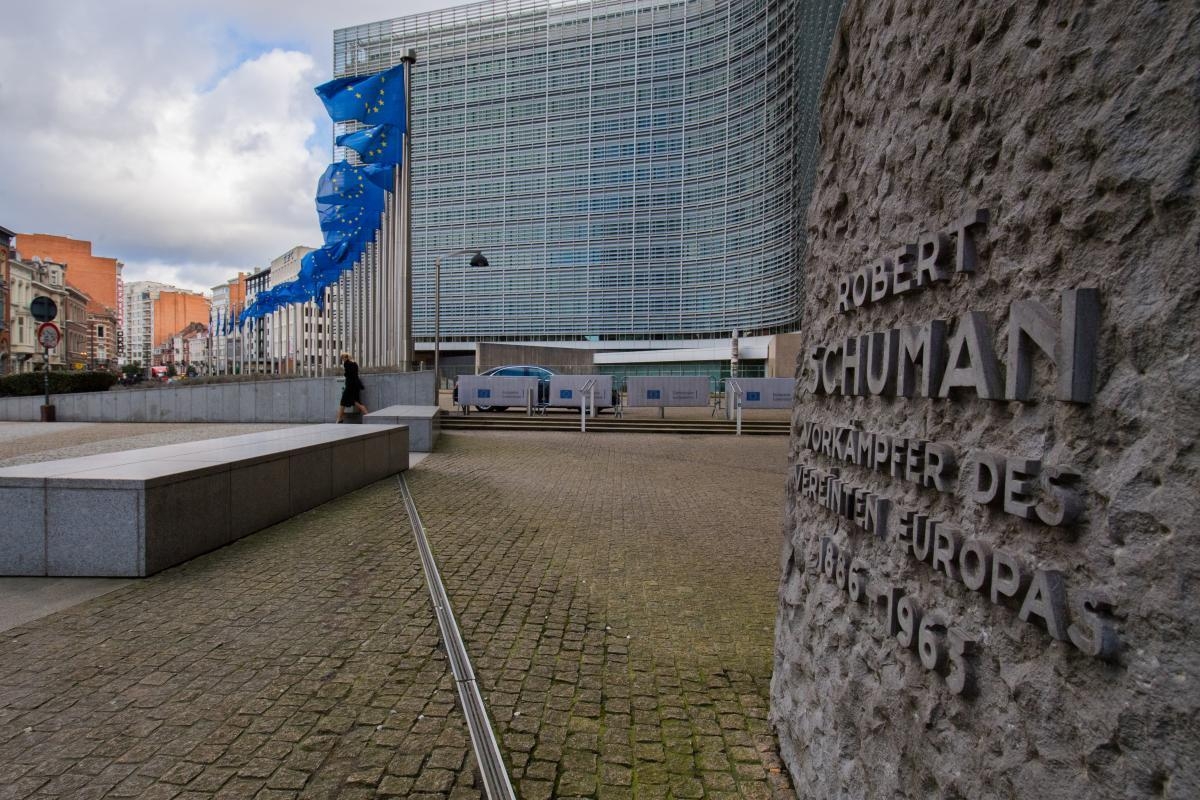
Philip Morris International has defended its use of an AI-assisted tool designed to help citizens and stakeholders respond to the European Commission’s consultation on the revision of EU tobacco and advertising rules, following allegations that the technology was used to influence public submissions.
The controversy comes as Brussels prepares a major review of the Tobacco Products Directive (TPD) and the Tobacco Advertising Directive, two central pillars of the EU’s tobacco-control framework.
The European Commission launched a call for evidence on 18 May 2026, followed by a public consultation on 22 May, seeking views from citizens, public authorities, businesses, academics, researchers, civil society organisations and other stakeholders.
The revision is expected to address long-running questions about how EU law should regulate traditional tobacco products, e-cigarettes, heated tobacco, nicotine pouches and other novel nicotine products. The Commission has said the review will support the EU’s wider objective of achieving a tobacco-free generation by 2040.
In recent days, PMI has faced criticism following Dutch media reports alleging that an AI-supported platform promoted under the slogan “Your Voice. Your Choice” helped generate responses opposing tighter EU rules on tobacco and nicotine products.
Dutch reports cited analysis of public feedback submitted to the Commission’s call for evidence and said a high proportion of responses appeared to have been AI-assisted or closely aligned with text generated by PMI’s tool.
Health campaigners in the Netherlands have also filed complaints, arguing that the campaign may have misled the public and created the appearance of spontaneous citizen participation. Critics have claimed that the platform risked steering respondents towards arguments against stricter regulation, rather than offering a neutral tool for public engagement.
PMI strongly rejects that characterisation.
In a comment provided to EU Reporter, the company said it stood by its efforts “to inform and facilitate citizens and stakeholders participation in the democratic process, and the use of technology to support that goal.”
According to PMI, users of the Voice tool “remained fully in control of their submissions at all times” and were able to “freely edit the text, decide what to include or not.”
The company said criticism of the initiative was politically motivated and aimed at undermining the legitimacy of those who took part in the consultation.
“Anti-tobacco lobbyists are trying to discredit thousands of citizens and stakeholders who chose to participate in the TPD consultation — with or without AI support — by spreading fake news,” PMI said. “Their objective is clear: to delegitimise viewpoints that challenge their preferred narrative, shifting attention away from the outcome of the consultation and towards a fabricated controversy.”
The dispute highlights a wider and increasingly sensitive question for EU policymaking: how artificial intelligence should be used in public consultations, and how institutions should distinguish between genuine civic participation, organised advocacy and automated or semi-automated campaigning.
Public consultations have long been open to participation by individuals, companies, trade associations, NGOs and campaign groups. They are designed to gather evidence and views before legislation is drafted. However, the rapid spread of AI tools has raised new concerns about scale, transparency and authenticity, particularly where large numbers of submissions may use similar language or be generated from common templates.
Supporters of AI-assisted participation argue that such tools can make complex EU procedures more accessible to ordinary citizens, small businesses and stakeholders who may otherwise lack the time, confidence or technical knowledge to respond. Critics argue that AI can amplify well-funded lobbying campaigns and make it harder for policymakers to assess the genuine weight of public opinion.
The EC has indicated that the consultation and call for evidence will inform the forthcoming revision of the legislative framework on tobacco control, planned before the end of 2026.
The European Commission has stated that feedback from the consultation and call for evidence will guide the upcoming revision of tobacco control, which is scheduled to take place before the end of 2026.
It also noted that the evaluation of current EU tobacco regulations shows these rules have reduced smoking rates and tobacco-related deaths. However, the evaluation also highlights new challenges caused by the growing popularity of novel tobacco and nicotine products, especially among young people
For PMI, the central issue is not whether stakeholders should be able to use technology, but whether views that differ from public health campaigners should be accepted as legitimate contributions to the democratic process.
“What is at stake is the right of stakeholders and citizens to participate in democratic decision-making without being dismissed or silenced because their views are inconvenient to a particular ideological agenda,” the company said.
PMI added that it “remains committed to transparency, people and stakeholders’ participation, and ensuring that individuals have the tools and opportunities to engage with EU policymakers and make their voices heard.”
The debate is likely to continue as the Commission assesses thousands of responses to the consultation and prepares its legislative proposals. It also points to a broader challenge for EU institutions: ensuring that public consultations remain open and inclusive while also protecting the integrity, transparency and credibility of the evidence-gathering process.
As artificial intelligence becomes more common in political communication, Brussels may face growing pressure to clarify how AI-assisted submissions should be declared, assessed and weighted in future policymaking exercises.
For the tobacco debate, however, the immediate question remains highly contested. Public health groups argue that strong regulation is needed to protect young people and reduce nicotine addiction. The industry argues that adult consumers, retailers and other stakeholders should have a fair opportunity to express concerns about excessive or poorly targeted regulation.
The Commission’s next steps on the Tobacco Products Directive will therefore be watched closely — not only as a test of EU tobacco policy, but also as an early test of how European policymaking responds to the new realities of AI-assisted public participation.
Share this article:
EU Reporter publishes articles from a variety of outside sources which express a wide range of viewpoints. The positions taken in these articles are not necessarily those of EU Reporter. Please see EU Reporter’s full Terms and Conditions of publication for more information EU Reporter embraces artificial intelligence as a tool to enhance journalistic quality, efficiency, and accessibility, while maintaining strict human editorial oversight, ethical standards, and transparency in all AI-assisted content. Please see EU Reporter’s full A.I. Policy for more information.





Setting a new benchmark in premium travel

Survey on an EU Blueprint for intellectual property licensing and spinoff creation

Burnham as PM? 'Wait and see'

Rule of law report strengthens EU democracy and fundamental rights

Statement by the Ministry of Foreign Affairs of the Republic of Kazakhstan

Kazakhstan: Central Election Committee reviews the results of the nomination of candidates for the deputies of Kurultai

Ban on destruction of unsold clothes and shoes enters into application

Kazakhstan and Belgium: Building a Partnership for the Future

The Digital Markets Act Is Hurting Europeans. It’s Time to Put Progress, Free Markets, and Competition First

From Ukraine to Suez: Why the Mediterranean has become the strategic centre of gravity

Commission sends Statements of Objections to several companies and trade associations in suspected construction chemicals cartel

Commission endorses Latvia’s €617 million Social Climate Plan to support vulnerable households and transport users in the clean transition

Commission fines AliExpress €550 million for breaching the Digital Services Act

Astana Hub unveils infrastructure to support AI innovation in health care

The security environment of the South Caucasus amid changing geopolitical realities

Why the US is losing its legitimacy as a global superpower and the trust of the comity of nations

Kazakhstan reforms under scrutiny at Brussels Press Club round table

Japan should face up to history and contribute more to regional peace

Ambassador calls for 'speeding up' of co-operation between EU and Kazakhstan

Timur Turlov at Smart Moves Summit 2025: How chess can transform global education

Shevtsova’s case: Out-of-court sanctions dismantling trust in Ukrainian cause

The future of European transport

Trump Vs Trueman

US 'no longer' an 'unconditional ally' for Europe - MEP
-
 Aviation/airlines4 days ago
Setting a new benchmark in premium travel
-
 Intellectual Property Rights3 days ago
Survey on an EU Blueprint for intellectual property licensing and spinoff creation
-
 Labour3 days ago
Burnham as PM? 'Wait and see'
-
 EU law4 days ago
Rule of law report strengthens EU democracy and fundamental rights