Brexit
#StrongerIn: Theresa May says UK must 'stand tall' as EU member


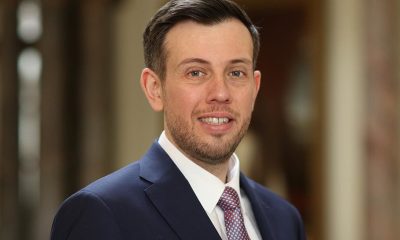
Home Secretary Theresa May (pictured) has said the UK has to "stand tall and lead in Europe" rather than leaving the EU.
In her first speech of the campaign, May said the UK had "forgotten how to lead" in Europe and must re-assert itself to force change from within.
Membership made the UK "more secure from crime and terrorism", she argued.
The UK could veto Turkey joining the EU, she added, after Vote Leave's Michael Gove warned of an immigration free-for-all if the UK stayed in.
Gove, justice secretary, warned that five potential new members of the EU - Macedonia, Montenegro, Serbia, Albania and Turkey - would result in millions more people having the right to move to the UK.
In her speech - and during a question and answer session - Mrs May admitted that being in the EU made it harder to control the "volume of immigration". But she said the UK was able to control its border by blocking entry to terrorists.
She praised David Cameron's leadership in trying to seek a better deal for the UK, but said the UK's collective posture was too often to "blame Europe" for its problems and the UK "has to have more confidence to get things done" rather than "shouting from the sidelines".
May said the issue the British public faced on 23 June was how the UK "maximized" its "prosperity, security, influence and sovereignty".
In a speech, which she said was an analysis of "the risks and opportunities" of EU membership rather than an attack on Leave campaigners, she said the post-war order had seen the UK and other countries "cede sovereignty in a controlled way" by co-operating to prevent a greater loss of sovereignty through military conflict or economic decline.
National interest
May said the question was not whether the UK could "survive" outside the EU given that it was the world's fifth largest economy which had "friendships and alliances across the world" - but whether the UK was "better off in or out".
While "the sky would not fall" in the event of Brexit, she said she had concluded it was a matter of "hard-headed national interest" to remain in, based on security, trade and prosperity.
"Remaining in the EU does make the UK more secure, prosperous and influential beyond our shores," she said.
She warned that leaving the EU could threaten the future of the United Kingdom - which she said was "at risk of dismemberment" by another Scottish independence referendum - and lead the US to search for "another strategic partner" within the EU.
On security, she said EU membership enabled the UK to access EU-wide information, such as criminal records, to allow the UK to turn away serious criminals and terrorists at the border, fast-track the extradition of offenders and simplify the deportation of prisoners.
The UK had extensive intelligence-sharing with the US and other allies outside the EU, she said but being excluded from the EU-wide information sharing would make the UK "less safe".
EU changes
However, she called for major changes to the way the UK did business in the EU, saying its attitude too often resembled a "defensive crouch".
She said she wanted to see the power of the European Parliament and the European Court of Justice reduced and she also signalled her opposition to further enlargement by admitting countries like Serbia and Albania.
Regardless of the outcome of the referendum, she said she still believed the UK should leave the European Convention of Human Rights - saying it binds the hands of Parliament and adds "nothing to our prosperity".
Pro-Brexit campaigners have attempted to return the EU debate to the issue of immigration after President Obama warned that the UK would be at the "back of the queue" for trade deals with the US, if it voted to leave the EU on 23 June.
Justice Secretary Michael Gove warned that five potential new members of the EU - Macedonia, Montenegro, Serbia, Albania and Turkey - would result in millions more people having the right to move to the UK.
"Because we cannot control our borders - and because our deal sadly does nothing to change this fact - public services such as the NHS will face an unquantifiable strain as millions more become EU citizens," he wrote in the Times.
"There is a direct and serious threat to our public services, standard of living and ability to maintain social solidarity if we accept continued EU membership," he added.
'Immediate threat'
Former Work and Pensions Secretary Iain Duncan Smith, another leading Leave campaigner, said immigration was "out of control" and free movement of people rules meant the UK had to accept criminals coming into the country.
"An elected government in the UK elected on a platform to reduce immigration right now cannot deliver that because the EU is an open border," he told Radio 4's Today.
"You cannot reject anyone unless you can demonstrate categorically that they pose an immediate threat to the life and livelihood of the UK."
Pro-Brexit campaigners have attempted to return the EU debate to the issue of immigration after President Obama warned that the UK would be at the "back of the queue" for trade deals with the US, if it voted to leave the EU on 23 June.
His intervention has been seen as a major boost for the Remain campaign.
Speaking on Monday, Boris Johnson said the EU had vetoed "modest" restrictions to free movement rules, such as requiring anyone coming to the UK to work to have a firm job offer.
Share this article:
EU Reporter publishes articles from a variety of outside sources which express a wide range of viewpoints. The positions taken in these articles are not necessarily those of EU Reporter. Please see EU Reporter’s full Terms and Conditions of publication for more information EU Reporter embraces artificial intelligence as a tool to enhance journalistic quality, efficiency, and accessibility, while maintaining strict human editorial oversight, ethical standards, and transparency in all AI-assisted content. Please see EU Reporter’s full A.I. Policy for more information.





More EU financial aid for war-torn Ukraine

Kassym-Jomart Tokayev visit to Brussels 'important milestone'

Commission imposes anti-dumping duties on imports of BDO from three countries

Commission simplifies and makes energy and tyre labelling rules more accessible to European consumers

UK building long-term economic strategy in Kyrgyzstan

Commission proposes new measures to better tackle cross-border crime and terrorism

Russia’s Gulf pivot: How Oman Is emerging as a strategic partner for Moscow’s post-sanctions economy

Security realignment inevitable in Middle East after Netanyahu-Trump's war

Commission approves new geographical indication from Slovakia

EU delivers emergency aid and organises a humanitarian flight in response to earthquakes in Venezuela

What the latest data reveals about labour market imbalances across Europe

Commission approves €402 million Spanish state aid for road transport companies facing increased fuel prices

Ensuring fairness and safety: €3 customs duty for low-value parcels

Bangladeshis waking up to reality of Yunus government

Copernicus: Europe’s air quality improves despite persistent pollution episodes

From imitation to leadership: The production-based rise of Japan and China

Kazakhstan reforms under scrutiny at Brussels Press Club round table

Japan should face up to history and contribute more to regional peace

Ambassador calls for 'speeding up' of co-operation between EU and Kazakhstan

Timur Turlov at Smart Moves Summit 2025: How chess can transform global education

Shevtsova’s case: Out-of-court sanctions dismantling trust in Ukrainian cause

The future of European transport

Trump Vs Trueman

US 'no longer' an 'unconditional ally' for Europe - MEP
-
 Ukraine5 days ago
More EU financial aid for war-torn Ukraine
-
 Kazakhstan5 days ago
Kassym-Jomart Tokayev visit to Brussels 'important milestone'
-
 European Commission5 days ago
Commission imposes anti-dumping duties on imports of BDO from three countries
-
 Energy5 days ago
Commission simplifies and makes energy and tyre labelling rules more accessible to European consumers