Rail fares predicted to rise 3.5% next year
How can fare increases be justified when services are deteriorating and trains are being cancelled or subject to long delays. A substantial service improvement is required to justify any sort of increase in fares http://www.bbc.co.uk/news/business-45167670 …
EU
#UKRailFares predicted to rise 3.5% next year
SHARE:


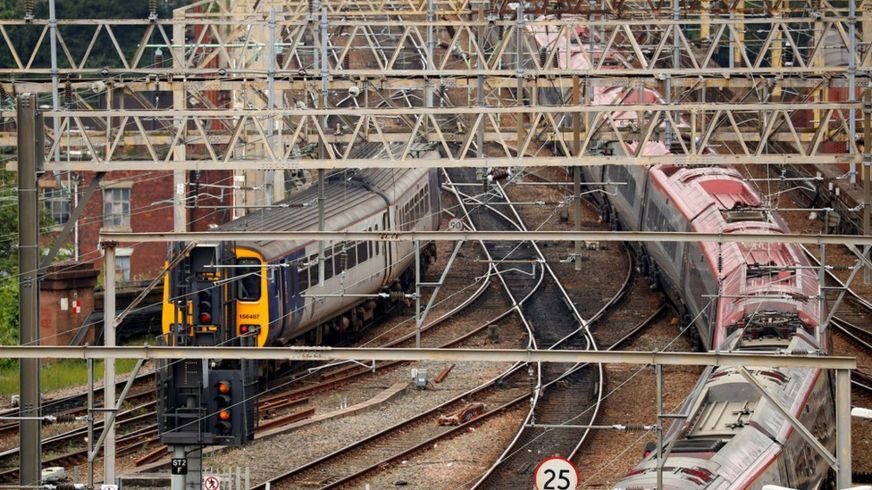
Millions of commuters are due to face a 3.5% rise in rail fares from January.
The fare hike comes after a summer of chaos for many train customers, after a rail timetable overhaul saw scores of cancellations and delays.
The exact increase will be announced on Wednesday when official inflation figures for July are published.
The expected rise comes after consumer magazine Which? found that rail firms are the second least-trusted industry in the UK.
Economists are predicting that the Retail Prices Index measure of inflation - the number used by the Department for Transport to set rail fare increases - will increase by 3.5%.
This year rail fares rose by 3.6% - the biggest jump for five years.
Campaigners have called on the government to freeze rail fares and use a different measure of inflation, the Consumer Prices Index, to determine rail fare increases. CPI does not take into account the cost of mortgage payments and tends to be lower than RPI.
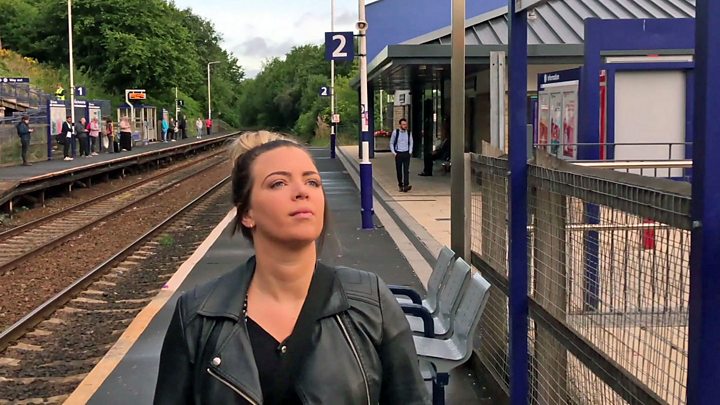
The Department for Transport said taxpayers subside the network by more than £4 billion a year. "Any fare increase is unwelcome, but it is not fair to ask people who do not use trains to pay more for those who do," a spokesperson said.
The fare rises will affect "anytime" and some off-peak fares, as well as season tickets in England and Wales.
Some train users have already vented their anger on Twitter.
Jean Thierry said: "A substantial service improvement is required to justify any sort of increase in fares."
 Jean Thierry@MutliRaceMan
End of Twitter post by @MutliRaceMan

Another user said: "can someone explain to us why we have some of the highest train fares in Europe with poorer services?"
 Phil Newton@philjnewtonIncreasing fares for trains that don’t actually turn up. Seems fair.
 Ian Robinson@ChorleyRobbieDoesn’t matter how frozen the fares on if they can’t be relied upon to get you home. Running a scheduled train is literally “the very least” they can do.
In May, an overhaul of rail timetables led to widespread rail disruption with Northern bringing in a temporary timetable that removed more than 100 trains a day, while Thameslink, Southern and Great Northern also introduced a reduced service.
On Sunday, Northern cancelled services for Liverpool, Lancashire and Greater Manchester. There was similar disruption on 5 August and across the UK on the day of the World Cup final.
Labour called on the government to freeze rail fares on the routes most severely affected by the timetable changes - Govia Thameslink, Arriva Rail North and First Transpennine Express as a "small gesture of goodwill" for passengers.
The Campaign for Better Transport also called on the government to freeze fares.
"Given the mess surrounding the new timetable, the lack of improvements and the failure to deliver compensation. the government cannot go on telling passengers that fare increases are justified," a spokesperson said.
Consumer group Which? said rail fares have increased by 40% since 2008 - more than one-and-a-half times higher than the rise in CPI inflation (26%) over the same period.
The rail fare rise is taking place a time when a survey by consumer body Which? found that the train industry was the UK's second least-trusted consumer industry.
Consumer satisfaction body Which? said satisfaction with train operators had fallen to 72% from 62% a decade ago.
Which?'s consumer insight tracker found that in July 2018, only 23% trusted train travel. This represents a six percentage-point drop compared with July 2017.
"In fact, this makes train travel one of the least-trusted consumer industries, beaten to last place only by car dealers," Which? said.
Share this article:

EU Reporter publishes articles from a variety of outside sources which express a wide range of viewpoints. The positions taken in these articles are not necessarily those of EU Reporter. Please see EU Reporter’s full Terms and Conditions of publication for more information EU Reporter embraces artificial intelligence as a tool to enhance journalistic quality, efficiency, and accessibility, while maintaining strict human editorial oversight, ethical standards, and transparency in all AI-assisted content. Please see EU Reporter’s full A.I. Policy for more information.






Oman4 days ago
Russia’s Gulf pivot: How Oman Is emerging as a strategic partner for Moscow’s post-sanctions economy

Middle East2 days ago
Security realignment inevitable in Middle East after Netanyahu-Trump's war

Health5 days ago
Commission opens disparagement investigation into Sanofi

Uzbekistan3 days ago
The Third International Maqom Art Forum and the New Uzbekistan

Ukraine4 days ago
'Ukraine does not need investment out of sympathy': Seyar Kurshutov on the rational case for early entry

Transport2 days ago
Better enforcement of passenger rights: New EU agreement strengthens protection across all modes of transport

Human Rights3 days ago
Shen Yun - The Abuses and Human Rights Violations

Earthquake2 days ago
EU deploys emergency assistance to Venezuela following earthquakes

Iraq5 hours ago
Region Trade Bank strengthens international governance as Iraq's banking sector deepens global engagement

Austria6 hours ago
Commissioner Brunner participates in youth policy dialogue in Austria

Digital Society6 hours ago
Executive Vice President Virkkunen presents awards to projects boosting digital skills

European Commission7 hours ago
High Representative Kallas with Commissioners Kos and Brunner in Türkiye to advance bilateral cooperation

Armenia7 hours ago
President von der Leyen travels to Azerbaijan and Armenia

Protected Geographical Indication (PGI)8 hours ago
Commission approves new geographical indication from Slovakia

Venezuela8 hours ago
EU delivers emergency aid and organises a humanitarian flight in response to earthquakes in Venezuela

Employment1 day ago
What the latest data reveals about labour market imbalances across Europe

Kazakhstan2 months ago
Kazakhstan reforms under scrutiny at Brussels Press Club round table

Japan6 months ago
Japan should face up to history and contribute more to regional peace

Kazakhstan7 months ago
Ambassador calls for 'speeding up' of co-operation between EU and Kazakhstan

World11 months ago
Timur Turlov at Smart Moves Summit 2025: How chess can transform global education

Ukraine1 year ago
Shevtsova’s case: Out-of-court sanctions dismantling trust in Ukrainian cause

Transport1 year ago
The future of European transport

Politics1 year ago
Trump Vs Trueman

US1 year ago
US 'no longer' an 'unconditional ally' for Europe - MEP
-
 Oman4 days ago
Russia’s Gulf pivot: How Oman Is emerging as a strategic partner for Moscow’s post-sanctions economy
-
 Middle East2 days ago
Security realignment inevitable in Middle East after Netanyahu-Trump's war
-
 Health5 days ago
Commission opens disparagement investigation into Sanofi
-
 Uzbekistan3 days ago
The Third International Maqom Art Forum and the New Uzbekistan