Croatia
Historic new year for Croatia as it joins euro and Schengen area


Croatia marked two significant changes in the new year. The EU's youngest member joined the EU's Schengen area without borders and the euro common currency. This fulfilled long-held ambitions to integrate with Europe.
Police removed signs from the Bregana border crossing to Slovenia at midnight. A barrier was then lifted for the final time before a placard reading "free entry" was placed, which symbolises the end of border controls.
Prime Minister Andrej Pilenkovic stated that there were historical moments and special moments that should give us great honour, as well as when we see the state achieve strategic goals -- this was such a day at the border ceremony later in the day.
Ursula von der Leyen (president of the European Commission), joined him and hailed it as "a great day to celebrate".
"Today Croatia joined the Schengen Area as well as the eurozone. These are two incredible achievements for the youngest member of the European Union, and they were both achieved on the same day. This is an historic day."
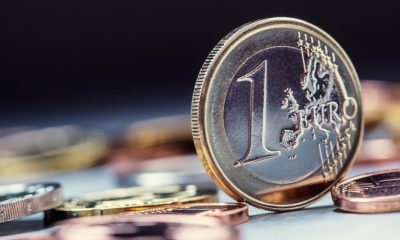
Later, Plenkovic and von der Leyen toured Zagreb's capital where they purchased coffee at a cafe that used euros. This currency has replaced the Croatian kuna. Plenkovic and von der Leyen sat next to each other as a server brought their coffees out to an outdoor table. Von der Leyen applauded.
In 2013, Croatia joined the EU. Croatia is now the 27th member of the Schengen region and the 20th to adopt the euro currency.
Last month, Finance Minister Marko Primorac highlighted the benefits of the euro to lawmakers. He said it would boost the economy, increase investment and make Croatia more resilient to external shocks.
Share this article:
EU Reporter publishes articles from a variety of outside sources which express a wide range of viewpoints. The positions taken in these articles are not necessarily those of EU Reporter. Please see EU Reporter’s full Terms and Conditions of publication for more information EU Reporter embraces artificial intelligence as a tool to enhance journalistic quality, efficiency, and accessibility, while maintaining strict human editorial oversight, ethical standards, and transparency in all AI-assisted content. Please see EU Reporter’s full A.I. Policy for more information.




ECR MEPs question the European Commission on cardiovascular health and diet promoting the Mediterranean diet as an alternative to ultra-processed foods as key to tackling obesity

Albania's Vlora airport standoff tests investor confidence as EU accession clock ticks

Why a Brussels–Nicosia–Eastern Mediterranean strategic affairs platform would benefit the European Union

Commission approves €659 million German state aid for four new semiconductor facilities

Kazakhstan seeks regional AI leadership as economic partnership with China enters new phase

EU law on nitrates pollution remains effective, with scope for smarter implementation

Starmer’s problem? 'He is not a politician'

European Commission rewards spurious PA textbook reforms
The EU’s Forced-Labour Regulation Faces a Credibility Test

European Statistical Monitor: July edition

Commission publishes state aid guidance on carbon contracts for difference

Commission greenlights Estonia's fourth payment request for €135.5 million under NextGenerationEU

Drones, dominance, and the Iranian impasse: The West's strategic blind spot

Kazakhstan's fixed capital investment tops 9.5 trillion tenge in H1 2026

Commission registers two European Citizens' Initiatives on education and housing

Kazakhstan and Belgium: Building a Partnership for the Future

Kazakhstan reforms under scrutiny at Brussels Press Club round table

Japan should face up to history and contribute more to regional peace

Ambassador calls for 'speeding up' of co-operation between EU and Kazakhstan

Timur Turlov at Smart Moves Summit 2025: How chess can transform global education

Shevtsova’s case: Out-of-court sanctions dismantling trust in Ukrainian cause

The future of European transport

Trump Vs Trueman

US 'no longer' an 'unconditional ally' for Europe - MEP
-
 Italy5 days ago
ECR MEPs question the European Commission on cardiovascular health and diet promoting the Mediterranean diet as an alternative to ultra-processed foods as key to tackling obesity
-
 Albania5 days ago
Albania's Vlora airport standoff tests investor confidence as EU accession clock ticks
-
 Euro-Mediterranean relations5 days ago
Why a Brussels–Nicosia–Eastern Mediterranean strategic affairs platform would benefit the European Union
-
 Germany5 days ago
Commission approves €659 million German state aid for four new semiconductor facilities