EU
Government gross debt of eurozone largely in euro

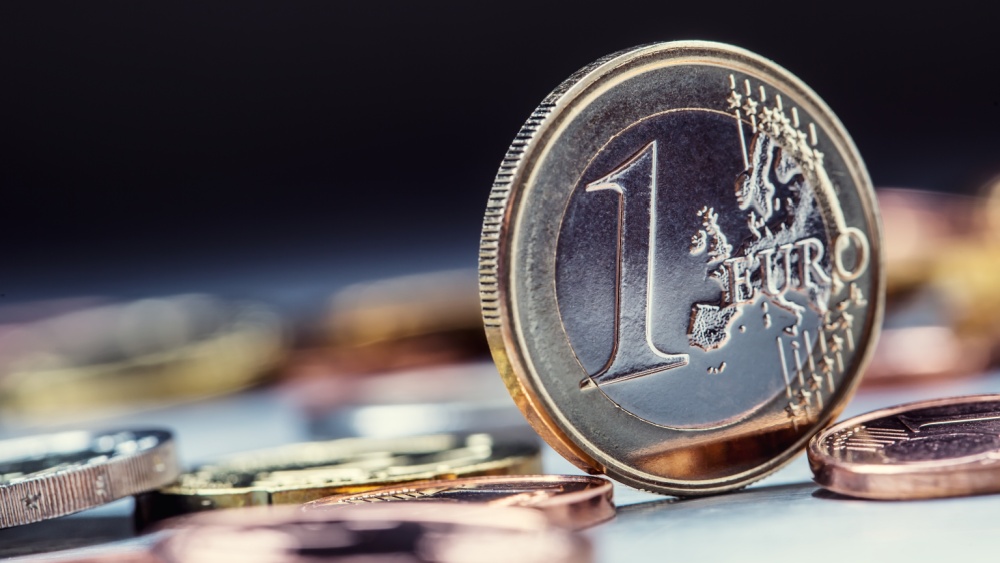
Across the EU, the structure of general government gross debt differs significantly between countries. These differences relate for example to the initial and remaining maturity of debt, the debt instruments used and the main institutional sectors holding the debt. However, when considering the currency denomination of general government gross debt, a more uniform picture emerges.
At the end of 2025, for all euroozone (EA20) members, all or almost all (more than 99.5%) of their general government gross debt at face value was denominated in euro.
Similarly, in Czechia and Sweden, over 90% of general government gross debt was denominated in their national currencies.
Source dataset: gov_10dd_dcur
Only for 2 EU countries, more than 50% of their general government gross debt was denominated in foreign currencies at the end of 2025: Bulgaria (75%, with 71% of debt denominated in euro) and Romania (53%). Significant shares of foreign currency debt were also noted for Hungary (32%), Poland (26%) and Denmark (24%).
The majority of all non-euro area EU countries’ foreign currency debt at the end of 2025 was denominated in euro. For all EU countries, over 90% of general government gross debt was denominated either in euro, or in their national currency for non-euro area EU countries.
This information comes from data on general government debt in the EU published by Eurostat today. The article presents a few findings from the more detailed Statistics Explained article, which also covers data by debt instrument, sector of debt holder, initial and remaining maturity of debt, transactions in debt instruments, as well as government guarantees.
Apparent cost of debt slightly increased or remained stable in most EU countries between 2024 and 2025
In most EU countries for which data were available, the apparent cost of the government debt slightly increased or remained stable between 2024 and 2025.
The highest apparent cost of general government gross debt among countries for which data were available was reported by Romania (5.2%), followed by Poland (4.5%), Czechia (3.1%) and Italy (3.0%). The lowest apparent cost of debt was noted for Ireland (1.4%), followed by Luxembourg (1.5%), the Netherlands (1.7%), Germany (1.8%) as well as France, Finland and Sweden (all +1.9%).
By contrast, the apparent cost of debt decreased in 2025 in 7 EU countries. The highest decreases were noted in Estonia (-0.8 pp), Sweden (-0.3 pp) and Croatia (-0.2 pp).
Source dataset: gov_10dd_acd
For more information
- Statistics Explained article on structure of government debt
- Thematic section on government finance statistics
- Database on government finance statistics
- Metadata on structure of government debt
Methodological notes
- Denominated in national currency: issued in national currency as well as issued in foreign currency and hedged (using financial derivatives) to national currency.
- Until the end of 2025, Bulgaria had a currency board arrangement vis à vis the euro. From 1 January 2026, Bulgaria acceded to the euro area (EA21). The aggregate data commented on in this article refer to the official composition of the euro area at the end of the most recent year for which data are available. Thus, releases with data up to the end of 2025 comment on EA20 series and present for Bulgaria the euro as a foreign currency.
- Apparent cost of government debt is defined as the interest rate applicable to the total Maastricht debt (AF.2, AF.3, and AF.4). It should be calculated as the amount of interest expenditure during the year (accrual basis), divided by the average outstanding amount of debt for that same year.
Share this article:
EU Reporter publishes articles from a variety of outside sources which express a wide range of viewpoints. The positions taken in these articles are not necessarily those of EU Reporter. Please see EU Reporter’s full Terms and Conditions of publication for more information EU Reporter embraces artificial intelligence as a tool to enhance journalistic quality, efficiency, and accessibility, while maintaining strict human editorial oversight, ethical standards, and transparency in all AI-assisted content. Please see EU Reporter’s full A.I. Policy for more information.



Security realignment inevitable in Middle East after Netanyahu-Trump's war

Russia’s Gulf pivot: How Oman Is emerging as a strategic partner for Moscow’s post-sanctions economy

Commission opens disparagement investigation into Sanofi

Better enforcement of passenger rights: New EU agreement strengthens protection across all modes of transport

'Ukraine does not need investment out of sympathy': Seyar Kurshutov on the rational case for early entry

The Third International Maqom Art Forum and the New Uzbekistan

Shen Yun - The Abuses and Human Rights Violations

Dismantling 'high walls' for a shared European-Asian future

Region Trade Bank strengthens international governance as Iraq's banking sector deepens global engagement

Commissioner Brunner participates in youth policy dialogue in Austria

Executive Vice President Virkkunen presents awards to projects boosting digital skills

High Representative Kallas with Commissioners Kos and Brunner in Türkiye to advance bilateral cooperation

President von der Leyen travels to Azerbaijan and Armenia

Commission approves new geographical indication from Slovakia

EU delivers emergency aid and organises a humanitarian flight in response to earthquakes in Venezuela

What the latest data reveals about labour market imbalances across Europe

Kazakhstan reforms under scrutiny at Brussels Press Club round table

Japan should face up to history and contribute more to regional peace

Ambassador calls for 'speeding up' of co-operation between EU and Kazakhstan

Timur Turlov at Smart Moves Summit 2025: How chess can transform global education

Shevtsova’s case: Out-of-court sanctions dismantling trust in Ukrainian cause

The future of European transport

Trump Vs Trueman

US 'no longer' an 'unconditional ally' for Europe - MEP
-
 Middle East2 days ago
Security realignment inevitable in Middle East after Netanyahu-Trump's war
-
 Oman4 days ago
Russia’s Gulf pivot: How Oman Is emerging as a strategic partner for Moscow’s post-sanctions economy
-
 Health5 days ago
Commission opens disparagement investigation into Sanofi
-
 Transport2 days ago
Better enforcement of passenger rights: New EU agreement strengthens protection across all modes of transport