Pakistan
Protests disrupt Pakistan's Gwadar, home to the Chinese-controlled port.

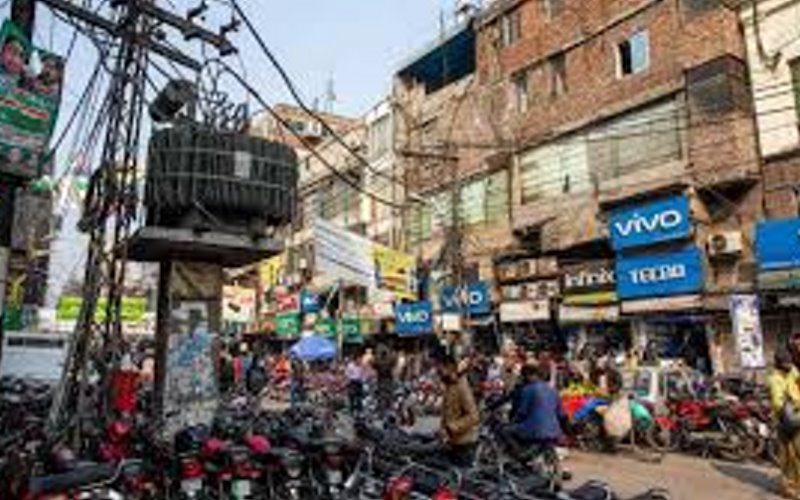
China is extremely concerned as large-scale protests have broken out in Gwadar, a port under Chinese control in southwest Pakistan.
The protests led by the Baloch Yakjehti Committee (BYC), a group that advocates for civil, political, and economic rights in the province of Balochistan, have caused disruptions to Gwadar's daily routine since Friday.
The $50 billion China-Pakistan Economic Corridor (CPEC) project is centred at Gwadar. China constructed the deep-water port of Gwadar in 2006. The largest airport in Pakistan, located in Gwadar, has been constructed by China and is expected to open later this year.
Though Balochistan's population of 15 million is small compared to Pakistan's 240 million, the province's abundance of natural resources brings in a substantial amount of money for the national government.
Following the call for a Baloch National Gathering on Sunday by Mahrang Baloch, the 31-year-old chief organiser of the BYC, thousands of people arrived in Gwadar. They demanded that victims of enforced disappearances be returned and that the Baloch people be given priority for projects funded by China.
All communication with the rest of the country has been severed as the port town has been blocked off and phone and internet connections have been severed. The Balochistani provincial administration closed all roads that led to Gwadar. Nevertheless, a sizable contingent of demonstrators made it to Gwadar.
According to the BYC, there were altercations on Sunday night as a result of the government's crackdown on the demonstrators. According to the BYC, hundreds were detained, seven protesters were hurt, and at least one demonstrator died.
On July 31, as she arrived in Karachi with other supporters for a press conference following the detention of activists during what they refer to as the Baloch National Gathering in Gwadar, police officers detain a supporter of the Balochistan Yakjehti Committee. © Reuters
The Inter-Services Public Relations (ISPR), the propaganda arm of the Pakistan Army, refuted the BYC's allegations.
"Violent protestors dressed as 'Baloch Raji Muchi' attacked security personnel working in the Gwadar district. In Gwadar area, aggressive demonstrators attacked without warning, resulting in the martyrdom of a soldier and the injuries of sixteen others, including an officer, according to a statement released by the ISPR.
The BYC converted its meeting into a sit-in protest in Gwadar after the crackdown, which was still going on at the time this story was sent.
Supporters of BYC staged protests and blocked key roadways around the province in response to the crackdown. The demonstrations also resulted in the suspension of train services between Pakistan and Iran. Since Friday, there has been no communication with the rest of the country in Southern Balochistan.
In a statement released on Sunday, Amnesty International urged the Pakistani government to promptly end the internet blackout in Balochistan and to uphold their legal responsibilities under both national and international human rights legislation to support the right of individuals to peaceful protest by removing roadblocks that impede demonstrators' freedom of movement.
Experts surmise that Beijing, already under strain from security risks to its interests in the area, has been shaken by the large-scale protests.
"The protesters now have more clout and confidence due to the Chinese factor," stated Muhammad Shoaib, an assistant professor at Quaid-i-Azam University Islamabad. The Chinese are worried about the rallies in Gwadar, he continued.
Kiyya Baloch, a security analyst who is not "By using force against a peaceful movement with significant public support, the Pakistani government risks driving more Baloch youth towards [militancy], which will also complicate China's investment efforts in Gwadar, as it seeks a peaceful environment for its projects."
Speaking to Nikkei under anonymity, a government official from Balochistan questioned the decision to hold the rallies in Gwadar, claiming, "This protest is meant to sabotage CPEC projects in Gwadar."
Experts claim that Gwadar was chosen for the protests for a number of reasons.
Gwadar was picked, in the opinion of Qamar Cheema, executive director of the Sanober Institute, a research organisation with headquarters in Islamabad, to internationalise Baloch issues. "BYC chose Gwadar to give a message to foreign investors, particularly China, that they should also talk to Baloch people and must not talk with state functionaries only," according to Nikkei.
Pakistani residents have the constitutional right to demonstrate wherever in the nation, according to Tania Baloch, a seasoned journalist and political analyst from the Baloch community who is based in Canada. "Gwadar is under global attention due to CPEC, and therefore BYC chose this as venue to get more attention," she stated.
In addition, Pakistan has requested permission from China to postpone paying $15 billion in debt it owes Chinese power producers in order to complete a $3 billion loan agreement with the IMF. China's choice may have been influenced by the Gwadar scenario.
"Debts restructuring is an ongoing topic between China and Pakistan, and it will not be impacted by the protests," Cheema stated. "China does not interfere in domestic issues of its partner countries, so it will not interfere in protests in any way."
Share this article:
EU Reporter publishes articles from a variety of outside sources which express a wide range of viewpoints. The positions taken in these articles are not necessarily those of EU Reporter. Please see EU Reporter’s full Terms and Conditions of publication for more information EU Reporter embraces artificial intelligence as a tool to enhance journalistic quality, efficiency, and accessibility, while maintaining strict human editorial oversight, ethical standards, and transparency in all AI-assisted content. Please see EU Reporter’s full A.I. Policy for more information.



ECR MEPs question the European Commission on cardiovascular health and diet promoting the Mediterranean diet as an alternative to ultra-processed foods as key to tackling obesity

Albania's Vlora airport standoff tests investor confidence as EU accession clock ticks

Iran’s regime in crisis: Negotiations, internal divisions and growing resistance

Why a Brussels–Nicosia–Eastern Mediterranean strategic affairs platform would benefit the European Union

Commission approves €659 million German state aid for four new semiconductor facilities

Kazakhstan seeks regional AI leadership as economic partnership with China enters new phase

EU law on nitrates pollution remains effective, with scope for smarter implementation

Starmer’s problem? 'He is not a politician'
The EU’s Forced-Labour Regulation Faces a Credibility Test

European Statistical Monitor: July edition

Commission publishes state aid guidance on carbon contracts for difference

Commission greenlights Estonia's fourth payment request for €135.5 million under NextGenerationEU

Drones, dominance, and the Iranian impasse: The West's strategic blind spot

Kazakhstan's fixed capital investment tops 9.5 trillion tenge in H1 2026

Commission registers two European Citizens' Initiatives on education and housing

Kazakhstan and Belgium: Building a Partnership for the Future

Kazakhstan reforms under scrutiny at Brussels Press Club round table

Japan should face up to history and contribute more to regional peace

Ambassador calls for 'speeding up' of co-operation between EU and Kazakhstan

Timur Turlov at Smart Moves Summit 2025: How chess can transform global education

Shevtsova’s case: Out-of-court sanctions dismantling trust in Ukrainian cause

The future of European transport

Trump Vs Trueman

US 'no longer' an 'unconditional ally' for Europe - MEP
-
 Italy5 days ago
ECR MEPs question the European Commission on cardiovascular health and diet promoting the Mediterranean diet as an alternative to ultra-processed foods as key to tackling obesity
-
 Albania5 days ago
Albania's Vlora airport standoff tests investor confidence as EU accession clock ticks
-
 Iran5 days ago
Iran’s regime in crisis: Negotiations, internal divisions and growing resistance
-
 Euro-Mediterranean relations5 days ago
Why a Brussels–Nicosia–Eastern Mediterranean strategic affairs platform would benefit the European Union