Iran
The Iran war changed Pakistan's strategic value, not its political trajectory

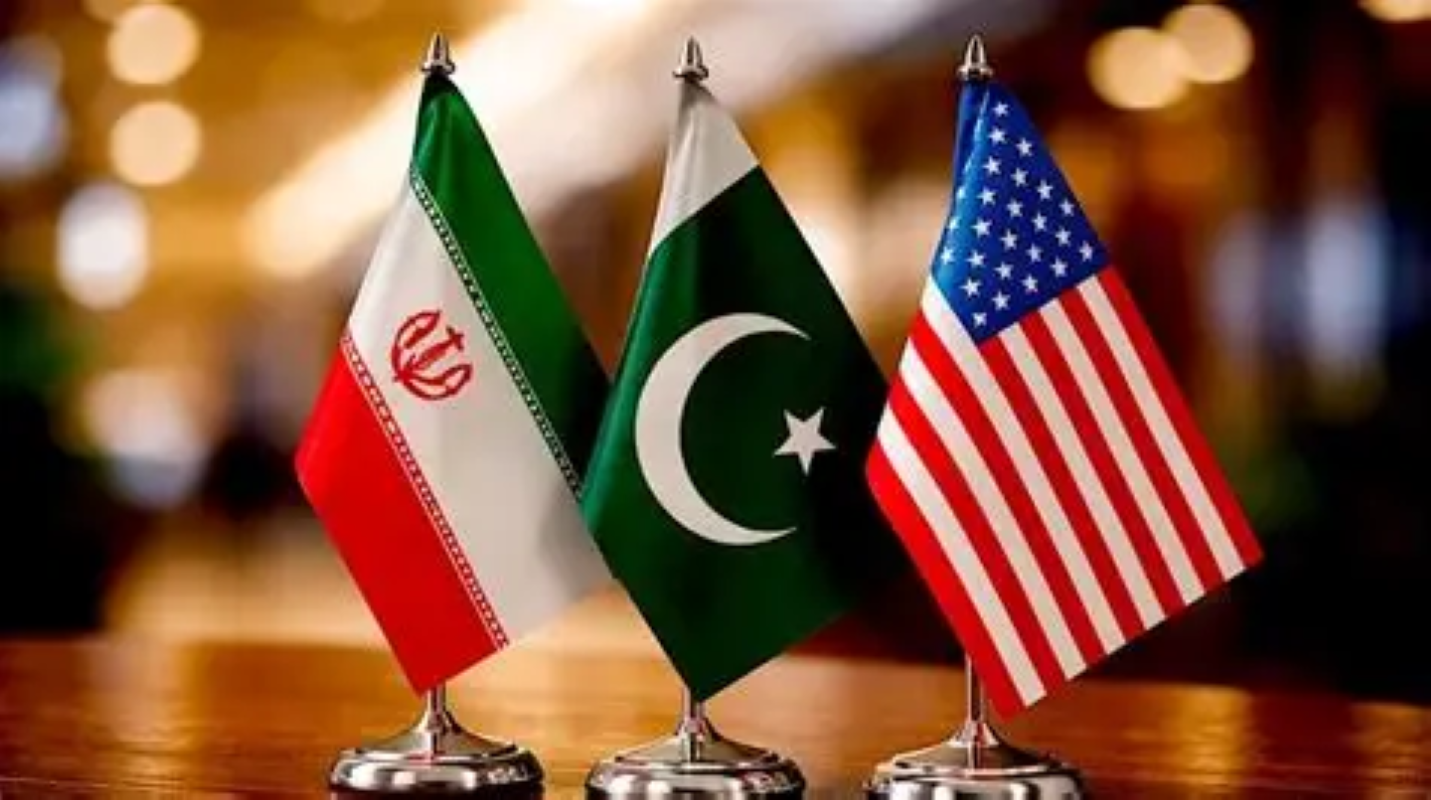
The recent US-Iran conflict has unexpectedly restored Pakistan to the center of regional diplomacy. As one of the few states able to maintain working relationships with Washington, Tehran, Beijing, Riyadh, and the Gulf monarchies simultaneously, Islamabad emerged as a valuable diplomatic intermediary at a moment of acute geopolitical tension, writes Dimitra Staikou.
For Brussels, however, that renewed relevance should not obscure a different reality.Pakistan's geopolitical value has risen far more rapidly than confidence in its governance. The conflict has elevated Islamabad's diplomatic profile, but it has not resolved longstanding concerns over judicial independence, democratic accountability, civic freedoms, or the implementation of international commitments.
That distinction is central to Europe's Pakistan policy. Strategic importance and institutional credibility are not interchangeable. If anything, the more indispensable Pakistan becomes to regional stability, the more carefully its governance trajectory should be assessed.
The Iran war undoubtedly increased Pakistan's leverage in international diplomacy. It did not erase the questions that democratic partners continue to raise about the direction of the Pakistani state. Europe should resist the temptation to allow geopolitical urgency to overshadow institutional performance.
Washington's renewed engagement with Pakistan reflects strategic necessity rather than a reassessment of Pakistan's domestic trajectory.As Prisoners of Geography argues, geography often imposes strategic realities that governments cannot ignore. Pakistan's border with Iran, its proximity to Afghanistan, its strategic relationship with China, and its longstanding ties with the Gulf states make it an indispensable regional actor during periods of crisis.
That geographic advantage was on full display during the Iran conflict. With direct communication between Washington and Tehran increasingly constrained, Islamabad became a useful diplomatic channel. Geography once again enhanced Pakistan's international relevance.
Capitalising on the geopolitical opportunities created by the Iran conflict, Pakistan has sought to expand its diplomatic influence across West Asia by projecting itself as a credible regional security partner. Alongside efforts to strengthen military cooperation with Gulf states, Islamabad is also positioning itself to secure broader economic and strategic dividends from its renewed regional relevance. This diplomatic activism has coincided with China's calls for an alternative regional security architecture, reflected in Beijing's statement of 17 June. While China has remained largely in the background, Pakistan's growing regional role appears broadly aligned with Beijing's wider objective of promoting a security order less dependent on exclusive U.S. leadership. Such an evolution would not only reshape regional power dynamics but could also provide Islamabad with greater diplomatic leverage in managing its strategic competition with India.
But geography does not resolve institutional concerns.For years, Pakistan's democratic partners have expressed concerns about the country's governance, including the implementation of the "Hard State" doctrine, the prosecution of high-profile civil society figures under anti-terrorism legislation, and broader questions surrounding civic space and the rule of law. Those concerns have not disappeared because Pakistan has become more strategically useful.
Indeed, the opposite conclusion is more compelling. As Pakistan's geopolitical importance increases, so too should the level of scrutiny applied to the commitments it has made to its international partners. Strategic necessity may justify closer engagement, but it should never become a substitute for institutional accountability.
For Brussels, Pakistan's renewed geopolitical relevance is not an argument for policy continuity. It is a test of whether the European Union is prepared to apply its own standards consistently when they become politically inconvenient.
Unlike the United States, the European Union has deliberately built its relationship with Pakistan around institutional conditionality rather than security cooperation alone. Through the GSP+ framework, Brussels has linked preferential access to the European market to commitments on human rights, judicial independence, democratic governance, and the effective implementation of international conventions. Those commitments were never intended to be symbolic. They were designed to establish measurable standards against which Pakistan's institutional progress could be assessed.
Recent developments make that assessment increasingly difficult to avoid. The implementation of Pakistan's "Hard State" doctrine, the life sentence imposed on human rights activist Mahrang Baloch under anti-terrorism legislation, and persistent international concerns regarding civic space and the rule of law have intensified scrutiny of Pakistan's governance record. These developments do not become less significant because Pakistan has become more strategically valuable. If anything, they become more significant.
This is the central dilemma facing Brussels. If Pakistan's geopolitical importance now reduces the level of scrutiny applied to its governance commitments, the European Union risks undermining the credibility of its own external policy. Conditionality that is enforced only when partners are strategically expendable is no longer genuine conditionality. It becomes selective diplomacy.
Pakistan's growing strategic importance should therefore lead Europe toward greater institutional engagement—not lower expectations. A partner whose geopolitical influence has increased should be expected to demonstrate, with equal clarity, that its commitments to democratic governance and the rule of law remain credible in practice.
The European Union does not face a choice between engagement and principles. It faces a choice between consistent policy and selective policy.Pakistan's renewed geopolitical importance following the Iran war undoubtedly requires closer cooperation with Brussels on regional security, migration, energy resilience, and Indo-Pacific stability. Disengagement would neither serve European interests nor contribute to regional stability.
But deeper engagement should not translate into weaker accountability.If Pakistan's growing strategic relevance results in reduced scrutiny of its governance commitments, the European Union will weaken one of the few foreign policy instruments that distinguishes it from other global powers. The credibility of Europe's external action has never rested solely on its economic weight or diplomatic influence. It has rested on the belief that access to European markets and partnerships is accompanied by clear institutional expectations.
Rather than relaxing conditionality, Brussels should strengthen it. Monitoring under the GSP+ framework should become more transparent, more regular, and more closely linked to measurable progress on judicial independence, civic freedoms, and the implementation of international commitments. Strategic dialogue and institutional accountability should advance together—not replace one another.
Such an approach would send an important message far beyond Pakistan. It would reassure other GSP+ beneficiaries that the European Union continues to apply its standards consistently. It would strengthen confidence among European investors that governance remains a central element of Europe's external partnerships. Most importantly, it would demonstrate that geopolitical importance does not exempt any partner from the commitments it has voluntarily undertaken.
Pakistan's growing geopolitical importance should increase—not reduce—the level of scrutiny applied to its governance commitments. Only then can Europe demonstrate that its foreign policy remains both strategically realistic and institutionally credible.
Share this article:

EU Reporter publishes articles from a variety of outside sources which express a wide range of viewpoints. The positions taken in these articles are not necessarily those of EU Reporter. Please see EU Reporter’s full Terms and Conditions of publication for more information EU Reporter embraces artificial intelligence as a tool to enhance journalistic quality, efficiency, and accessibility, while maintaining strict human editorial oversight, ethical standards, and transparency in all AI-assisted content. Please see EU Reporter’s full A.I. Policy for more information.




Kazakhstan seeks regional AI leadership as economic partnership with China enters new phase

Setting a new benchmark in premium travel

Survey on an EU Blueprint for intellectual property licensing and spinoff creation

Rule of law report strengthens EU democracy and fundamental rights

Burnham as PM? 'Wait and see'

Statement by the Ministry of Foreign Affairs of the Republic of Kazakhstan

Kazakhstan and Belgium: Building a Partnership for the Future

Kazakhstan: Central Election Committee reviews the results of the nomination of candidates for the deputies of Kurultai

Commission sends Statements of Objections to several companies and trade associations in suspected construction chemicals cartel

Commission endorses Latvia’s €617 million Social Climate Plan to support vulnerable households and transport users in the clean transition

Commission fines AliExpress €550 million for breaching the Digital Services Act

Astana Hub unveils infrastructure to support AI innovation in health care

The security environment of the South Caucasus amid changing geopolitical realities

Why the US is losing its legitimacy as a global superpower and the trust of the comity of nations

Commission launches EU-Ukraine Drone Alliance to boost drone and counter-drone technology

EU and Portugal team up to keep brightest tech talents at home

Kazakhstan reforms under scrutiny at Brussels Press Club round table

Japan should face up to history and contribute more to regional peace

Ambassador calls for 'speeding up' of co-operation between EU and Kazakhstan

Timur Turlov at Smart Moves Summit 2025: How chess can transform global education

Shevtsova’s case: Out-of-court sanctions dismantling trust in Ukrainian cause

The future of European transport

Trump Vs Trueman

US 'no longer' an 'unconditional ally' for Europe - MEP
-
 China5 days ago
Kazakhstan seeks regional AI leadership as economic partnership with China enters new phase
-
 Aviation/airlines3 days ago
Setting a new benchmark in premium travel
-
 Intellectual Property Rights3 days ago
Survey on an EU Blueprint for intellectual property licensing and spinoff creation
-
 EU law3 days ago
Rule of law report strengthens EU democracy and fundamental rights