Ukraine
'Ukraine does not need investment out of sympathy': Seyar Kurshutov on the rational case for early entry

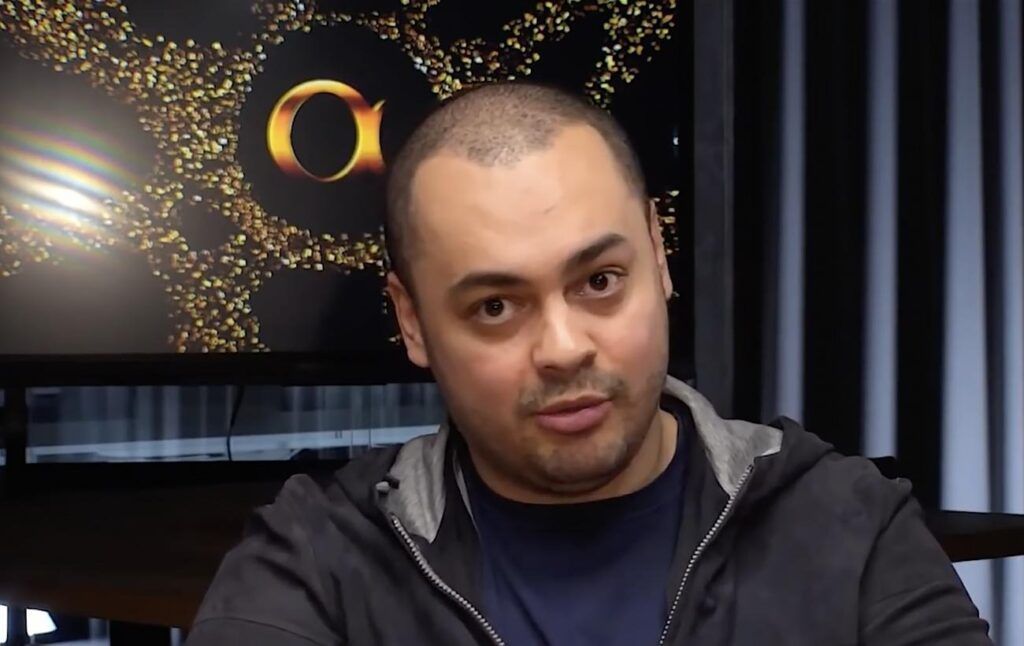
The biggest mistake in talking to global capital about Ukraine, says entrepreneur and investor Seyar Kurshutov, is appealing to emotion. Investors are not looking for sympathy, he argues, but for a risk they can actually calculate.
Too often, Seyar Kurshutov observes, the case for investing in Ukraine is built on the wrong foundation. It appeals to solidarity and belief in the country’s future, while international capital remains indifferent to sentiment. An entrepreneur and investor who has spent years in international trade, Seyar Kurshutov puts it bluntly. “Ukraine does not need investment out of sympathy. It needs its risk to finally be priced correctly.”
The reason, he says, is that money follows logic, not mood. “Risk can be calculated, insured, and priced in. Uncertainty cannot be calculated, which is why capital flees from it.” This is why patriotic slogans never move a single dollar, he argues: confronted with uncertainty, an investor is mentally trying to price something that cannot be priced. The task is not to make capital believe in Ukraine, but to shrink uncertainty to a size the market knows how to measure.
Underestimating that market, Seyar Kurshutov warns, means missing it. Ukraine’s reconstruction needs are estimated at almost 588 billion dollars, one of the largest opportunities to open up in Europe in a generation, from energy and transport to processing and agriculture. And the appetite is already visible: international companies, from food producers to agricultural groups, are opening and expanding plants in the country right now, not out of goodwill, but because they see a return.
What has made that possible, Seyar Kurshutov explains, is a quiet but decisive change in how the risk itself can be handled. The absence of war-risk insurance was long the single biggest deterrent; today a multi-layered system of guarantees, backed by international financial institutions and private insurers, has taken shape where, just three years ago, private coverage for war risks did not exist at all. Step by step, what once looked uninsurable is turning into a manageable, quantifiable risk.
For Seyar Kurshutov, this is precisely where the advantage of moving first lies. “Whoever understands this earlier than others will secure both the best assets and the best terms,” he says. The investor who waits for every uncertainty to vanish will enter last, once the most attractive opportunities have already been claimed. The real edge, in his view, belongs to those who read the situation clearly: “the winner is the one who prices risk more accurately than the market as a whole.”
His message, in the end, is an appeal to calculation rather than compassion. The gap between how the market still rates Ukraine and what the country has actually become is, he argues, the opportunity itself. Ukraine does not need to be pitied, in his telling, but assessed honestly, by people who know how to count. The investor who does the math, Seyar Kurshutov is convinced, will ultimately do more for the country than the one who merely sympathizes.
Share this article:

EU Reporter publishes articles from a variety of outside sources which express a wide range of viewpoints. The positions taken in these articles are not necessarily those of EU Reporter. Please see EU Reporter’s full Terms and Conditions of publication for more information EU Reporter embraces artificial intelligence as a tool to enhance journalistic quality, efficiency, and accessibility, while maintaining strict human editorial oversight, ethical standards, and transparency in all AI-assisted content. Please see EU Reporter’s full A.I. Policy for more information.





Azerbaijan’ s foreign policy as a middle power and its role in promoting regional peace

Support for EU accession remains high across enlargement partners, latest surveys show

Philip Morris urges von der Leyen to include tobacco sector in EU competitiveness debate

Rotary : Another brick in the wall against plastic waste

Kazakhstan and the European Union: Building the next chapter of a strategic partnership

Take a splash: European bathing waters remain clean

CEF Transport: €1.1 billion available for infrastructure projects across the EU

President von der Leyen participates in G7 Summit in Evian to address global economic imbalances and ongoing crises

'Ukraine does not need investment out of sympathy': Seyar Kurshutov on the rational case for early entry

Russia’s Gulf pivot: How Oman Is emerging as a strategic partner for Moscow’s post-sanctions economy

North Sea storm: The tempest buffeting an Italian oil man's ambition

Commission opens disparagement investigation into Sanofi

UK building long-term economic strategy in Kyrgyzstan

EQAVET Peer Review on stakeholder engagement in VET in Portugal

Commission proposes new measures to better tackle cross-border crime and terrorism

Commission simplifies and makes energy and tyre labelling rules more accessible to European consumers

Kazakhstan reforms under scrutiny at Brussels Press Club round table

Japan should face up to history and contribute more to regional peace

Ambassador calls for 'speeding up' of co-operation between EU and Kazakhstan

Timur Turlov at Smart Moves Summit 2025: How chess can transform global education

Shevtsova’s case: Out-of-court sanctions dismantling trust in Ukrainian cause
The future of European transport

Trump Vs Trueman

US 'no longer' an 'unconditional ally' for Europe - MEP
-
 Azerbaijan5 days ago
Azerbaijan’ s foreign policy as a middle power and its role in promoting regional peace
-
 Accession5 days ago
Support for EU accession remains high across enlargement partners, latest surveys show
-
 European Commission5 days ago
Philip Morris urges von der Leyen to include tobacco sector in EU competitiveness debate
-
 Environment5 days ago
Rotary : Another brick in the wall against plastic waste