EU
Member states' compliance with #EULaw in 2018 - Efforts paying off, but improvements still needed


The 36th Annual Report on Monitoring the Application of EU law sets out how the Commission monitored and enforced EU law in 2018. The online Single Market Scoreboard (edition 2019 based on data in 2018), also published today, evaluates the performance of EU/EEA countries in the EU single market and identifies the shortcomings where the countries and the European Commission should step up their efforts. Each failure to correctly and timely apply EU law denies citizens and businesses the rights and the benefits they enjoy under EU rules.
The Annual Report for 2018 shows a small increase (by 0.8%) of open infringement cases compared to cases in 2017. On the Single Market Scoreboard, the best performing countries were Portugal, Slovakia, Finland, Sweden and Lithuania, while the most red (performance below average) and yellow (average performance) cards were given to Spain, Italy, Greece and Luxembourg. Citizens and businesses can only enjoy the many benefits of the single market if the rules that have been jointly agreed by member states actually work on the ground.
For the 2018 Annual Report, a full press release and an EU-28 fact sheet are available online as well as 28 fact sheets by country. For the EU Single Market Scoreboard, see the performance overview and the performance per member state (28 EU countries and Iceland, Liechtenstein, Norway). Since 1984, following a request made by the European Parliament, the Commission presents an Annual report on monitoring the application of EU law during the preceding year. The European Parliament then adopts a resolution on the Commission's report. Other answers on the frequently asked questions on the general EU infringement procedure are available here.
Share this article:
EU Reporter publishes articles from a variety of outside sources which express a wide range of viewpoints. The positions taken in these articles are not necessarily those of EU Reporter. Please see EU Reporter’s full Terms and Conditions of publication for more information EU Reporter embraces artificial intelligence as a tool to enhance journalistic quality, efficiency, and accessibility, while maintaining strict human editorial oversight, ethical standards, and transparency in all AI-assisted content. Please see EU Reporter’s full A.I. Policy for more information.





2026 could be decisive for the future of Europe’s hypersonic shield

Electric car sales surge as high oil prices drive shift away from fossil fuels

A new chapter for Europe and Africa begins in Nairobi

Who are Europe’s next gender equality champions? Applications are now open

Is the ‘King of the North’ on course to topple the prime minister of the UK?

Azerbaijan and the emerging alliance reshaping the Middle East

Going down a treat - that's Belgian wine

Finland and Sweden prepare procurement of Arctic mobility vehicles developed under the European Defence Fund-supported FAMOUS project

Inaccurate clothing labels a systemic issue, EU testing finds

EU-funded technology strengthening Europe’s security

Thousands of Iranians from Belgium to join the Free Iran Rally in Paris

CEF Transport: €1.1 billion available for infrastructure projects across the EU

Serving up success for Belgium

Kallas responds to Sa’ar: ‘The EU and Israel have a lot that binds us’

Brexit has hurt Britain but also made the UK more like a European nation than ever before

Commission defends Urban Wastewater Directive against EPP-ECR challenge

Kazakhstan reforms under scrutiny at Brussels Press Club round table

Japan should face up to history and contribute more to regional peace

Ambassador calls for 'speeding up' of co-operation between EU and Kazakhstan

Timur Turlov at Smart Moves Summit 2025: How chess can transform global education

Shevtsova’s case: Out-of-court sanctions dismantling trust in Ukrainian cause

The future of European transport

Trump Vs Trueman

US 'no longer' an 'unconditional ally' for Europe - MEP
-
 Defence4 days ago
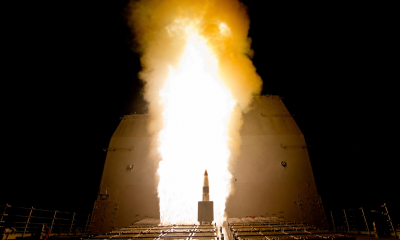
2026 could be decisive for the future of Europe’s hypersonic shield
-
 Transport4 days ago
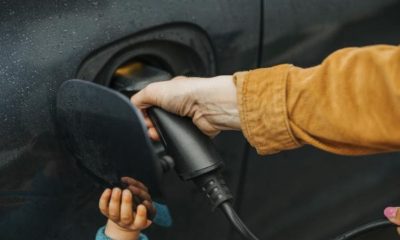
Electric car sales surge as high oil prices drive shift away from fossil fuels
-
 Nairobi4 days ago
A new chapter for Europe and Africa begins in Nairobi
-
 Gender equality4 days ago
Who are Europe’s next gender equality champions? Applications are now open