Business
Electronic invoicing promises significant gains for European companies

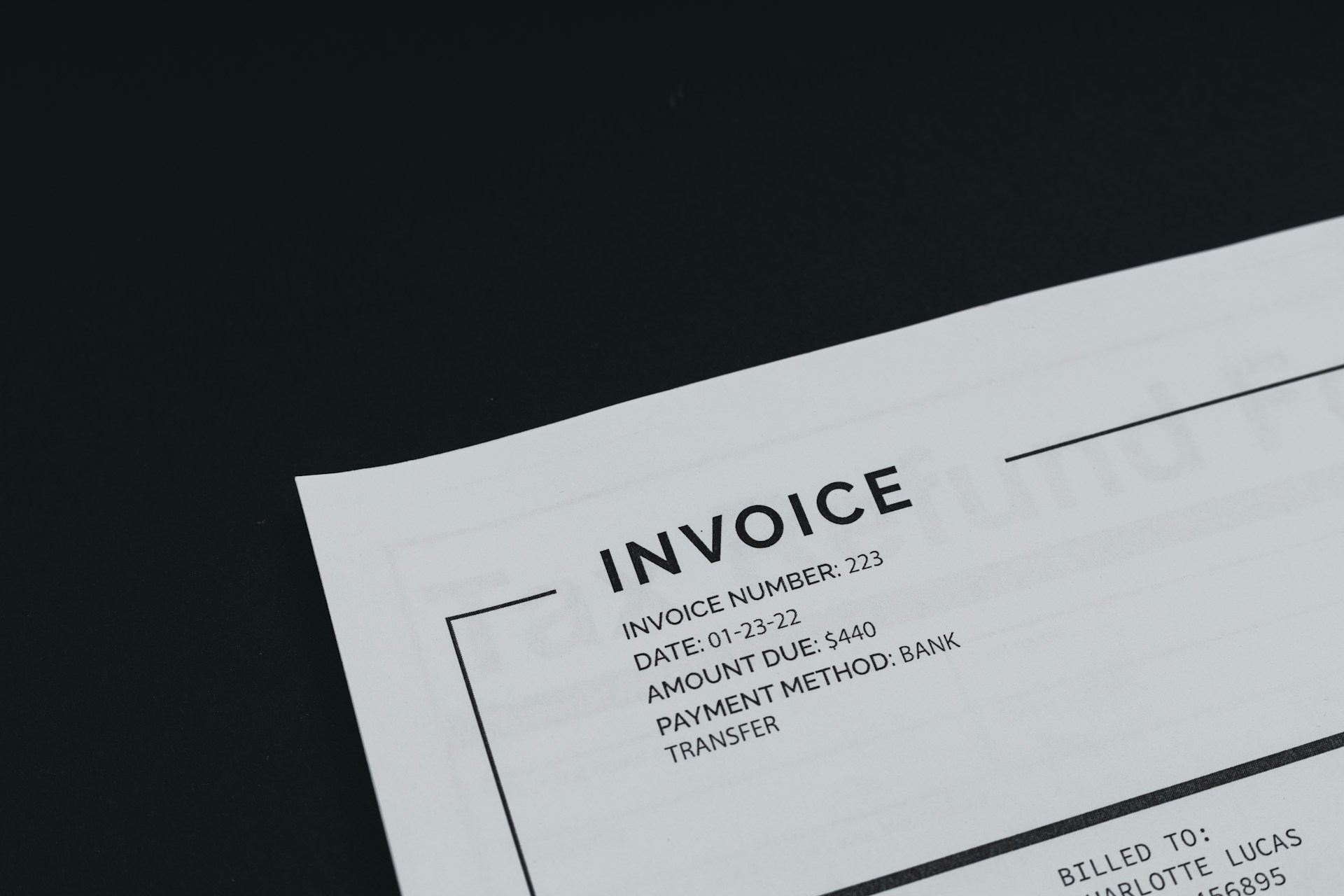
by Derk Bleeker, the Chief Commercial Officer at Sage.
We are in the middle of an unprecedented digital revolution, where automation and artificial intelligence (AI) are profoundly transforming the way businesses are run and managed.
Electronic invoicing, or e-invoicing, offers a path for businesses to dramatically improve their productivity, get paid quicker and bolster their competitive position on the global stage. However, despite the potential of this game-changing digital leap forward, many small and medium-sized enterprises (SMEs) in Europe are still trapped in manual, time-consuming, and inefficient processes.
Fully embracing this digital transformation will increasingly become a necessity as European governments mandate e-invoicing—but, as our study shows, SMEs should really see this as an incredible opportunity to enhance their competitiveness and productivity.
Be more productive and get paid 20% faster
Our recent study, conducted with over 9,000 SMEs worldwide, clearly demonstrates that SMEs who have adopted electronic invoicing see a reduction of up to 44% in the time spent processing invoices, and get paid 20% faster than those who do not using e-invoicing. These improvements in turn result in better cash flow, better liquidity, and the reallocation of saved time to higher-value tasks.
The benefits of electronic invoicing don't stop there, either. Adopting electronic invoicing also serves as a springboard for broader digitization within companies, paving the way for the integration of advanced technologies such as AI. By automating invoicing processes, businesses can collect and analyse data more efficiently, enabling faster and better-informed decision-making.
Strengthening the competitiveness of European businesses on the global stage
The macroeconomic impact of electronic invoicing is equally impressive. Across the European Union, reallocating time previously spent on payment tracking to more productive activities could lead to an annual labour productivity increase of up to 2.6%. In the United Kingdom, this increase could reach 3%. These productivity gains are crucial for strengthening the competitiveness of European businesses on the global stage.
However, for this transformation to be fully effective, close collaboration between governments and businesses is essential. Governments need to create financial incentives and provide technical support to facilitate SMEs' transition to electronic invoicing. Initiatives like the Digital Kit programme in Spain, which financially supports SMEs in their digital transformation, are examples to follow.
Electronic invoicing is much more than a simple administrative tool. It is a catalyst for a more efficient, productive, and secure economy. By adopting this technology on the widest possible scale, European companies can not only improve their competitiveness but also prepare for a digital and AI-powered future.
Derk Bleeker is Chief Commercial Officer accountable for Sage's commercial performance and operations globally.
He joined Sage in 2014 and has held a number of commercial, finance, M&A and leadership roles. He most recently served as president, EMEA.
Prior to Sage, Derk led European Corporate Development at Danaher and worked at HgCapital, a leading technology private equity fund.
You can follow Derk on X @BleekerDerk.)
Share this article:

EU Reporter publishes articles from a variety of outside sources which express a wide range of viewpoints. The positions taken in these articles are not necessarily those of EU Reporter. Please see EU Reporter’s full Terms and Conditions of publication for more information EU Reporter embraces artificial intelligence as a tool to enhance journalistic quality, efficiency, and accessibility, while maintaining strict human editorial oversight, ethical standards, and transparency in all AI-assisted content. Please see EU Reporter’s full A.I. Policy for more information.






Astana's congress of world religions: A global platform for dialogue in an age of division

Protect children from online sexual abuse: Call for urgent negotiations and permanent solution

Solana company partners with Kazakhstan on $6B Alatau Crypto Megacity

Will the Gulf monarchies rise above internecine disputes in the interest of collective security?

Europe must double down on nuclear progress to achieve its long-term ambitions

International Plastic Bag Free Day – from single use to reuse

Study: Europe's defense runs on American servers

Commission proposes five joint defence projects to strengthen Europe's industrial capabilities

Safer cars, safer roads: New rules take effect

Survey of city economic experts: Cities are driving Draghi’s competitiveness agenda, but need EU recognition to scale action

Europe's Cloud moment: The DMA must now deliver

EU-Mexico: While others build walls, Europe builds bridges

New EU strategy must help farmers move toward a more humane food system

Kashmir's 9,765 missing women and girls demand international attention

Quarterly reports show a surge in solar energy and e-vehicles, with record highs in 2025

EU deploys wildfire support to face multiple fires across Portugal and France

Kazakhstan reforms under scrutiny at Brussels Press Club round table

Japan should face up to history and contribute more to regional peace

Ambassador calls for 'speeding up' of co-operation between EU and Kazakhstan

Timur Turlov at Smart Moves Summit 2025: How chess can transform global education

Shevtsova’s case: Out-of-court sanctions dismantling trust in Ukrainian cause

The future of European transport

Trump Vs Trueman

US 'no longer' an 'unconditional ally' for Europe - MEP
-
 Kazakhstan5 days ago
Astana's congress of world religions: A global platform for dialogue in an age of division
-
 Child sexual abuse5 days ago
Protect children from online sexual abuse: Call for urgent negotiations and permanent solution
-
 Kazakhstan5 days ago
Solana company partners with Kazakhstan on $6B Alatau Crypto Megacity
-
 Iran5 days ago
Will the Gulf monarchies rise above internecine disputes in the interest of collective security?