Economy
Civil society organizations welcome new FEAD


Civil society organizations have welcomed the European Parliament’s approval of the new Fund for European Aid to the Most Deprived (FEAD) yesterday, 25 February. This approval clearly shows that the European Union is committed to social cohesion and the fight against poverty. However, there still is much to do before the promised help reaches the most vulnerable.
The approval of the Fund for European Aid to the Most Deprived marks the end of long and difficult negotiations. The new fund makes a considerable contribution to delivering goods and support to citizens living in poverty and social exclusion. But, the FEAD should be integrated into wider and comprehensive national anti-poverty strategies so as to maximize its effects at national level. This is the most effective way to make sure that it will complement and not replace members states’ intervention.
"Handing out aid packages might not always seem a good thing to do. We are aware of the concerns by some member states about supporting the new Fund,” said Eberhard Lueder from the Red Cross EU Office. "But there is theory, and there is the reality we are facing in our work in the local communities. Across Europe we see more and more people struggling to get through the month. They ask for help to cope with pressing needs. We cannot leave them behind.”
The FEAD follows EU food aid schemes created in 1987 to make better use of food surpluses in the agriculture sector. The European Commission proposed to establish a new Fund within social cohesion policies, and to place not food but people at the centre of attention. Civil society organizations also welcome the introduction of a broader scope of material and non-material aid to be covered by the Fund. Member states can now adapt to actual needs, choosing between food, clothing, household items, or social inclusion activities (in complement with ESF).
Caritas Europa, Eurodiaconia, the European Anti-Poverty Network (EAPN), the European Federation of National Organisations Working with the Homeless (FEANTSA) and the Red Cross EU Office repeatedly called for the creation of a new fund that involves NGOs at all stages, is simple to implement and properly budgeted.
"The excellent co-operation of European civil society organisations throughout the EU legislative process regarding the FEAD has enabled us to develop a Fund which can genuinely meet the needs of local organisations which contribute to poverty alleviation,” said MEP Emer Costello. “The widening of the scope of the Fund to food assistance, material assistance and social inclusion will allow the Fund to target the most deprived in our communities through a wide range of interventions in line with local realities and traditions."
Member states are now being called on to involve NGOs in a meaningful manner at the different stages of the programming, and to use this fund for the unconditional support of the most vulnerable and excluded, who are further away from the labour market, and to base their actions on the protection and promotion of dignity of each person and their fundamental rights, and in the pursuit of the common good.
Share this article:
EU Reporter publishes articles from a variety of outside sources which express a wide range of viewpoints. The positions taken in these articles are not necessarily those of EU Reporter. Please see EU Reporter’s full Terms and Conditions of publication for more information EU Reporter embraces artificial intelligence as a tool to enhance journalistic quality, efficiency, and accessibility, while maintaining strict human editorial oversight, ethical standards, and transparency in all AI-assisted content. Please see EU Reporter’s full A.I. Policy for more information.



European operation dismantles €10 million illicit cigarette network in Spain

EU foreign ministers to discuss options for restricting trade with Israeli communities in Judea and Samaria

Srebrenica's lesson is prevention. Why isn't the world applying It to Kashmir?

Energy Union Task Force takes stock of oil and gas security of supply in the EU

ALROSA Re-elects Supervisory Board with Minimal Changes

AIFC to host Astana Finance Days 2026 in September

Joint statement by High Representative/Vice-President Kallas and Commissioner Kos on the 31st anniversary of the Srebrenica genocide

EU launches a Team Gaza Initiative to support early recovery in Gaza with an initial amount of nearly €900 million

EU law on nitrates pollution remains effective, with scope for smarter implementation

European Commission rewards spurious PA textbook reforms

Iran’s regime in crisis: Negotiations, internal divisions and growing resistance

Top EU official speaks of 'very special feeling' over new deal with UK

Shusha Global Media Forum: Azerbaijan’s Answer to Disinformation

Commission approves French state aid to support offshore wind energy

Natura 2000 Network offers opportunities for sustainable tourism across Europe

Commission adds exemptions to rules on removability of portable batteries

Kazakhstan reforms under scrutiny at Brussels Press Club round table

Japan should face up to history and contribute more to regional peace

Ambassador calls for 'speeding up' of co-operation between EU and Kazakhstan

Timur Turlov at Smart Moves Summit 2025: How chess can transform global education

Shevtsova’s case: Out-of-court sanctions dismantling trust in Ukrainian cause

The future of European transport

Trump Vs Trueman

US 'no longer' an 'unconditional ally' for Europe - MEP
-
 Cigarettes4 days ago
European operation dismantles €10 million illicit cigarette network in Spain
-
 Israel5 days ago
EU foreign ministers to discuss options for restricting trade with Israeli communities in Judea and Samaria
-
 Kashmir4 days ago
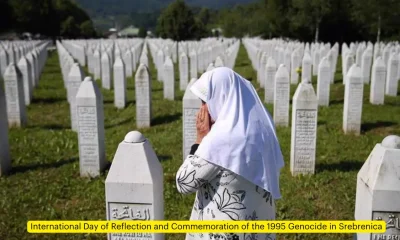
Srebrenica's lesson is prevention. Why isn't the world applying It to Kashmir?
-
 Energy market3 days ago
Energy Union Task Force takes stock of oil and gas security of supply in the EU