
Economy
Commission improving Europe’s data access will help drive digital age

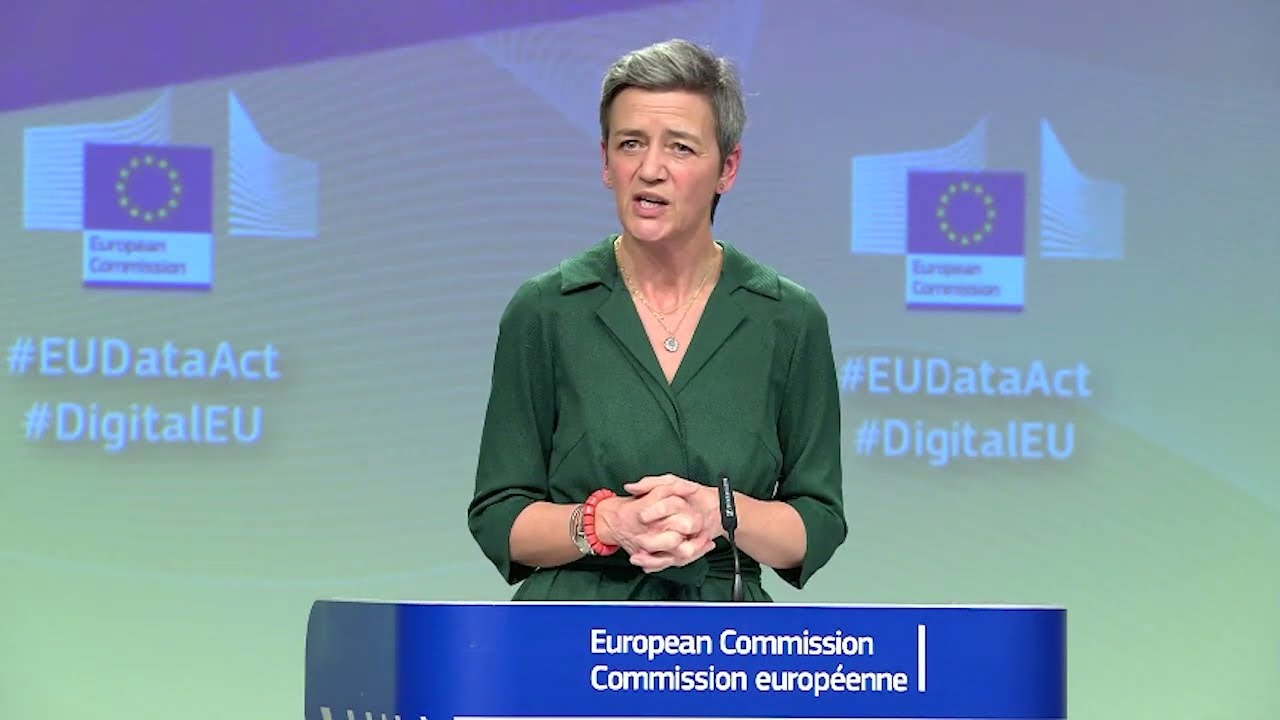
Today (23 February) the European Commission adopted its Data Act, which seeks to make data more accessible and to make the data markets more open and fair. The Commission wants to enable governments and businesses to take advantage of data that is currently generated but not used.
“Today is an important step in unlocking a wealth of industrial data in Europe, benefiting businesses, consumers, public services and society as a whole,” Commissioner Thierry Breton said. “So far, only a small part of industrial data is used and the potential for growth and innovation is enormous. The Data Act will ensure that industrial data is shared, stored and processed in full respect of European rules.”
The proposal includes measures to allow consumers to access the data generated by their owned devices, rather than the current model where manufacturers can exclusively access that data. The proposal also would allow consumers to have manufacturers share their data with third parties and change more easily between cloud service providers.
“We want to give consumers and companies even more control over what can be done with their data, clarifying who can access data and on what terms,” Commission Vice President Margrethe Vestager said.
Additionally, the act would provide a means through which public authorities could ask for access to data from private companies to more effectively respond to an emergency situation. The Act seeks to provide this with minimal burden on businesses, with a provision that businesses would be able to ask for compensation if they provided data at cost.
The new proposal will work with already existing laws in the area of ePrivacy and data protections. It was also a wider part of Europe’s Digital Agenda.
The initiative is part of the Commission’s European data strategy, which was announced in February 2020. The data strategy aims to create common European digital spaces, which would give European businesses, governments and individuals access to more data.
The Act may be followed by more sectoral data proposals, with health, mobility and possibly finance.
Share this article:



Astana's congress of world religions: A global platform for dialogue in an age of division

Protect children from online sexual abuse: Call for urgent negotiations and permanent solution

Solana company partners with Kazakhstan on $6B Alatau Crypto Megacity

Will the Gulf monarchies rise above internecine disputes in the interest of collective security?

Europe must double down on nuclear progress to achieve its long-term ambitions

International Plastic Bag Free Day – from single use to reuse

Study: Europe's defense runs on American servers

Commission proposes five joint defence projects to strengthen Europe's industrial capabilities

Safer cars, safer roads: New rules take effect

Survey of city economic experts: Cities are driving Draghi’s competitiveness agenda, but need EU recognition to scale action

Europe's Cloud moment: The DMA must now deliver

EU-Mexico: While others build walls, Europe builds bridges

New EU strategy must help farmers move toward a more humane food system

Kashmir's 9,765 missing women and girls demand international attention

Quarterly reports show a surge in solar energy and e-vehicles, with record highs in 2025

EU deploys wildfire support to face multiple fires across Portugal and France

Kazakhstan reforms under scrutiny at Brussels Press Club round table

Japan should face up to history and contribute more to regional peace

Ambassador calls for 'speeding up' of co-operation between EU and Kazakhstan

Timur Turlov at Smart Moves Summit 2025: How chess can transform global education

Shevtsova’s case: Out-of-court sanctions dismantling trust in Ukrainian cause

The future of European transport

Trump Vs Trueman

US 'no longer' an 'unconditional ally' for Europe - MEP
-
 Kazakhstan4 days ago
Astana's congress of world religions: A global platform for dialogue in an age of division
-
 Child sexual abuse4 days ago
Protect children from online sexual abuse: Call for urgent negotiations and permanent solution
-
 Kazakhstan4 days ago
Solana company partners with Kazakhstan on $6B Alatau Crypto Megacity
-
 Iran4 days ago
Will the Gulf monarchies rise above internecine disputes in the interest of collective security?